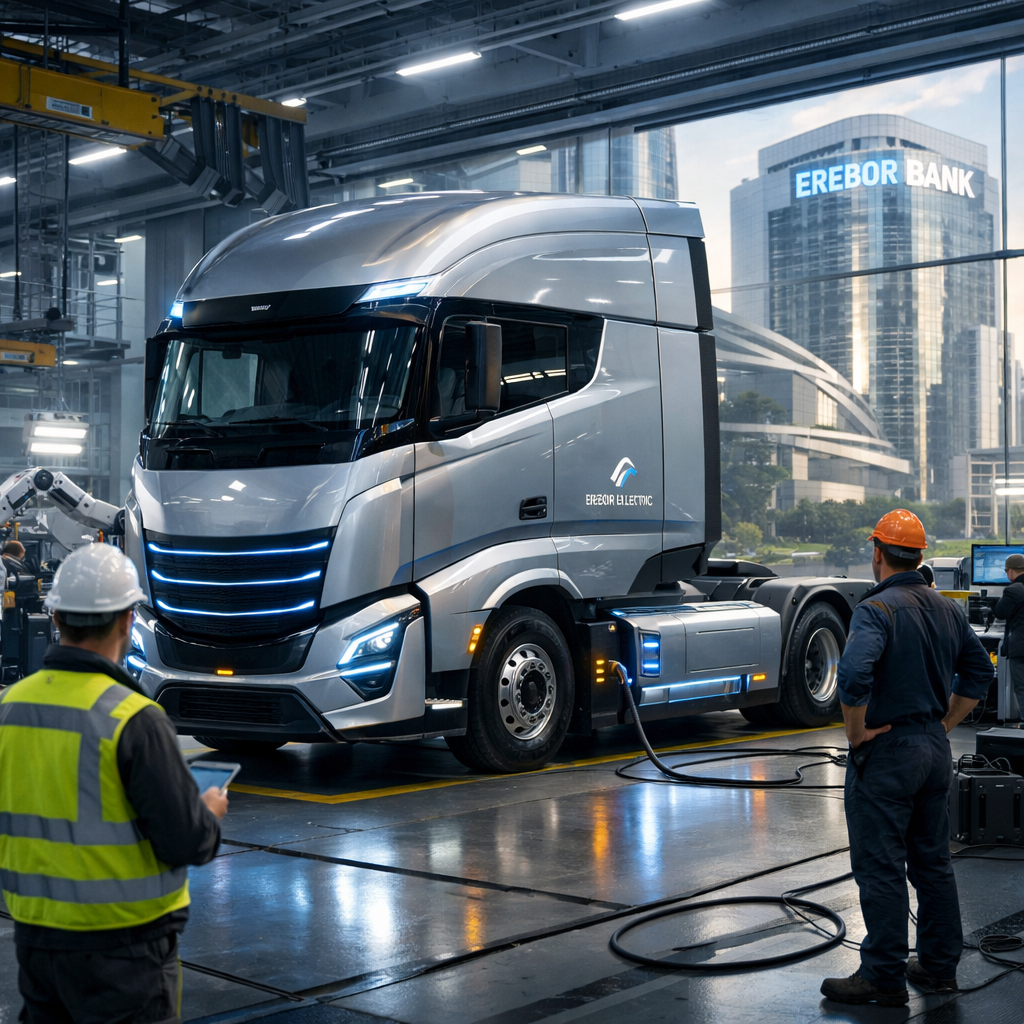
Los Angeles-based electric truck maker Harbinger has landed over $100 million in fresh financing, leaning heavily on Palmer Luckey’s newly founded Erebor Bank and a convertible note from Pinegrove Venture Partners. This comes alongside senior debt provided by Erebor, reinforcing Harbinger’s push to diversify beyond pure equity funding. The startup is now turning to more traditional capital sources as it scales up production, delivers commercial electric trucks, and expands into autonomous driving, energy storage, and defense applications.
Blended Capital Strategy
The latest funding arrives less than three weeks after Harbinger closed a $240 million Series D round, co-led by Tiger Global, Capricorn Technology Impact, and Ridgeline, with FedEx—a major customer—also participating. Harbinger had already secured an order for 2,000 trucks from FedEx, underlining its commercial momentum.
Harbinger’s CEO John Harris explains that scaling an industrial tech company demands a different financial playbook—one that doesn’t rely solely on equity. He points to large-scale OEMs and aerospace firms, which often use debt instruments to sustain production and meet contractual vehicle delivery goals.
Erebor’s Role and Broader Financial Trends
Erebor Bank—which Palmer Luckey launched in February 2026—has quickly climbed to more than $1 billion in loan originations. The bank is now Harbinger’s principal banking partner, signaling a growing willingness among financial institutions to support manufacturers of advanced technologies. Luckey has emphasized that many legacy lenders struggle to understand or fund the kind of real-tech firms putting U.S. workers to work in high-skill manufacturing roles.
In effect, Harbinger is joining a trend where EV and industrial tech ventures are shifting toward mixed capital structures. Equity rounds remain vital for innovation funding, but debt is becoming increasingly important for scaling operations. By tapping into both, Harbinger hopes to accelerate delivery to customers while preserving equity for future growth.
This financing move doesn’t just fuel Harbinger’s trucks: it underpins work in autonomous vehicles, energy storage, and defense—areas where upfront investment is steep and revenue ramps more slowly. Having Erebor Bank as a partner bridges that gap in sources of capital, enabling Harbinger to commit to production schedules and delivery targets without overleveraging equity dilution.
Why It Matters:This deal is part of a bigger inflection point for cleantech and industrial tech—companies are demonstrating that equity alone can’t finance heavy manufacturing and complex product lines. Harbinger’s embrace of debt financing through a bank that ‘gets it’ could mark a turning point for how EV startups fund growth. As Erebor and others extend credit to non-standard borrowers in tech, watch whether this opens doors for more manufacturers to scale without sacrificing control—or whether higher debt loads introduce new vulnerabilities in this sector of high stakes and long timelines.