Apple’s upcoming HomeView is shaping up to be a lot more restricted for developers than many had hoped. While the smart home device doesn’t ship until November 13, virtualized previews from developers are giving a clear look at how limited its operating environment is.
Base OS revealed—but it’s not what you’d think
Despite mounting evidence that HomeView OS is built on tvOS 27.2, virtualization testing shows the system identifying itself as “iOS 27.2.0” with a DeviceFamily value of 8. That discrepancy illuminates just how opaque things are behind the scenes. The launcher—called BreadBoard—alongside a dedicated Control Center process dubbed CupBoard, signifies a novel shell on top of existing frameworks.
App support: CarPlay APIs, no App Store
Developers are limited to Apple’s CarPlay SDK for creating app-like experiences on HomeView. Out of the box, the device won’t ship with an App Store, and sideloading or installing non-CarPlay apps isn’t supported. Some experimentation managed to get other apps running, but these efforts remain unofficial and constrained.
CarPlay itself is deeply integrated—but only for certain content. Audio and video apps are supported, but navigation tools and other popular categories like AI chat apps are left out. This hybrid of CarPlay and older frameworks like WatchKit 1 isn’t satisfying everyone, especially those expecting full-on app development freedom.
Features, UI, and system access under lock and key
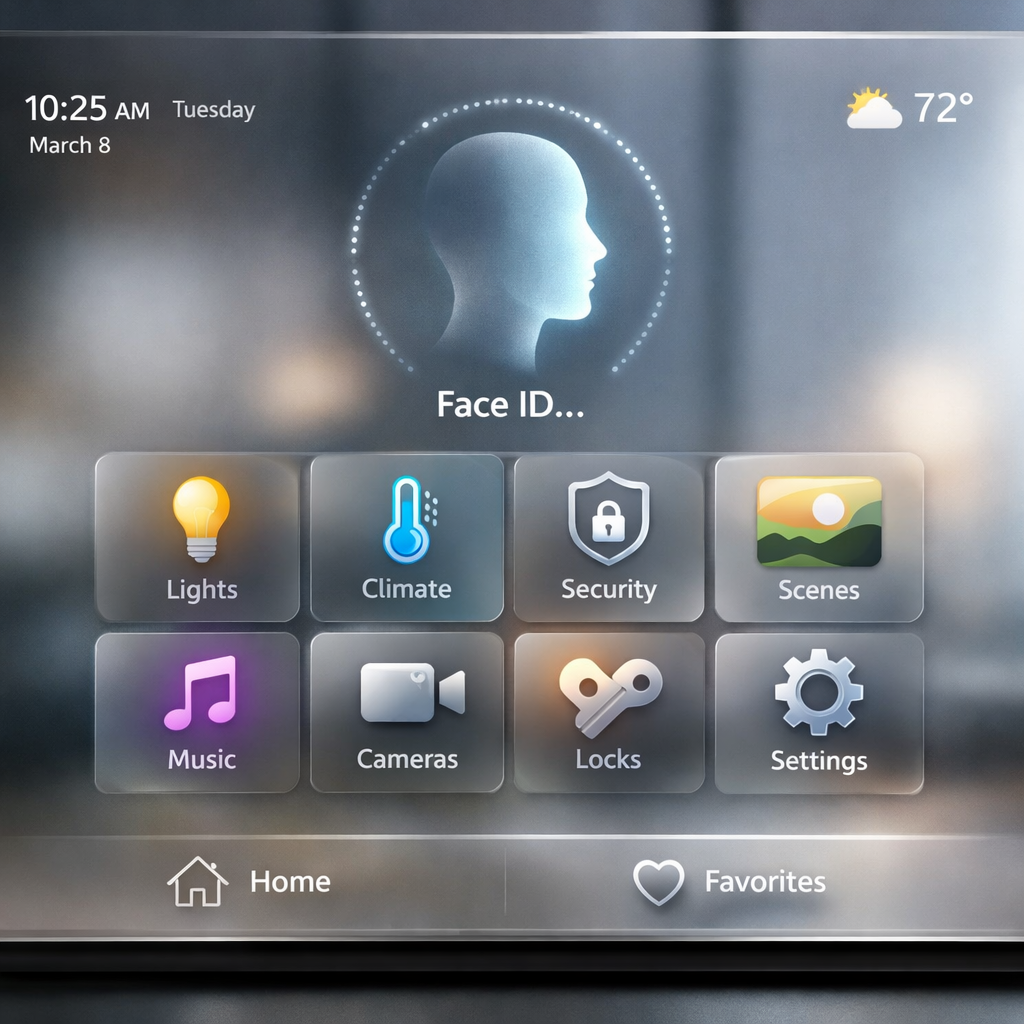
HomeView carries over many familiar iPhone/iPad behaviors in its Settings app, including swipe typing and a search bar. There’s also a “Liquid Glass” effect slider that varies transparency. But access to several system apps is gated behind profile authentication using an iPhone, iPad, or built-in camera. The latter triggers brightness boosts in low light and uses an animated “Recognizing” screen for face detection.
When it comes to streaming, AirPlay functionality appears mostly intact: pairing requires a four-digit code and once connected, video works with different layouts, subtitles, audio track choices, even playback speed controls. But this usability doesn’t extend to broader app ecosystems.
One developer described the CarPlay-based approach as undesirable—providing only limited app types and templates. The lack of navigation, productivity, or AI chat apps reinforce that HomeView OS may be more curated than anticipated.
HomeView OS’s locked-down nature may disappoint developers hoping for a full app platform. It’s clear that Apple sees the product as more of an appliance than an extension of the iPhone or iPad ecosystem. What looks like “Option A” for launch may simply be the first in a tiered approach. Going forward, devs will be watching for whether “Option B” and “C” allow more freedom.
Why this matters: HomeView’s tight restrictions suggest Apple is prioritizing control over openness—similar to how CarPlay limits what types of apps can appear. For the developer community, this setup may feel like a regression compared to platforms that support full third-party app access. For users, it likely means a very curated experience at launch, with limited third-party ecosystem integration.