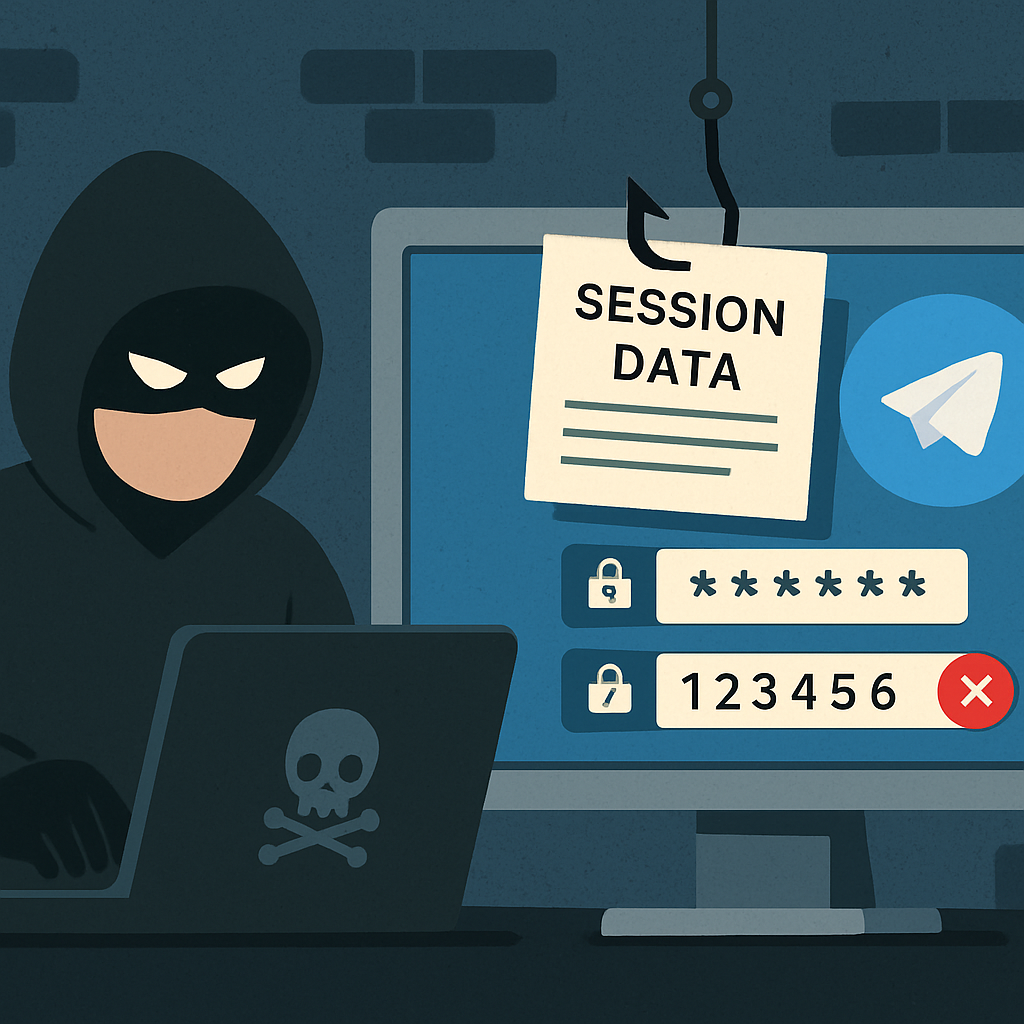
Recent findings have revealed that cybercriminals are exploiting vulnerabilities in Telegram’s desktop application to hijack user accounts without the need to crack passwords or bypass two-factor authentication (2FA). This method involves copying session data from a victim’s device, allowing attackers to gain unauthorized access seamlessly.
Traditionally, 2FA serves as a robust security measure, requiring users to provide a second form of verification beyond just a password. However, this new attack vector circumvents 2FA by targeting the session files stored locally on a user’s computer. By extracting these files, specifically from Telegram’s ‘tdata’ directory, attackers can replicate an active session on another device. This means that when the stolen session data is loaded onto a different machine, Telegram recognizes it as an already authenticated session, thereby not prompting for any additional verification.
Security researchers have demonstrated that this technique is effective even when 2FA is enabled, provided the user has not set up a separate passcode for the Telegram Desktop application. The malware responsible for this attack not only targets Telegram session data but also seeks out other sensitive information. It scans for macOS Keychain data, browser credentials, cookies, Apple Notes, and cryptocurrency wallet databases. Additionally, it employs deceptive tactics, such as fake password prompts, to harvest system passwords.
Once the malware has collected the necessary data, it compresses and uploads it to a remote server controlled by the attackers. This comprehensive approach allows cybercriminals to access a wide range of personal and financial information, amplifying the potential damage.
One of the more concerning aspects of this attack is its stealthiness. In many cases, the replicated session does not appear as a new device in Telegram’s device list, making it challenging for users to detect unauthorized access. This underscores the importance of users being vigilant and proactive in securing their accounts.
To mitigate the risk of such attacks, users are advised to implement additional security measures. Setting up a passcode for the Telegram Desktop application can provide an extra layer of protection. Regularly monitoring active sessions and promptly terminating any unrecognized devices is also crucial. Furthermore, users should be cautious of unexpected password prompts and ensure they are not inadvertently providing credentials to malicious entities.
This development highlights the evolving tactics of cybercriminals and the need for continuous adaptation in cybersecurity practices. While 2FA remains a vital security tool, it is not infallible. Users must stay informed about potential vulnerabilities and take comprehensive steps to safeguard their digital assets.