Cybercriminals are increasingly exploiting legitimate Remote Monitoring and Management (RMM) tools to gain unauthorized access to systems, effectively bypassing traditional malware detection mechanisms. A recent campaign has been identified where attackers are leveraging NinjaOne RMM software to infiltrate organizations without deploying conventional malware.
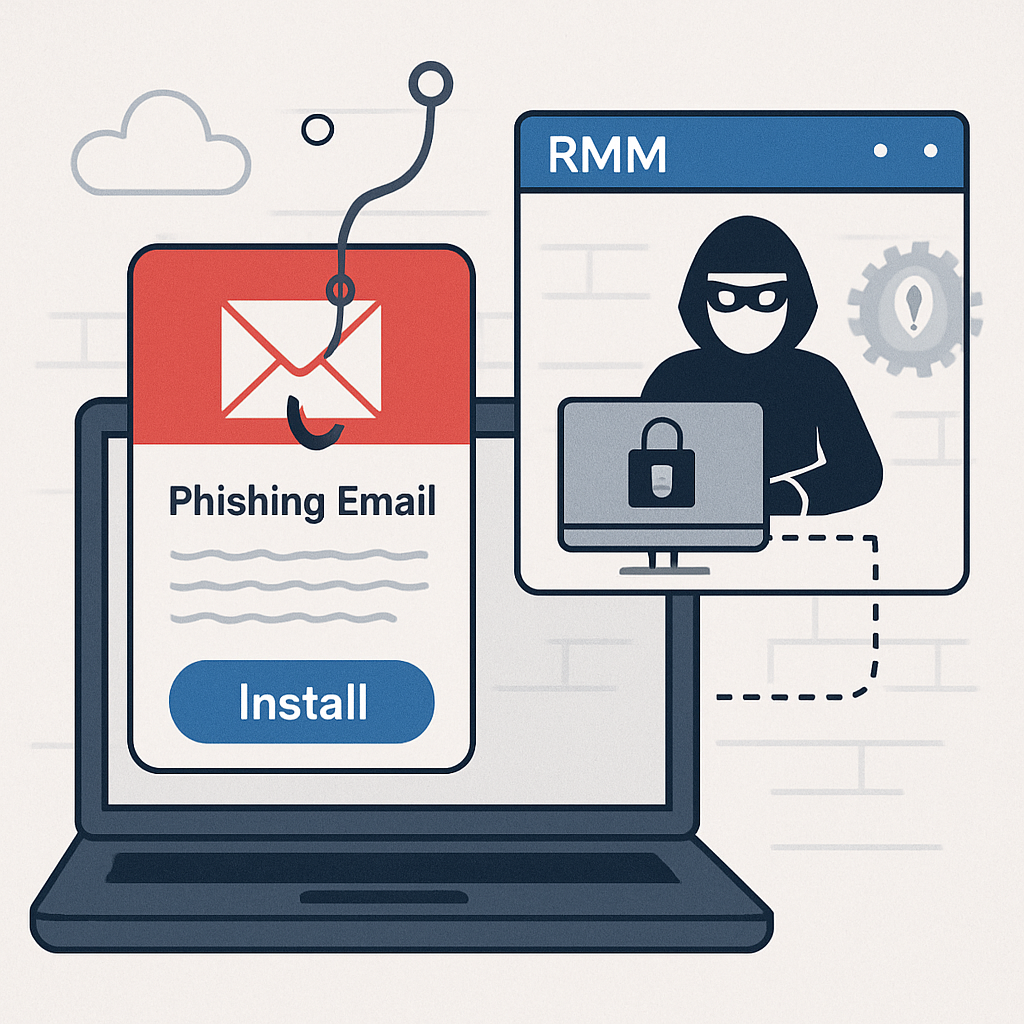
The attack begins with a phishing email that appears routine, often targeting employees in sectors like chemicals and advanced materials. These emails contain links that redirect victims through legitimate services before landing on counterfeit business portals designed to mimic authentic document-access workflows. This social engineering tactic exploits the familiarity of employees with such processes, increasing the likelihood of successful deception.
Upon interacting with the fraudulent portal, victims are prompted to download what they believe is a legitimate document. Instead, they unknowingly install the NinjaOne RMM agent, which has been pre-configured to connect to attacker-controlled infrastructure. This installation grants the attackers the same level of access as a legitimate IT administrator, enabling them to monitor device activity, execute remote commands, transfer files, and deploy additional tools—all through a trusted and digitally signed platform. The use of genuine software allows the attackers to evade detection by most security tools, as the RMM software is commonly used in enterprise environments and is not typically flagged as malicious.
To further enhance the illusion, the downloaded file is named in a manner that aligns with the phishing theme, such as ‘NinjaOne-Agent-DocumentoFiscal21782856920262001238-Sede-Auto-x86-64,’ maintaining the appearance of a fiscal document up to the point of installation. In some instances, victims are contacted by phone and instructed to install the software under the pretense that it is necessary to access the document, placing social engineering at the core of the attack and eliminating the need for technical exploits.
The infrastructure supporting this phishing campaign is notably sophisticated. The fraudulent pages employ browser fingerprinting and sandbox detection techniques to evade analysis by security researchers. This indicates a well-planned operation with significant effort invested in maintaining the campaign’s effectiveness and longevity.
Similar tactics have been observed in other campaigns where attackers exploit legitimate RMM tools. For instance, the MuddyWater hacking group has been known to abuse RMM software like Atera Agent to deliver malware, leveraging the trusted nature of these tools to maintain a low profile and evade detection. Additionally, threat actors have utilized weaponized PDF files to trick users into installing RMM tools such as Syncro, SuperOps, and ConnectWise ScreenConnect, further demonstrating the versatility and effectiveness of this approach.
The exploitation of legitimate RMM tools like NinjaOne underscores the evolving tactics of cybercriminals who seek to blend malicious activities with normal network operations. Organizations must enhance their security awareness training to recognize sophisticated phishing attempts and implement robust monitoring to detect unauthorized installations of RMM software. Regular audits of installed software and vigilant network traffic analysis are crucial in identifying and mitigating such threats.