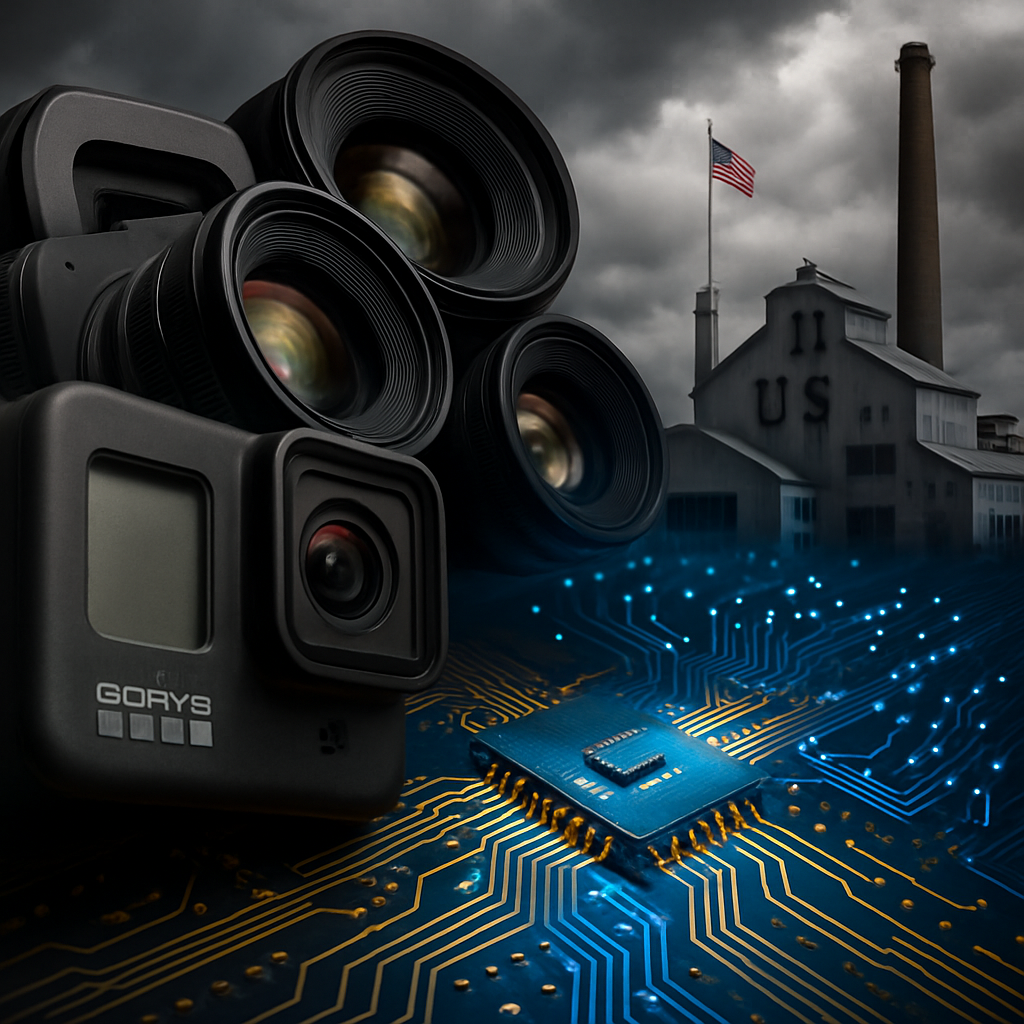
GoPro is set to be acquired by Starman Optical in a deal valued at $285 million, yet it will continue trading as a public company afterward. Under the agreement announced September 1, 2026, GoPro shareholders will receive $1.14 per share, and retain about 10% of the merged entity. One major outcome: GoPro’s $92 million debt will be wiped out. The merger is expected to close by the end of 2026.
From Cameras to Optics and Defense Tech
This deal follows mounting financial strain and GoPro’s recent consideration of moving beyond its core business of action cameras into defense technology and commercial imaging. Around the same time, YouTuber Markiplier revealed ownership of roughly 8.5% of GoPro shares. The combined company aims to leverage GoPro’s intellectual property across consumer, commercial, and defense sectors, expanding product lines and shifting much of its component manufacturing back to the U.S.
GoPro asserts it will continue to support its existing consumer line while also investing in new products and diversifying its roadmap. The buyer, Starman Optical, is part of Starman Holdings, which owns other tech brands like Incase, Incipio, and Griffin. Starman Optical itself—or more precisely its Starman New Photonics division—is focused on optical transceivers and photonics tech, building a manufacturing facility in New Jersey.
GoPro’s Rocky Decade
Ever since its IPO in 2014, when GoPro’s action cameras were thrilling consumers with high sales, the company has experimented with drones, 360-degree cameras, and other product expansions. Many of those pivots underperformed, and GoPro has since narrowed focus back to high-end action cameras for professionals and athletes. That strategy tightened operations, but also led to several rounds of layoffs as revenues weakened.
By mid-2026, GoPro warned investors that it may face insolvency without fresh funding. Its CEO, Nick Woodman, then invested $20 million of his own money to help keep the lights on. Now, the merger with Starman Optical purports to solve those urgency issues via recapitalization and by leveraging GoPro’s trusted optics and IP.
Starman Optical, meanwhile, is barely off the ground—incorporated August 31, 2026, in Delaware. Its manufacturing arm, New Photonics, established in 2025, is ramping up facilities in New Jersey. The company’s mission centers on domesticizing key components vital for optics and AI infrastructure, areas especially sensitive because of national security interests. The GoPro acquisition is positioned as a strategic move in that direction.
GoPro’s leadership reframes the deal as a chance to become America’s imaging and optical solutions company covering consumer, commercial, and defense markets—leveraging advances in optics, AI models, and camera technologies to address growing demand in both private and national sectors.
The bottom line: GoPro is being reborn through acquisition without losing its public status. With debt cleared, backing from a firm invested in optics and manufacturing, and a roadmap aimed at both breadth and depth, the company is making a bet that optics and imaging of the future—especially when tied to AI and defense—offer more promise than action cameras alone.
What this means:GoPro’s story reflects a broader shift: device makers are increasingly becoming platform players in optics, imaging, and AI frameworks. As nations prioritize manufacturing and supply chain security, the overlap of consumer tech, defense designs, and AI-compatible hardware is going to be the next frontier. With this merger, GoPro could be positioning itself at that intersection—if it can avoid the missteps of its past diversification attempts.