Google has officially launched the Pixel Tag, a new $29.99 tracker designed to help Android users keep tabs on items like keys, wallets, or bags. Pre-announced in August, the Pixel Tag is now available for purchase. It leans on both Bluetooth and ultra-wideband (UWB) technologies for precise tracking through the Find Hub app.
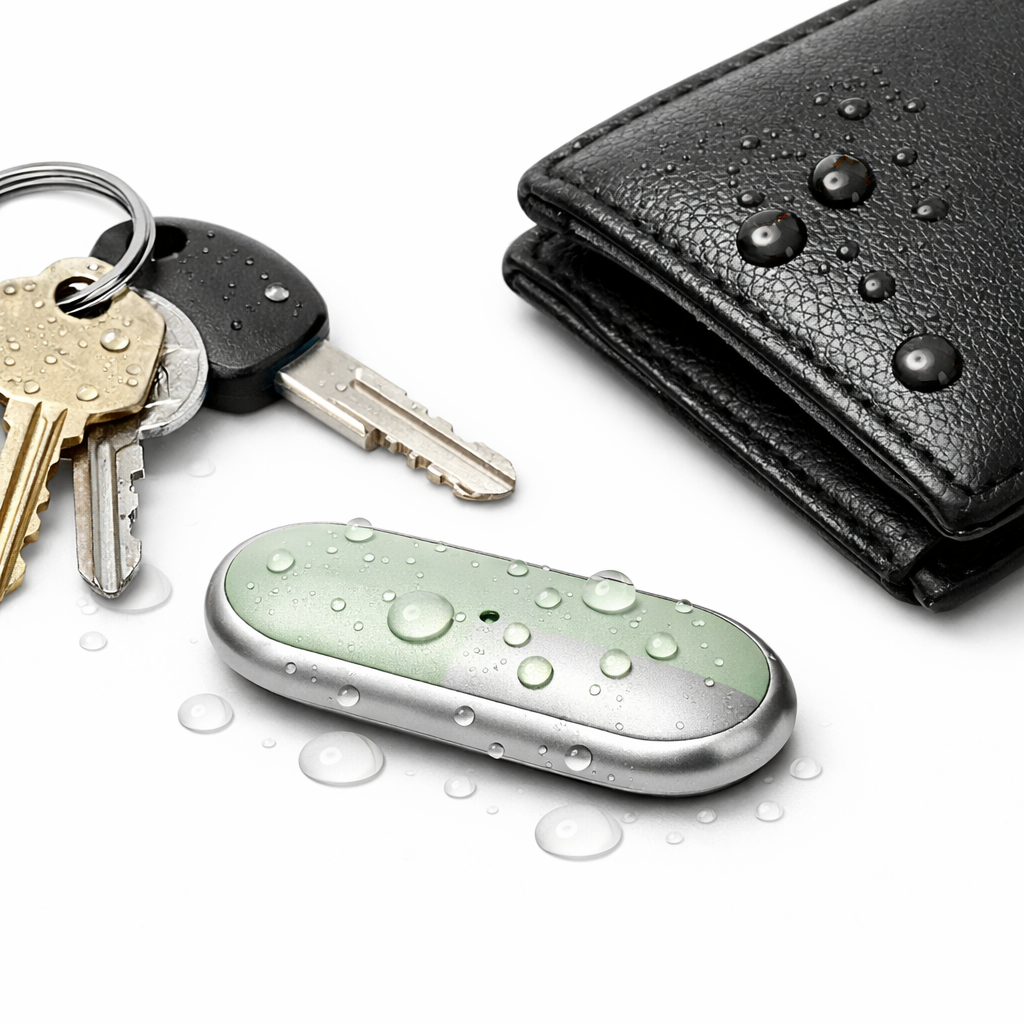
The tracker features a slender, oval design that differentiates it from Apple’s round AirTag. At 1.1 inches wide and 1.8 inches tall, it is slimmer and slightly more elongated. It’s lightweight—just 0.4 ounces including battery—and has a depth of only 0.2 inches. Built to endure the elements, it delivers IP67-rated dust and water resistance, withstanding submersion at depths up to one meter for 30 minutes.
Features & Functionality
One standout addition is a built-in speaker that lets the device chime so you can locate items that are nearby. For those trying to find their phone, pressing the Pixel Tag’s button twice will trigger a ring on the lost device. Users can toggle between three volume settings through Find Hub, with the loudest peaking around 80 decibels.
Unlike AirTag, the Pixel Tag lacks NFC for tap-to-view owner contact information. Instead, when a tag is marked as “Lost”, it uses Google’s massive Android device network—over one billion devices globally—to relay the tag’s location to its owner via Find Hub. Lost tags can share owner details like email, a short message, or a phone number once found. When the tag later reconnects with the owner’s device, it’s automatically marked “found”.
Battery, Compatibility & Extras
Power comes from a replaceable CR2032 coin cell battery, which Google claims should last up to one year under regular use. The Tag works with Android devices running Android 9 or later and pairs quickly using Google’s Fast Pair technology.
Available in silver and pale green, the Pixel Tag can be purchased individually, or as a four-pack for $99.99—bringing down cost per unit if you have several items to track. And for customization, Google has partnered with Bellroy to offer keychain cases in various colors and styles.
This launch pits Google more directly against Apple and Tile in the lost-item tracking space. While its sleek design, UWB support, and large Android network are strong points, the omission of NFC leaves a gap in finding convenience that rivals currently fill.
Why this matters: With many users already tied into Android ecosystems, Pixel Tag gives them a first-party option that matches many of AirTag’s top features. Still, what people will really judge is how it performs in real-world scenarios—especially regarding accuracy, durability, and the ability to locate tags through crowdsourced networks. How well it fills the gap left by the missing NFC support will be a key metric to watch.