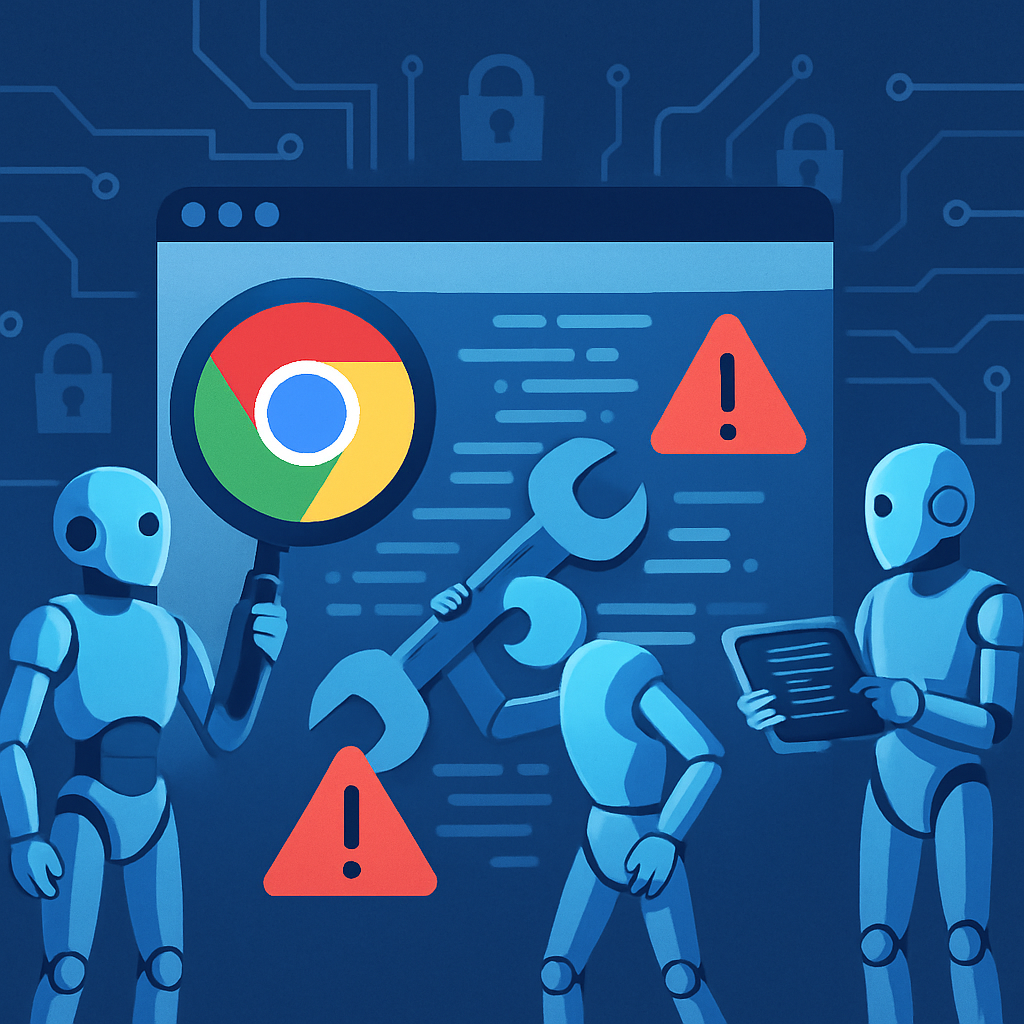
Google has significantly enhanced the security of its Chrome browser by deploying advanced artificial intelligence (AI) agents throughout the software development lifecycle. These AI systems have successfully identified and rectified 1,072 security vulnerabilities, marking a substantial advancement in proactive cybersecurity measures.
Traditionally, Google’s AI tools were primarily utilized for specific tasks such as fuzz testing. However, the company has now expanded their role to encompass a comprehensive analysis of the entire Chromium codebase. This broader application enables the AI agents to detect a wider array of potential security flaws, including those that may have been overlooked in previous assessments.
A notable achievement of this AI-driven approach was the discovery of a longstanding sandbox escape vulnerability that had been present in the Chrome codebase for over 13 years. This particular flaw could have allowed a compromised renderer process to bypass sandbox restrictions, potentially granting unauthorized access to local files. The identification and remediation of such a deep-seated issue underscore the effectiveness of integrating AI into the security review process.
To facilitate this enhanced security analysis, Google has developed a specialized agent framework that incorporates models like Gemini. This framework is equipped with tailored tools, internal knowledge bases, and stringent guardrails designed specifically for secure code analysis. By leveraging multiple sources of context—including the browser’s Git history, previously disclosed Common Vulnerabilities and Exposures (CVEs), security documentation, and component-specific SECURITY.md files—the AI agents gain a comprehensive understanding of trust boundaries, expected behaviors, and threat models pertinent to individual Chrome components.
In addition to identifying vulnerabilities, Google has introduced “critic” agents that independently review reported bugs and proposed fixes. This multi-agent system aims to reduce false positives and enhance the quality of remediation suggestions before they reach human developers. Such automation streamlines the vulnerability triage process, which traditionally could take anywhere from 5 to over 30 minutes per report. The automated pipeline now efficiently filters out duplicate and invalid reports, verifies proofs of concept, reproduces flaws across affected platforms, assigns severity ratings, adds relevant metadata, and routes bugs to the appropriate developer or team. This optimization saves developers hundreds of hours each month, allowing them to focus on more complex security investigations and the development of robust mitigations.
For the remediation phase, AI fixing agents generate multiple candidate patches, which are then evaluated by critic agents for correctness, adherence to coding standards, and compatibility with Chromium conventions. Test-writing agents further contribute by creating and validating regression tests across Chrome’s supported operating systems and configurations. Tools from DeepMind and Project Zero, including Big Sleep and CodeMender, have been integrated into Chrome’s continuous integration environment. These systems operate continuously, running every 24 hours in response to code changes. In May alone, these tools prevented more than 20 vulnerabilities from reaching production, including one critical severity issue.
Google is also addressing the “patch gap,” the interval between a public source-code fix and its deployment to users. The company aims to shift towards releasing security updates twice a week and is researching dynamic patching technology that could allow certain Chrome processes to be updated without requiring a full browser restart. In addition to AI-driven bug discovery, Chrome continues to invest in memory safety protections, such as hardened C++ defenses, adoption of std::span, heap hardening, and increased use of Rust for security-sensitive components.
The integration of AI agents into Chrome’s security processes represents a significant leap forward in proactive vulnerability management. By automating the detection, triage, and remediation of security flaws, Google not only enhances the robustness of its browser but also sets a precedent for the broader tech industry. This approach underscores the potential of AI to transform cybersecurity practices, making software more secure and resilient against emerging threats.