At its 2026 Android Dev Summit, Google officially revealed that “detachables” are the next device category under its Googlebook lineup. These devices will join current clamshells and 2-in-1 convertibles in the expanding range of large-screen ChromeOS hardware. The move came during the developer keynote, where Google noted that its product portfolio “spans across large screen form factors from clamshells, convertibles, and soon detachables.”
Where Googlebook Stands Now
Googlebook launched with a handful of models: four of the five early devices are standard clamshell laptops, with one convertible in the mix. That convertible offers traditional laptop, tent, and tablet modes. Notably, however, ChromeOS homescreen components — including the Overview, app tray, and desktop — remain fixed to landscape orientation. Full-screen applications can rotate to portrait on tablets, but essential system UI doesn’t yet. This highlights remaining work before Google delivers fully featured detachable devices.
First Detachable From Lenovo
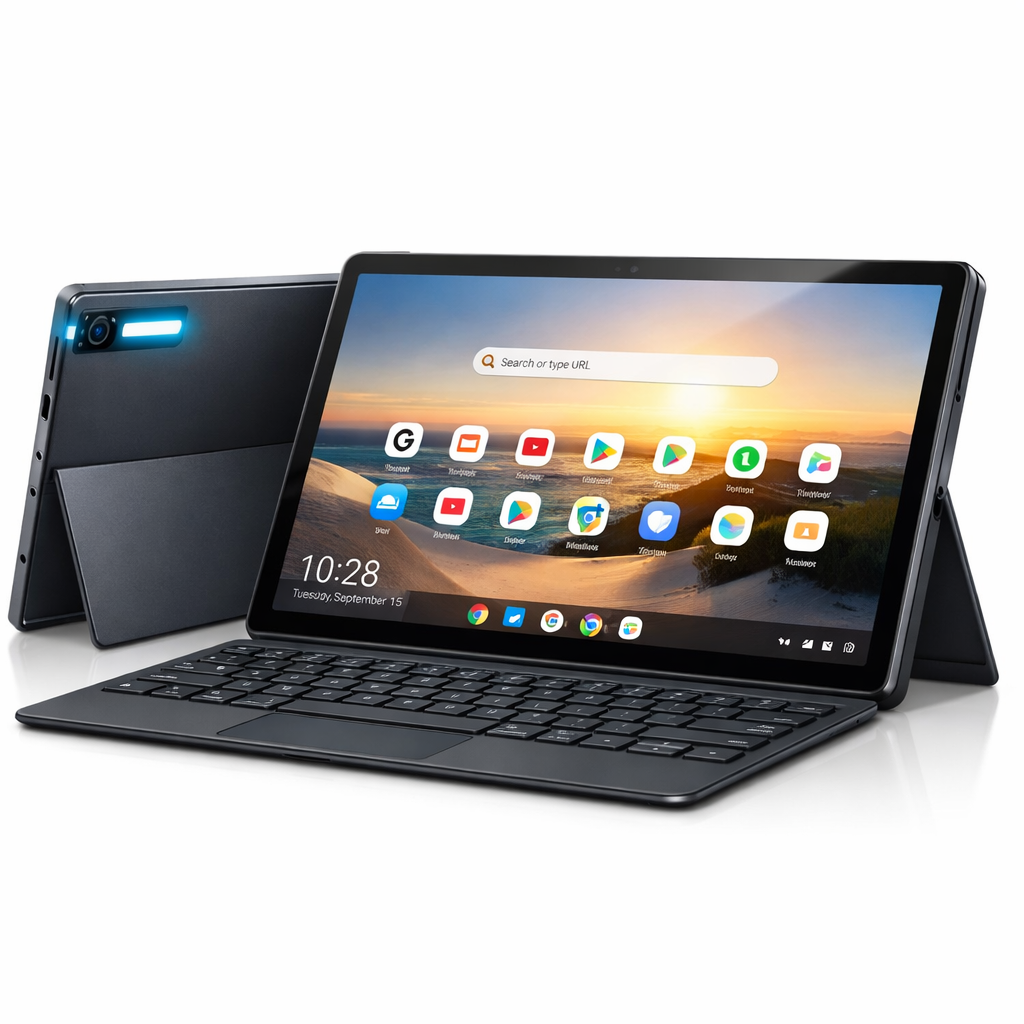
Hints from earlier leaks point toward Lenovo as the maker of the first Googlebook detachable. That tablet will include a detachable keyboard and kickstand, and a Glowbar — an LED feature by the camera — is expected. In those leaks, it appeared alongside a smaller laptop than Googlebook’s current 15-inch model, suggesting Google plans to target different size brackets with the detachable line.
With the arrival of Googlebook OS on tablet hardware, Google is planting the flag for a more desktop-style experience even on slate devices. While Android remains in use on standard tablets, ChromeOS is likely to take precedence on higher-end models with large screens.
Why this matters: The shift to include detachables signals Google’s strategy to directly compete with Microsoft’s Surface series and Apple’s iPad Pro line — both of which thrive in the detachable category. ChromeOS gaining first-party hardware that integrates keyboard and stand modularity could blur lines between tablet and laptop even more.