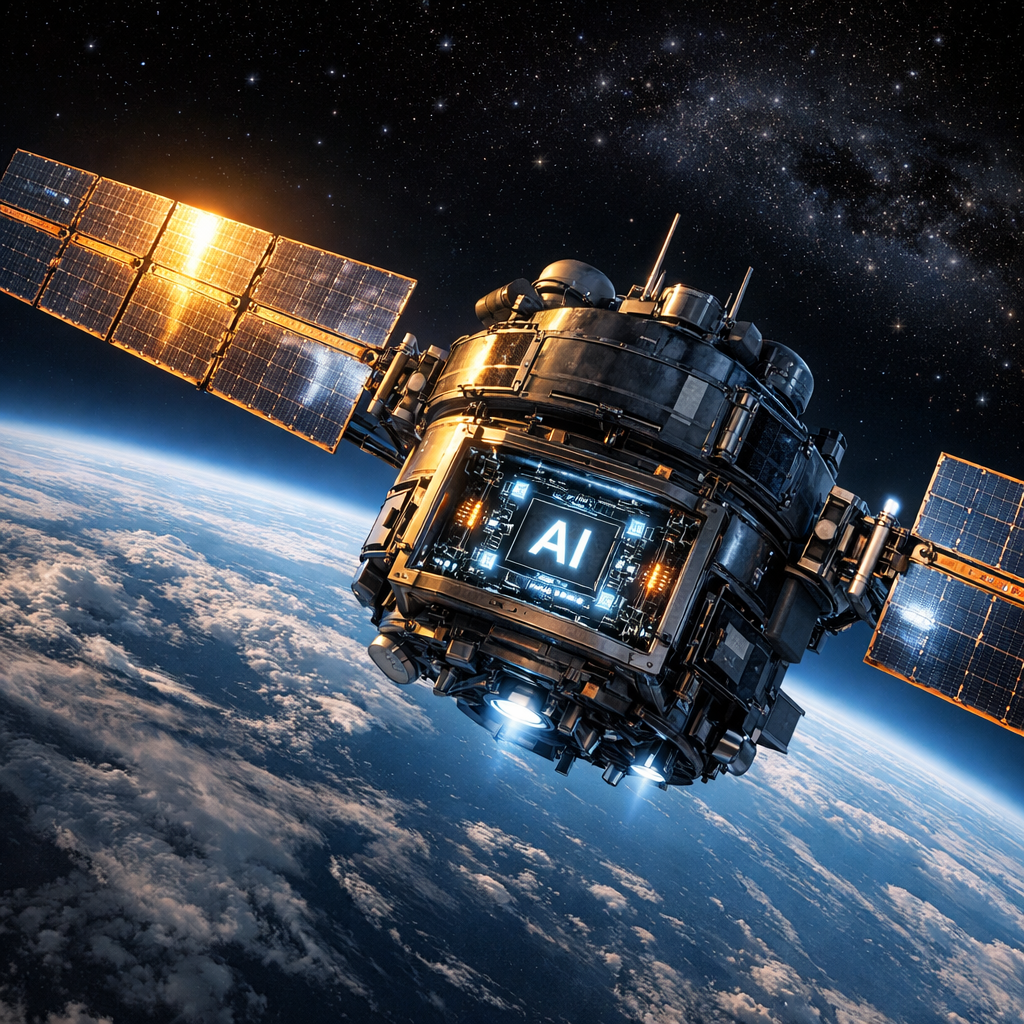
Google’s first satellite under its Suncatcher project has officially begun operations in orbit. The spacecraft, launched earlier in October aboard a SpaceX Falcon 9 rocket along with more than 100 other satellites, now hosts a single Google tensor processing unit (TPU). While it produces up to 1 kilowatt of electrical power, the TPU can only run for about twenty minutes at a time due to high power demands—making space-to-ground data handling especially challenging.
Over a three-week commissioning period, engineers tested various subsystems aboard the satellite. Once those checks were complete, they activated a language model called Gemma 4, preloaded onto the satellite. Their first command was to compose a haiku about life in space. The result:
“Blue marble below
Data streams in silent grace
Starlight feeds my core.”
In addition to poetic prompts, the team instructed the satellite to assess its surrounding orbital conditions. Everything so far is performing normally, according to project spokespeople. But the tests are far from purely symbolic—the mission aims to understand how TPUs manage thermal and radiation stress beyond Earth. Radiation, for instance, can cause random bit flips in memory, potentially compromising data. In lab experiments, these issues seemed minor for inference tasks, though more pronounced for training models. Now Google must observe how this hardware behaves in actual space environments.
Next Steps: From Single Node to Starfleet
If this inaugural satellite meets expectations, Google plans to launch two more in 2027. Those will incorporate upgrades: more power generation and inter-satellite optical communication links, which would allow different satellites to coordinate and share workloads.
Google’s Starcloud vision positions it among a small but growing group working on space-based data centers. SpaceX’s future data centers are expected to use similar laser link technology but will orbit too far apart to offer the same kind of tightly coupled distributed systems that Starcloud aspires to. Meanwhile, projects like Cowboy Space and others are also pursuing inference at the satellite level without networking multiple units closely.
Broader Implications
These orbital data centers are a long-term bet. Suncatcher is aimed at building infrastructure that becomes cost-competitive during the 2030s. Part of the equation is leveraging heavy-lift rockets like Starship, which are still under development and whose repeatable, rapid reusability is crucial. A recent peer-reviewed analysis from within Google estimated SpaceX may need roughly 1,800 Starship launches to reach learning-driven cost reductions comparable to what was achieved with earlier launch vehicles.
In the short run, the space data center effort comes amid pressure on Google’s core business. Alphabet’s stock has dropped recently after reporting that integrating AI into search is weighing on ad revenue growth. That backdrop makes Suncatcher both a gamble and a potential hedge: investing in infrastructure that might be essential for the next wave of computing.
What this means: Google has shown it can place inference-capable hardware in orbit, keep it running, and even have it respond with poetic flair. The real test is whether these tiny bursts of computation translate to reliable, scalable operations in space. The coming 2027 launches will be critical. If they succeed, they’ll mark a shift in how we think about computing infrastructure—one that stretches from Earth’s surface into the final frontier.