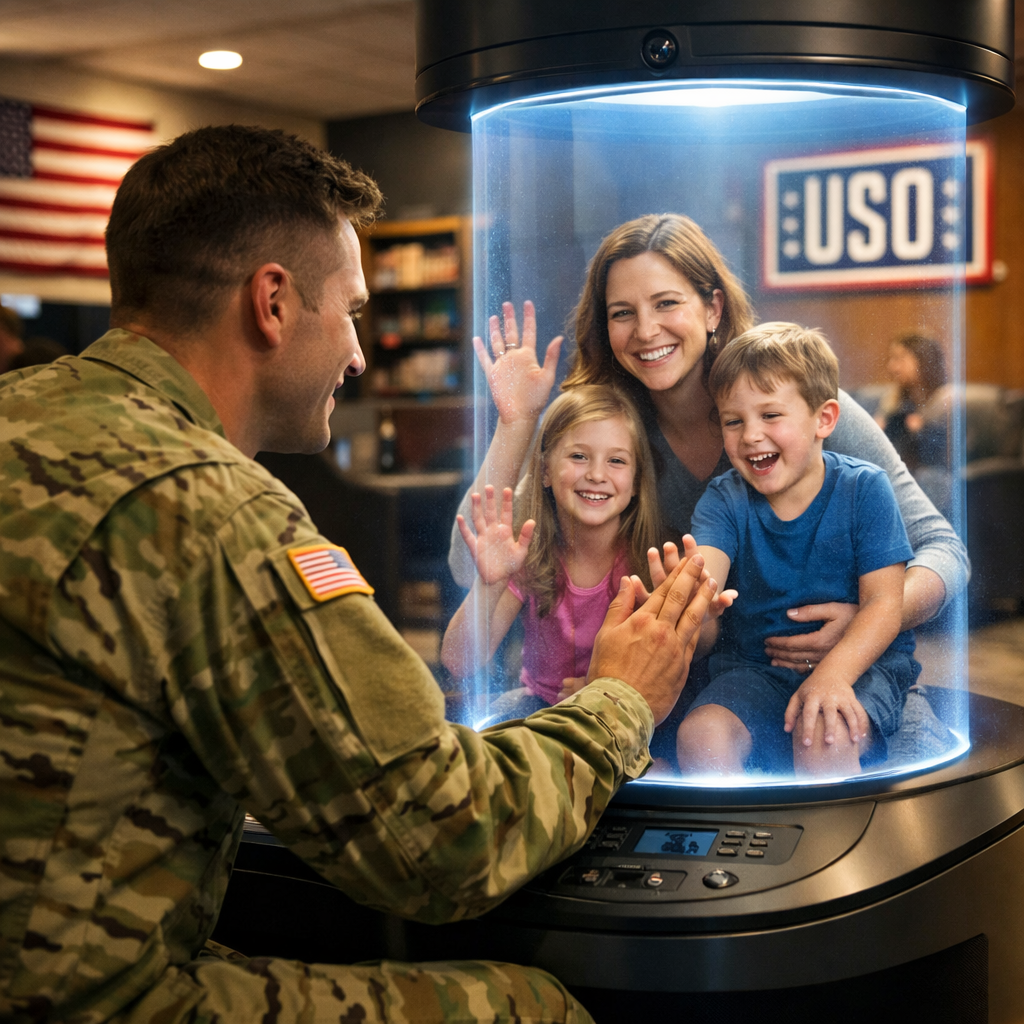
Google is widening the rollout of Beam—its advanced 3D video communication tech—by bringing it to military families through a new partnership with the United Service Organizations (USO). The company is installing the hardware, known as the HP Dimension with Google Beam, at 20 USO locations globally to help service members and their loved ones feel more connected.
What’s Changing and Where
Previously, Google Beam (initially dubbed Project Starline) was available at Google’s internal offices and select co-working spaces through a collaboration with HP. Now, under this latest expansion, Beam booths are being added to USO sites already in Poland and Texas, plus two new sites in Germany and Texas—specifically USO locations in Grafenwöhr, Germany, and Fort Hood, Texas. These booths allow military families to interact in three dimensions, making remote conversations feel far more lifelike than traditional video calls.
Stories from the Field
To showcase the impact, Google has teamed up with filmmaker and veteran Kyle Hausmann-Stokes on a docuseries that follows four families in Fort Bliss, Texas. The series explores how these 3D booths are altering long-distance connection beyond a standard video frame. The episodes are now available on Google’s YouTube channel.
This expansion marks Google Beam’s latest step as it moves from exclusive corporate use toward broader public access through strategic partnerships. While HP’s co-working hub rollout was the first opening beyond Google’s own campuses, the USO agreement moves the tech into a humanitarian and family support space.
This isn’t just a technology deployment—it reflects growing demand for immersive video communication tools among groups separated by geography. Military families, especially, often face tough breaks from loved ones. Having access to 3D connection could ease some of that burden by making remote presence feel more genuine.
Looking ahead, how Beam performs in these USO sites will be telling—will users embrace the 3D format, and will it become standard for remote communication? If this expansion succeeds, it might pave the way for Beam booths in other support settings, like hospitals or elder care, wherever people are separated from those they care about.