General Motors is reversing course with its 2027 Chevrolet Silverado and GMC Sierra models, reintroducing Android Auto and Apple CarPlay—but with a twist. Rather than fully reverting to older systems, GM is blending projection tech with its native infotainment experience, aiming to strike a balance that addresses long-standing user complaints while keeping its long-term strategic goals intact.
What’s Changing: Windowed Projection Mode
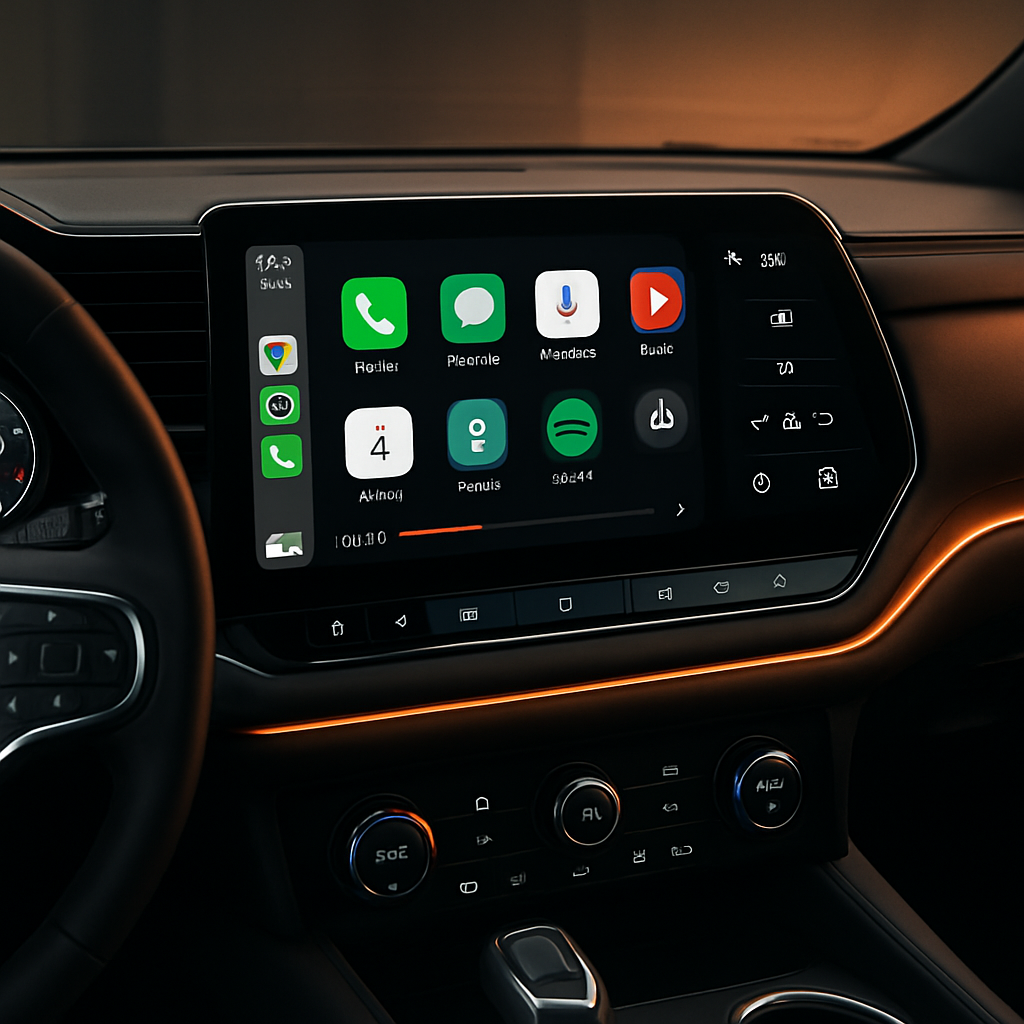
Starting with the 2027 Silverado and Sierra, GM will support Android Auto and CarPlay in a “windowed mode.” Instead of projecting the phone’s interface over the full dashboard display, the projection will occupy just a portion of the screen. Meanwhile, other essential controls native to GM’s infotainment—such as climate, media, and vehicle settings—remain visible around the projection frame. The two trucks, built with robust physical controls, become testing grounds for this hybrid UI. Features like proactive placement of controls (e.g. garage door opener, call controls) are also being added to improve usability.
Moving Between Old and New
GM’s transition began in 2023 when it announced plans to phase out traditional phone projection (Android Auto and CarPlay) in favor of its own Android Automotive/Google-built-in system. That stance has been met with resistance; many customers favored having projection support, especially for certain apps or familiarity. Gasoline-powered GM vehicles have largely retained projection in some form, but electric models—including the latest Chevrolet Bolt—did not. The introduction of the windowed mode suggests GM is trying to give owners a choice without fully reversing its earlier move.
The Big Picture: Strategy and Limitations
GM describes this blended projection approach as the “sweet spot.” According to execs overseeing Google built-in systems and projection integration, this design aims to let customers use projection when they want, or stick with native functions when they prefer—or even split the screen without hunting through menus. Still, there’s no word yet on whether other GM models, especially EVs, will get this windowed mode. For now, EVs remain without projection support, distancing them from gas-powered siblings.
While GM’s hybrid UI could soothe disgruntled customers, it also maintains the company’s vision of reducing dependence on external platforms. It preserves space for its own software ecosystem, allowing GM to surface native controls persistently rather than letting projection entirely take over the UI. But this middle path poses technical and user experience challenges: balancing seamless integration of phone apps while ensuring essential vehicle controls remain intuitively accessible.
Given that software determines how drivers interact with their vehicles, this shift could reshape expectations for infotainment systems across the automotive industry. If GM successfully deploys this hybrid model in more vehicle lines, projection may become a configurable option rather than the default in many cars. On the other hand, if EVs stay excluded, the divide between gas and electric GM vehicles could widen—not just in powertrain, but in in-car experience. This is a test case worth watching closely, especially for competitors also navigating that tension between “native vs projection” systems.