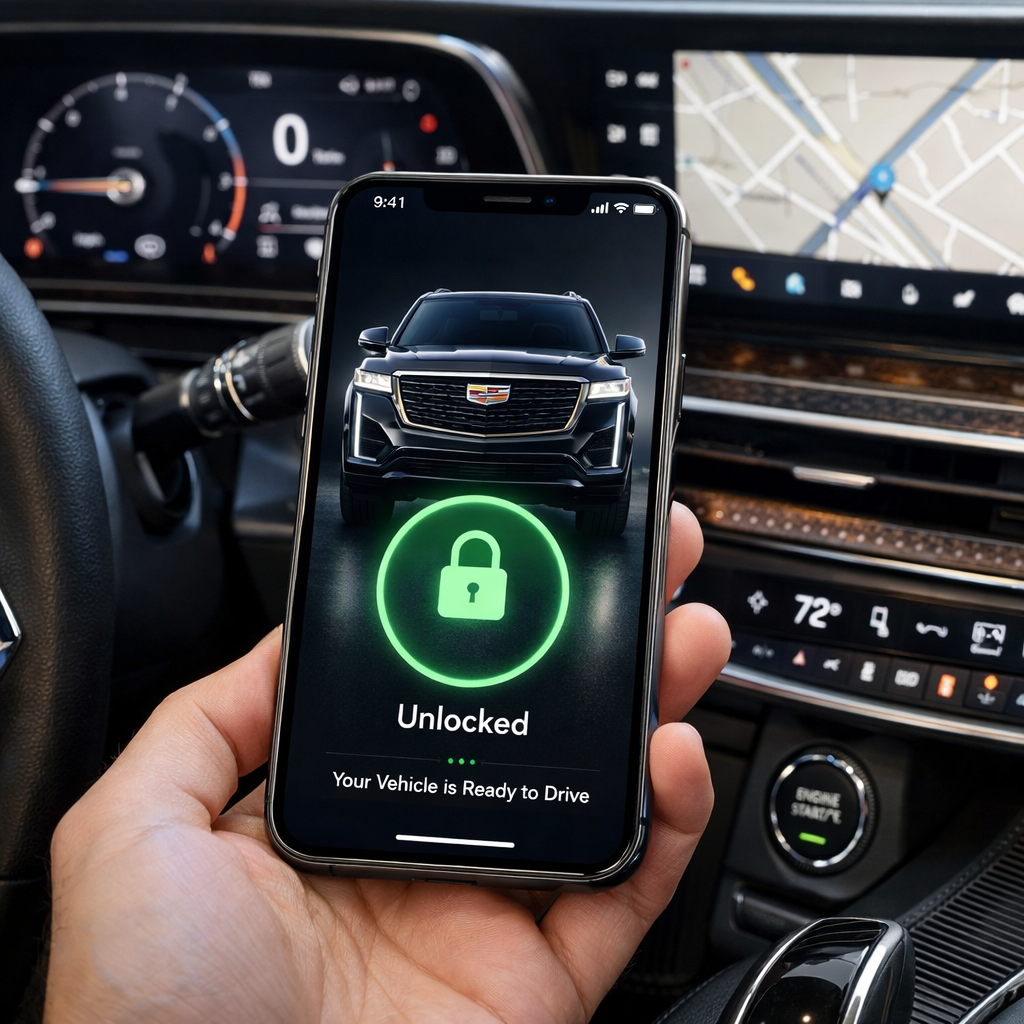
GM is rolling out Apple Wallet support for digital car keys across nine of its vehicles spanning Cadillac, Chevrolet, and GMC brands. After teasing the feature in June 2025, the automaker began a limited launch in late September and October, with a broader rollout expected by December. The upgrade allows drivers to store a digital key in Apple Wallet, replacing the need for a physical key fob.
Vehicles Receiving Support
Cadillac kicks off the expansion with several models now or soon to be compatible: the 2027 Vistiq, the Optiq from 2026–2027, the Lyriq from the 2025–2027 range, the 2027 Escalade, and the electrified Escalade IQ/IQL. Chevrolet joins in with the Suburban and Tahoe models covering the 2026–2027 years, while GMC adds the 2026–2027 Yukon and Yukon XL to the list.
Timeline and Future Plans
The initiative launches this fall, with support already active for select Cadillac vehicles and scheduled to extend to the Chevrolet and GMC offerings before the end of December. GM notes it will keep expanding Apple Wallet car key compatibility to more vehicles over time. Owners will be notified of updates when their vehicle becomes eligible via the “What’s New” section of GM’s smartphone app.
This move is one of the largest automotive digital key rollouts in recent memory, bridging luxury and mainstream brands under GM’s lineup. It builds on increasing momentum in vehicle tech, where manufacturers are embracing software-driven convenience features to enhance ownership and integrate with broader mobile ecosystems.
What’s changing for drivers: once a model is supported, owners can add a digital key to Apple Wallet on their iPhone (and presumably compatible Apple Watch), allowing keyless access and engine start via NFC or Bluetooth, eliminating reliance on traditional key fobs. Customers will benefit from quick access, reduced risk of losing physical keys, and greater integration with other Apple services.
Challenges and considerations: Digital keys require appropriate hardware in the vehicle—including sensors for secure NFC or BLE communication—as well as software updates. Users should check compatibility for their specific trim or region. Moreover, vehicle security and data privacy are always critical, so the implementation must protect against unauthorized access or hacking.
This marks a major step for GM into next-gen vehicle convenience. By adding support to both high-end and mass-market models, it signals that digital car keys are becoming a baseline feature. Drivers with Cadillac, Chevrolet, or GMC models should watch for the December rollout in their app; those outside GM should see whether rivals follow suit. As automotive tech tilts ever more toward software, this could become a decisive factor in consumer choice.