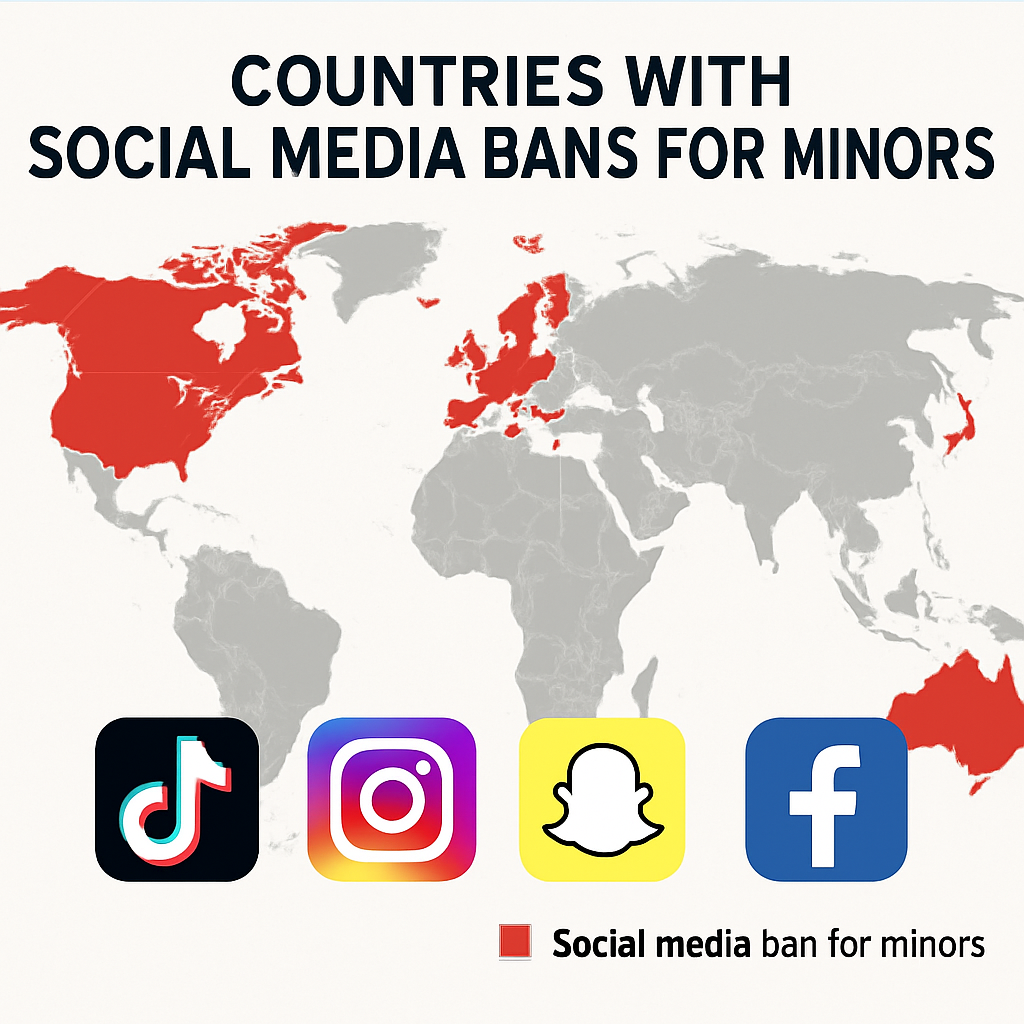
Countries worldwide are increasingly implementing or considering bans on social media access for minors, aiming to protect young users from online risks such as cyberbullying, addiction, and exposure to harmful content.
Australia Leads the Way
In December 2025, Australia became the first nation to prohibit children under 16 from using major social media platforms, including Facebook, Instagram, Snapchat, Threads, TikTok, X, YouTube, Reddit, Twitch, and Kick. Notably, WhatsApp and YouTube Kids were exempted. Social media companies are required to employ multiple verification methods to enforce this ban, with non-compliance potentially resulting in fines up to $49.5 million AUD ($34.4 million USD).
Global Adoption of Similar Measures
Following Australia’s lead, several countries have introduced or are drafting similar legislation:
- Austria: Announced plans in March to ban social media for children up to 14 years old, with draft legislation expected by June.
- Canada: Introduced a digital safety bill in June aiming to ban social media for those under 16, allowing platforms to avoid the ban if they demonstrate protective policies for young users. The bill may take up to a year to pass.
- Denmark: Set to ban social media for children under 15, with potential implementation by mid-2026. The government is also developing a “digital evidence” app for age verification.
- France: Passed a bill in January to ban social media for children under 15, pending Senate approval and a final vote in the lower house.
- Germany: In February, discussions began on a proposal to bar children under 16 from using social media, though consensus has yet to be reached.
- Greece: Announced in April plans to ban social media access for children under 15 starting January 2027, citing concerns over rising anxiety and sleep problems among youth.
- Indonesia: In early March, declared a ban on social media for children under 16, targeting platforms like YouTube, TikTok, Facebook, Instagram, Threads, X, Bigo Live, and Roblox.
- Malaysia: Began enforcing a ban on June 1, 2026, prohibiting children under 16 from creating social media accounts on platforms with over eight million users, including Facebook, Instagram, TikTok, and YouTube.
- Poland: Drafting legislation to ban social media for children under 15, as reported in February.
- Slovenia: Announced in February plans to prohibit children under 15 from accessing social media, focusing on platforms like TikTok, Snapchat, and Instagram.
- Spain: In February, the Prime Minister announced plans to ban social media for children under 16, pending parliamentary approval.
- Turkey: In April, the parliament passed a bill to restrict social media access for children under 15, awaiting presidential approval to become law.
- United Kingdom: Considering a ban on social media for children under 16, with plans to consult various stakeholders to assess the effectiveness of such a measure.
These initiatives reflect a growing global effort to safeguard minors online. However, they also raise concerns about privacy, particularly regarding invasive age verification methods and potential government overreach. Critics argue that such bans may be ineffective and overlook the realities of younger generations’ online engagement. As more countries adopt these measures, the balance between protecting children and preserving digital freedoms remains a critical discussion point.
Source: TechCrunch