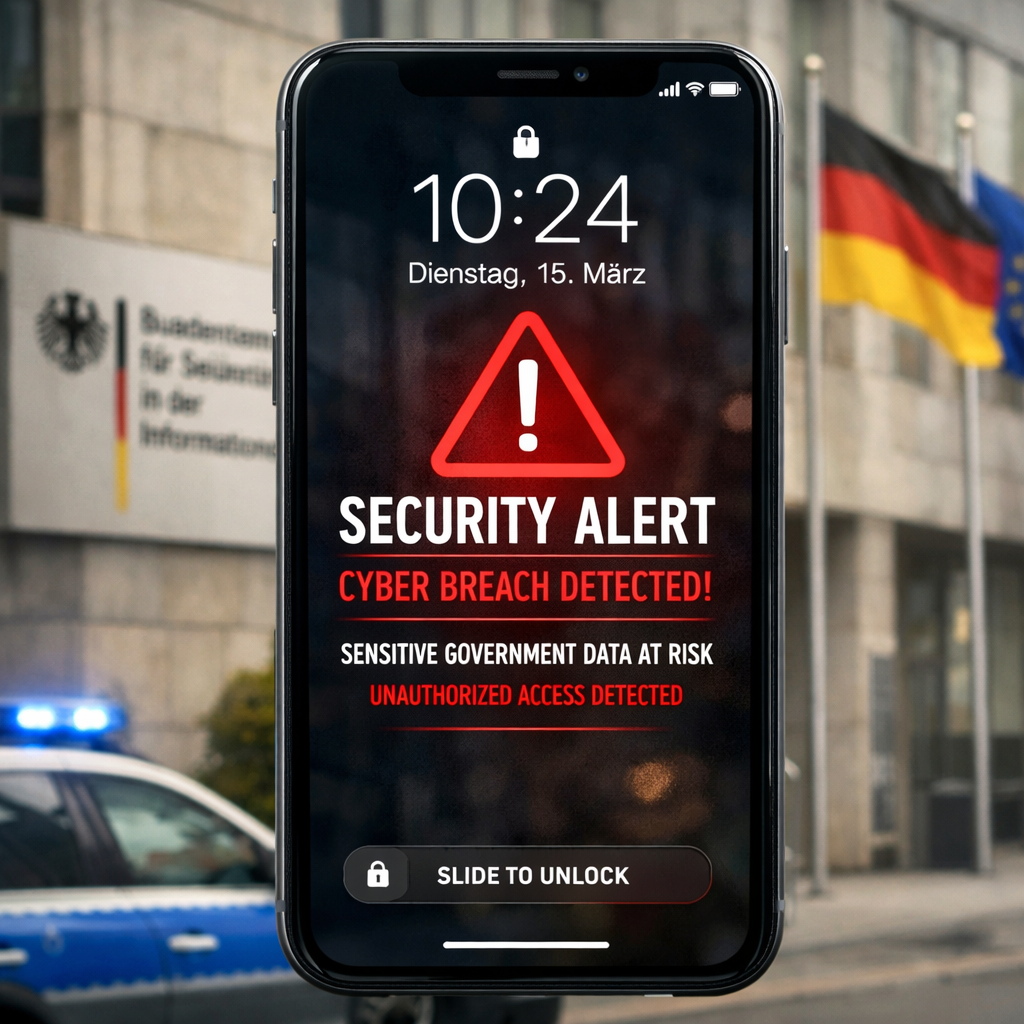
Germany’s digital minister and national cybersecurity agency have issued warnings to senior federal officials that their iPhones may have been exposed to targeted spyware attacks. The alerts stem from iPhones of members of the Bundestag and federal departments, following messages from Apple that some devices “may have been compromised with so-called spyware.” The first such notices arrived on October 29, 2026, with the government urging recipients to assume they’ve been compromised as a precaution. Apple’s alerts do not confirm breaches, but recommend precautions such as enabling Lockdown Mode.
What We Know
According to statements from Karsten Wildberger, Germany’s digital minister, Apple dispatched threat notifications to certain federal ministers. These notices warned that some officials’ smartphones could be targeted by spyware. Although Apple acted quickly, it is unclear how long the threat activity had been ongoing or what triggered Apple’s detection. Germany’s Bundesamt für Sicherheit in der Informationstechnik (BSI) has advised that all affected parties treat their devices as compromised—even though the alerts themselves don’t establish that hacking succeeded.
Apple’s notification arrived via iPhone lock screen alerts and through Settings. Users are also notified by email and when signing into their Apple ID. In its documentation, Apple classifies these warnings under “mercenary spyware attacks,” describing them as far more advanced than typical cybercrime threats. While it cannot guarantee absolute certainty, the company labels these as “high-confidence” alerts. Since 2021, Apple has sent such alerts to users in over 150 countries.
Unspecified Scope, Unknown Actors
No data has been released regarding how many German officials were affected, nor has there been confirmation of who is behind the spyware attack. Minister Wildberger declined to reveal steps taken beyond noting that Apple responded promptly. The BSI offered no further details on scope or source.
While Apple’s alert system is designed to flag individuals rather than large populations, the intrusion of federal-level officials raises substantial concerns about state-level security. In Germany’s past, even the government admitted to use of Pegasus spyware, illustrating how surveillance tools have crossed into political realms.
Why This Matters
Germany is one of many nations receiving these types of threat notifications in recent years—Apple has dispatched warnings to individuals across 110 countries as recently as August 2026. These are meant to flag specifically targeted attacks, often against politicians, human rights defenders, journalists, or diplomats. The tools involved are usually sophisticated enough that traditional malware countermeasures may not suffice.
Common advice from Apple includes keeping iOS up-to-date, using strong passwords and two-factor authentication, and enabling Lockdown Mode to reduce attack surface. The government’s instruction for officials to assume compromise suggests urgency behind such advice.
It remains uncertain how effective these alerts are in preventing intrusion, and how many targets go undetected or unnotified. Apple does not disclose attackers or precise vulnerabilities triggering alerts. Nonetheless, seeing high level targets in Germany suggests that even well protected officials are not immune.
What this reveals is that surveillance and cyber-threat tools once seen as tools of oppressive regimes or intelligence agencies are now relevant to democratic governments themselves. The risk landscape is increasingly personal and individualized. Watch how Germany responds—not just in communications, but in infrastructure, transparency, and legal constraints around digital surveillance.