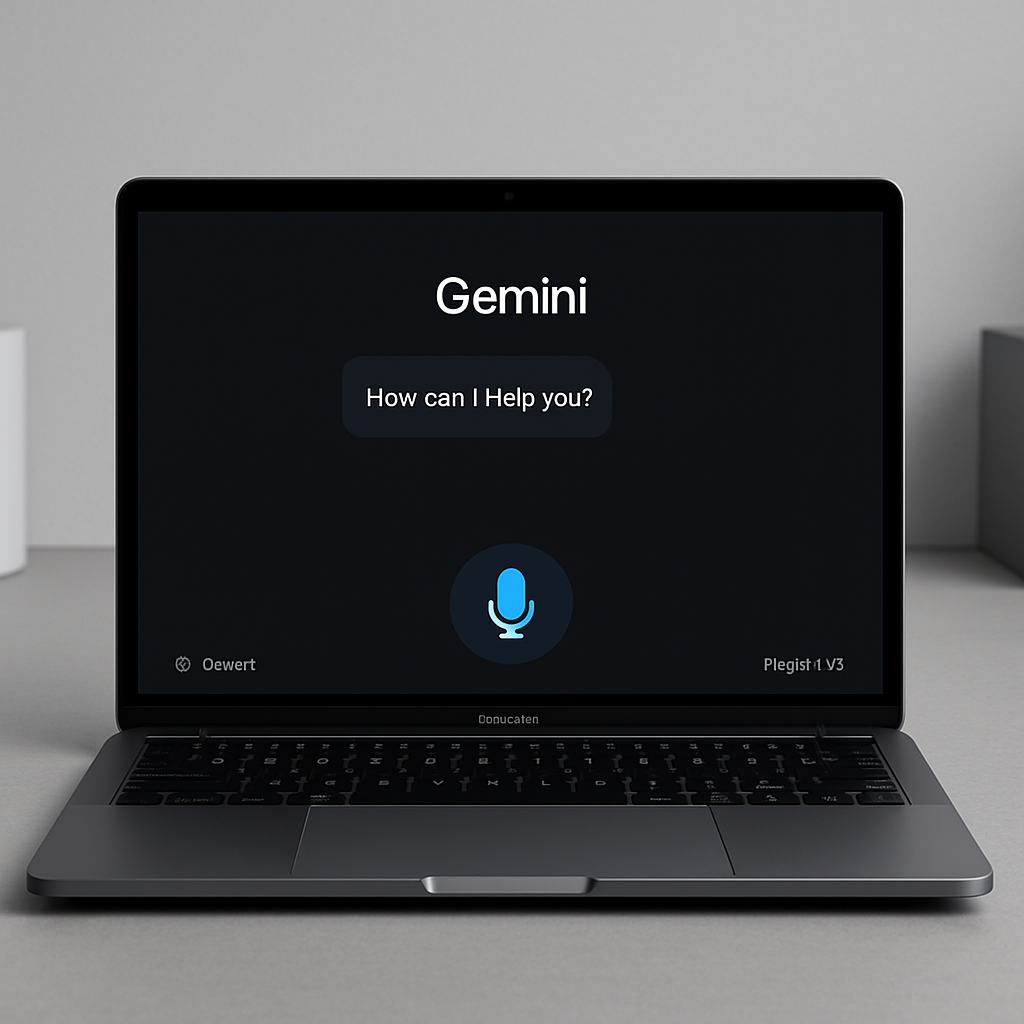
Google has introduced a significant enhancement to its Gemini AI assistant on macOS: a voice-first interaction mode designed to streamline user workflows. This new feature allows users to dictate text directly into any application, with Gemini transcribing speech in real-time and intelligently removing verbal fillers like “um” and “ah.” The result is polished text inserted seamlessly at the cursor’s location, minimizing the need for manual editing.
Beyond basic dictation, Gemini’s voice mode offers screen-aware reasoning capabilities. By analyzing the content displayed on the screen, Gemini can perform complex tasks such as summarizing highlighted notes into concise executive summaries, which are then inserted directly into the active document. This functionality aims to enhance productivity by reducing the steps required to process and integrate information.
Activating Gemini’s voice mode is straightforward: users can press and hold the Function (Fn) key to initiate voice input. This method ensures that the feature is easily accessible without disrupting the user’s workflow. Additionally, Gemini’s voice mode supports multiple languages, including English, Arabic, Chinese, French, German, Hindi, Italian, Japanese, Korean, and Spanish, catering to a diverse user base.
Gemini’s voice mode is available on Macs running macOS 15 and later. Users can download the Gemini app for free, with subscription plans offering increased usage limits for those requiring more extensive access. The introduction of this feature marks a significant step in making AI assistance more intuitive and integrated into daily tasks.
By moving beyond traditional chat interfaces, Gemini’s voice mode represents a shift towards more natural and efficient human-computer interactions. This development not only enhances user productivity but also sets a new standard for AI integration in desktop environments. As voice-based AI continues to evolve, we can anticipate further innovations that will redefine how we interact with our devices.