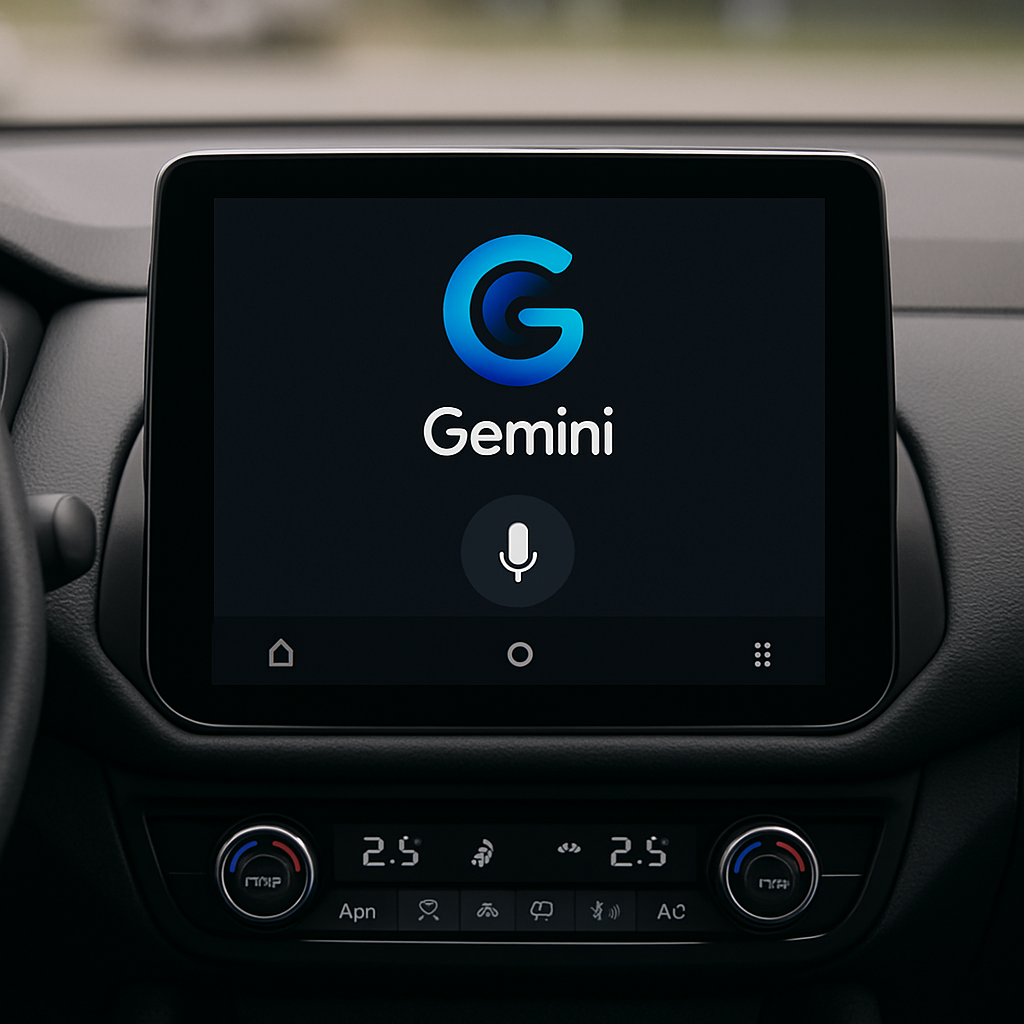
Google’s advanced AI assistant, Gemini, is now being deployed to vehicles equipped with Android Automotive, marking a significant enhancement in in-car voice control capabilities. This rollout follows its earlier introduction to Android Auto and is now extending to vehicles with the integrated Android Automotive system.
Unlike Android Auto, which relies on a connected smartphone, Android Automotive is a standalone operating system embedded directly into the vehicle’s hardware. This integration allows for deeper control over vehicle functions. With Gemini’s introduction, drivers can now manage various in-car features through voice commands, including adjusting climate settings, controlling heated seats, and operating windshield wipers. The extent of these controls may vary depending on the vehicle manufacturer’s implementation.
For instance, in Volvo’s EX30 model, drivers have reported receiving notifications prompting them to activate Gemini. This AI assistant is designed to understand and process natural language commands more effectively than its predecessor, Google Assistant. Users have noted that Gemini can interpret less specific commands, such as “set the A/C to 100% power,” and adjust the temperature and fan speed accordingly, enhancing the overall user experience.
To activate Gemini, eligible vehicles will display a prompt labeled “Start using Gemini,” introducing it as “your AI assistant for the car.” Drivers who prefer to continue using Google Assistant have the option to dismiss this prompt and retain the previous experience.
As this rollout progresses, more vehicles are expected to receive Gemini integration in the coming weeks, aligning with individual manufacturers’ update schedules. This development signifies a substantial advancement in automotive technology, offering drivers a more intuitive and responsive in-car assistant.
The integration of Gemini into Android Automotive represents a pivotal shift towards more intelligent and user-friendly vehicle interfaces. As AI continues to evolve, we can anticipate even more sophisticated interactions between drivers and their vehicles, potentially transforming the driving experience into a more seamless and personalized journey.