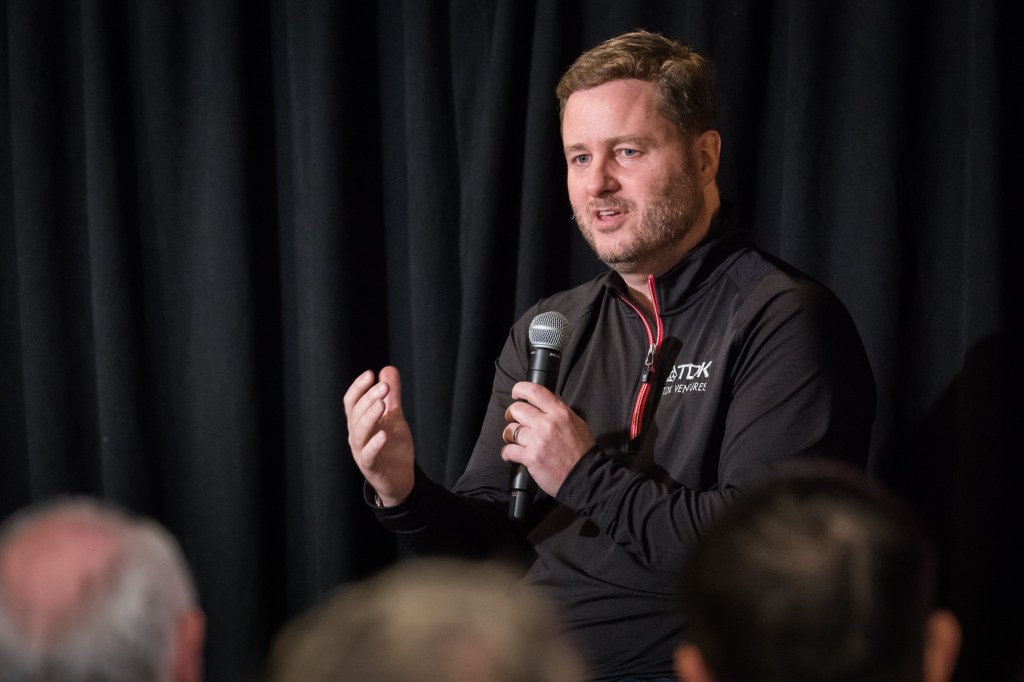
Nicolas Sauvage’s Strategic Focus on AI’s Underappreciated Sectors
Nicolas Sauvage, the visionary founder of TDK Ventures, has consistently demonstrated a knack for identifying and investing in the less glamorous yet crucial facets of artificial intelligence (AI). Since establishing the corporate venture arm of Japanese electronics giant TDK in 2019, Sauvage has been instrumental in managing $500 million across four funds, focusing on areas that, while often overlooked, are essential to the AI ecosystem.
One of the most notable investments under Sauvage’s leadership is in Groq, an AI chip startup that achieved a valuation of $6.9 billion during its latest funding round in the fall of 2025. Groq, founded by Jonathan Ross—a key engineer behind Google’s Tensor Processing Units—specializes in inference processing, a critical component of AI operations. Inference involves the computational tasks required each time an AI model generates a response, making it a cornerstone of AI functionality.
Sauvage’s decision to invest in Groq in 2020, well before the generative AI boom, underscores his foresight. He recognized that, unlike consumer hardware with its market limitations, the demand for efficient inference processing would escalate with the proliferation of AI applications and models. This strategic move highlights his ability to anticipate industry needs and invest accordingly.
The inception of TDK Ventures itself is a testament to Sauvage’s determination and vision. Despite lacking traditional qualifications—being neither Japanese nor based in Tokyo—he successfully pitched the idea of a corporate venture fund to TDK’s leadership. His proposal centered on identifying emerging technologies that could either propel TDK forward or pose potential threats, thereby ensuring the company’s continued relevance and growth.
Under Sauvage’s guidance, TDK Ventures has built a diverse portfolio that includes technologies now gaining traction among venture capitalists. These investments encompass solid-state grid transformers, sodium-ion batteries tailored for data centers, and alternative battery chemistries designed to mitigate the geopolitical risks associated with lithium and cobalt dependencies.
Sauvage’s investment philosophy is rooted in a disciplined approach: identifying potential bottlenecks four years in advance and seeking out founders who are proactively addressing these challenges. This forward-thinking strategy has positioned TDK Ventures at the forefront of technological innovation.
Looking ahead, Sauvage is particularly interested in the realm of physical AI, focusing on specialized robotics designed for specific tasks. For instance, Agility Robotics, a company in TDK Ventures’ portfolio, develops robots dedicated to transporting items within warehouses—a solution to labor shortages in the logistics sector. Similarly, Swiss-based ANYbotics creates ruggedized robots capable of operating in hazardous environments, performing tasks that are unsafe for human workers. The common thread among these investments is a clear, singular purpose: developing robots that excel at one specific, challenging task.
Sauvage is also observing shifts in the computational landscape. While GPUs have traditionally dominated AI model training due to their parallel processing capabilities, and inference chips like those developed by Groq have optimized model responses, he anticipates a resurgence of CPUs. CPUs, known for their flexibility, are well-suited for managing the complex, decision-making processes inherent in AI orchestration. As AI systems become more intricate, the role of CPUs in coordinating various tasks is expected to grow.
Another area capturing Sauvage’s attention is the rapid advancement of AI-assisted hardware prototyping in China. A recent report from Eclipse, a venture firm he follows closely, highlights how Chinese manufacturers are accelerating the design-build-test cycle for physical products through AI integration. This vibe manufacturing approach enables swift iterations, presenting a challenge to Western supply chains that have yet to adopt similar methodologies.
For Sauvage, this trend signals the need for innovation in manufacturing processes. He identifies dexterity as a critical, yet unresolved, issue in physical AI. While AI models are advancing rapidly, the physical agility required to match these capabilities remains elusive. Sauvage believes that entities capable of iterating on physical products as swiftly as software developers iterate on code will gain a significant manufacturing advantage. This perspective informs TDK Ventures’ current investment strategies, positioning the firm to capitalize on the next wave of technological evolution.
In summary, Nicolas Sauvage’s investment approach focuses on the foundational, often overlooked aspects of AI and technology. By identifying and investing in these critical areas, he ensures that TDK Ventures remains a key player in the ever-evolving tech landscape.