Fujifilm’s Instax Wide 400: Expanding Instant Photography Horizons
In an era dominated by digital advancements and artificial intelligence, the allure of analog instant photography endures, offering a tangible and nostalgic experience that digital mediums often lack. Fujifilm’s latest offering, the Instax Wide 400, embraces this sentiment by delivering larger prints and a user-friendly design, catering to both seasoned photographers and newcomers alike.
Design and Build
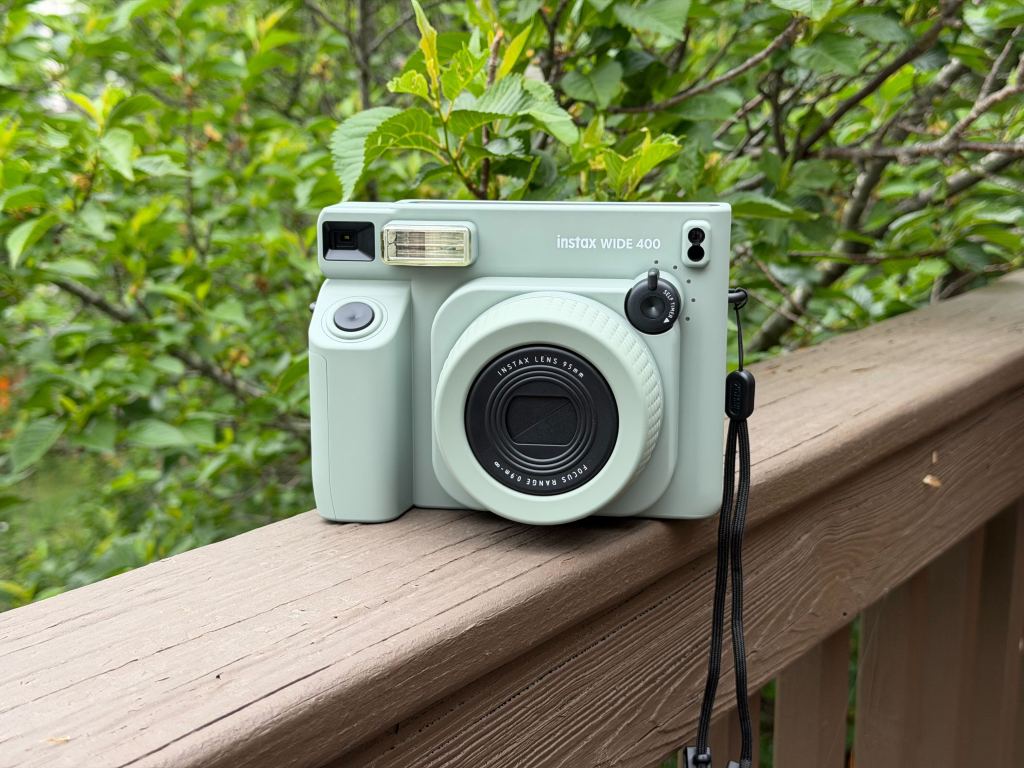
The Instax Wide 400 boasts a minimalist design, emphasizing ease of use without compromising on functionality. Its straightforward interface ensures that users can focus on capturing moments without the distraction of complex settings. The camera’s build is robust yet lightweight, making it suitable for various shooting environments, from casual gatherings to outdoor adventures.
Image Quality and Performance
Equipped with automatic exposure control, the Instax Wide 400 adjusts settings to accommodate different lighting conditions, producing prints with vibrant colors and commendable detail. The larger print size, measuring 62 × 99 mm, allows for more expansive compositions, making it ideal for group photos and scenic landscapes. However, in high-contrast scenes, such as dark subjects against bright backgrounds, the camera may struggle to capture finer details, resulting in some loss of clarity.
User Experience
Operating the Instax Wide 400 is intuitive. To power on, users rotate the lens counterclockwise, activating close-up mode suitable for subjects within 0.9 to three meters. A further rotation switches to landscape mode for subjects beyond three meters. Rotating the lens clockwise powers the camera off. This design eliminates the need for multiple buttons, streamlining the shooting process.
The camera includes a close-up lens attachment that snaps onto the front, enhancing focus for subjects within close range. This feature is particularly useful for capturing detailed shots without blur.
Limitations
While the Instax Wide 400 excels in simplicity and print size, its lack of manual controls may deter users seeking more creative freedom. The absence of adjustable exposure settings means that in less-than-ideal lighting conditions, achieving the desired brightness or contrast can be challenging. Additionally, the camera’s reliance on automatic flash may not always yield optimal results, especially in environments with mixed lighting.
Conclusion
Fujifilm’s Instax Wide 400 is a commendable addition to the instant photography market, offering larger prints and an uncomplicated user experience. Its design caters to those who appreciate the charm of instant photos without the complexities of modern digital cameras. However, photographers seeking greater control over their images may find the camera’s automatic settings limiting. Overall, the Instax Wide 400 stands as a testament to the enduring appeal of instant photography in a digital age.