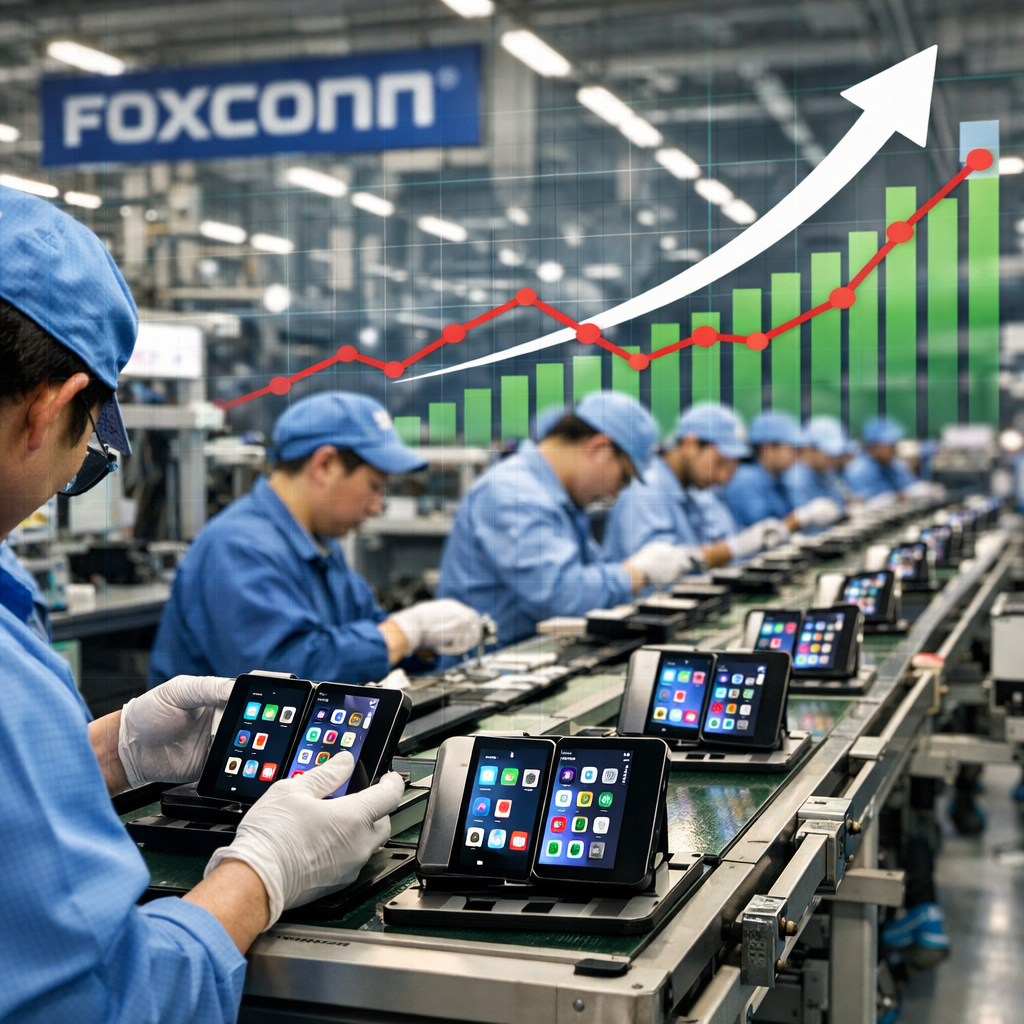
Foxconn, Apple’s foremost manufacturing partner, has reported a substantial 46% year-over-year jump in revenue driven by surging demand for both consumer electronics and server infrastructure. Although Apple is no longer the company’s dominant source of income, it still accounts for approximately 29% of Foxconn’s revenue, chiefly through its consumer electronics operations. Assembly of Apple devices likely contributed significantly to the recent surge.
Bloomberg Sees Strong Demand for iPhone Duo
In a related development, Bloomberg Intelligence projects that Apple will sell around 16 million units of the iPhone Duo model in its first twelve months after launch—far surpassing earlier estimates. Initial forecasts had placed first-year sales at about 9.7 million units, though the target was revised upward to 14 million based on stronger-than-expected demand.
Bloomberg’s forecasts come amid a global smartphone market facing headwinds from an uncertain economic climate. In response, premium-tier devices like the iPhone Duo are expected to play a growing role in driving Apple’s revenue and profitability. With value-conscious consumers tightening budgets, models positioned at the higher end of the spectrum often deliver higher margins for manufacturers like Apple.
Foxconn’s Growing Bet on AI and Servers
Beyond consumer electronics, Foxconn has steadily expanded into server production for AI data centers and cloud storage solutions. That diversification helps explain why Apple no longer dominates Foxconn’s revenue mix. Still, the strong performance of high-demand Apple assemblies remains a key contributor to its overall growth strategy.
This revenue spike reflects both broader product demand and Foxconn’s successful move into infrastructure hardware— a sector expected to see increasing investment from companies building AI capabilities.
Looking ahead, Apple’s success with the iPhone Duo may serve as a bellwether for how well premium devices can drive growth in a saturated and economically cautious smartphone landscape. If Bloomberg’s 16 million unit prediction proves accurate, it could mark one of Apple’s more successful product launches of recent years.