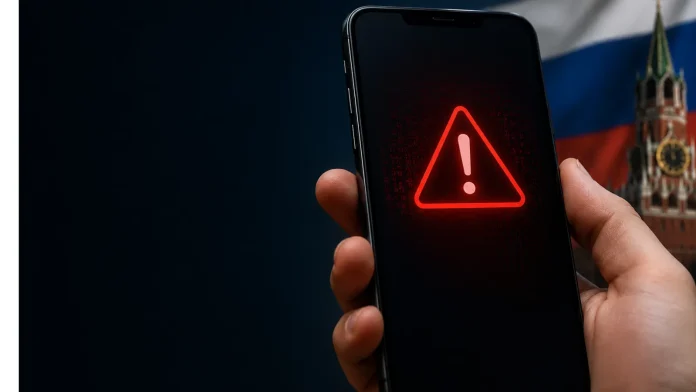
Foreign Spyware Infiltrates Russian Officials’ Mobile Devices
Russia’s Federal Security Service (FSB) has uncovered a significant cyber-espionage operation targeting high-ranking government officials through sophisticated spyware implanted on their mobile devices. The FSB attributes this campaign to unidentified foreign intelligence services aiming to conduct covert surveillance and extract sensitive information.
The spyware was designed to infiltrate smartphones and other mobile devices used by senior officials, enabling unauthorized access to confidential data, interception of communications, and activation of audio and video recording functions without the users’ knowledge. This indicates a highly targeted and intelligence-driven attack strategy.
The attackers reportedly utilized technical infrastructures associated with major international IT and telecommunications providers to facilitate covert data collection. Although the FSB did not specify the vendors or countries involved, this suggests the exploitation of sophisticated supply-chain or network-level access to enable surveillance capabilities without directly compromising the devices.
From a technical standpoint, such spyware campaigns often employ zero-click exploits, baseband vulnerabilities, or malicious configuration profiles to gain persistent access to mobile systems. These methods allow attackers to bypass user interaction and traditional security controls, making detection significantly more challenging. Once deployed, the spyware can access encrypted messaging apps, capture keystrokes, activate microphones and cameras, and exfiltrate stored files.
While the FSB did not disclose specific indicators of compromise (IOCs) or malware family names, the described capabilities align with previously observed nation-state-grade spyware such as Pegasus or Predator. These tools are typically used in targeted surveillance operations and are known for their stealth and modular architecture.
According to a report by Democrata shared with Cybersecurity News, Russian authorities have initiated a criminal investigation and are conducting forensic analysis of the affected devices. The FSB has also issued a warning, emphasizing the risks of discussing sensitive information near mobile devices and highlighting the potential for real-time interception even without visible signs of compromise.
This incident underscores the growing threat of mobile-targeted espionage, particularly against government and high-value individuals. Mobile devices remain a critical attack surface due to their constant connectivity, access to sensitive communications, and integration with enterprise systems.
Security experts recommend several mitigation strategies, including regular device updates, the use of mobile threat defense (MTD) solutions, restricting app installations, and segmenting sensitive communications across secure channels. In high-risk environments, hardened devices or air-gapped communication methods may also be considered.
While independent verification of the FSB’s claims remains limited, the report reflects ongoing geopolitical tensions and the increasing use of cyber capabilities in intelligence operations. The lack of attribution and technical disclosure leaves open questions. However, the scenario aligns with known tactics employed in state-sponsored cyber-espionage campaigns.