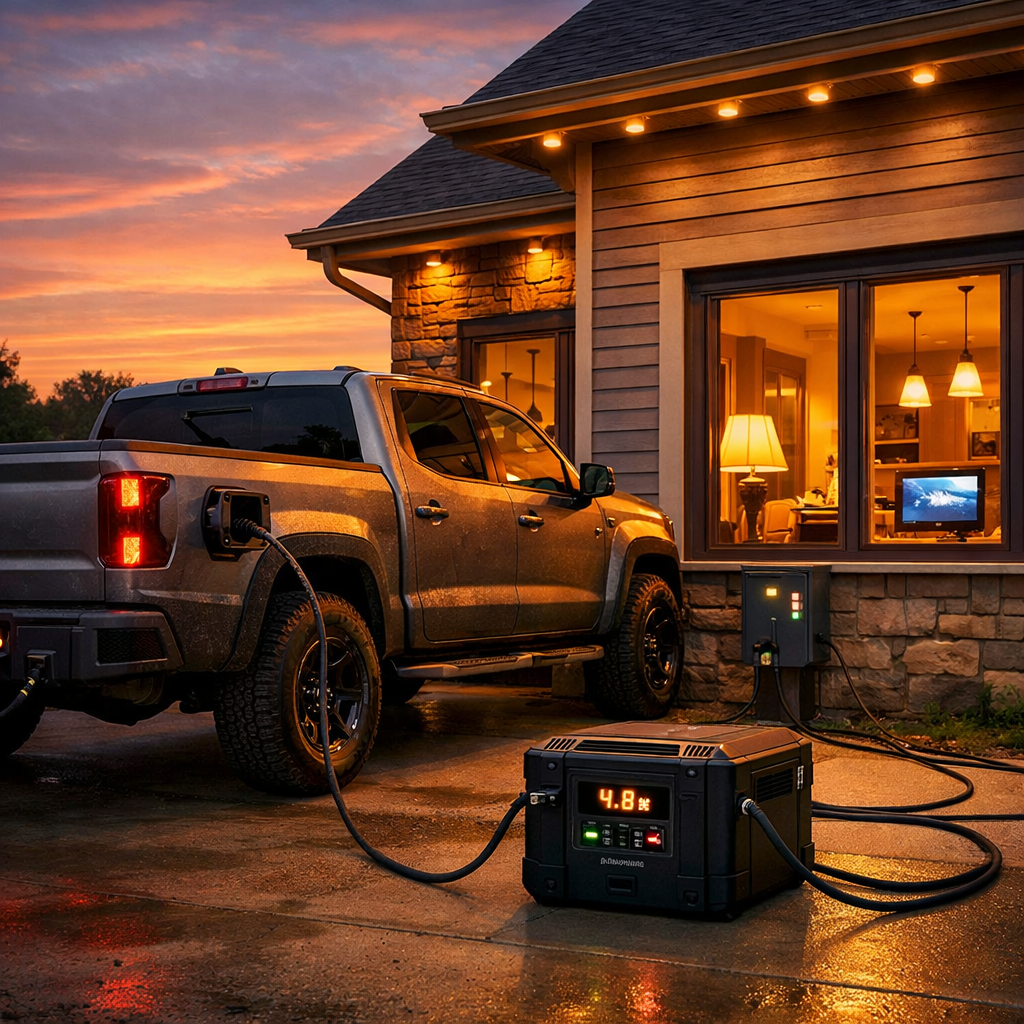
Ford is launching its Fathom pickup truck with pricing that undercuts any current U.S.-made EV with the ability to power a home. Kicking off at roughly $28,350, the Fathom marks a major shift toward making vehicle-to-everything (V2X) power capabilities accessible for more households. Alongside it, Ford introduced two chargers that facilitate more affordable home and grid power usage from the vehicle.
New Charging Gear, Lower Costs
To tap into the Fathom’s V2X potential, Ford is unveiling two related products. The first is the Home Power Station charger, which charges the truck when power is inexpensive and redirects electricity back to the home during expensive rate periods. This model will cost about $650, nearly half the price of Ford’s previous bidirectional charger.
The second offering, Home Backup Power, bundles the Home Power Station with a Backup Panel to provide enough capacity to run either select circuits or an entire home during outages. Ford estimates this combined package at approximately $2,100—about 60% less expensive than its first-gen system.
Power Output & Practical Use
Ford says the Fathom will be able to deliver over 10 kilowatts (kW) of electricity to a house. While this isn’t enough to power everything in a typical U.S. home, it’s sufficient to run key appliances such as refrigerators and air conditioners for roughly 12 hours. The output depends heavily on home electrical setup and the presence of surge-heavy devices, though “soft start” solutions can help manage startup surges at additional cost.
Grid, Backup & Income Streams
Besides powering homes during outages, the system enables participation in virtual power plants (VPPs), allowing Fathom owners who remain plugged in to sell electricity back to the grid—potentially earning over $1,000 annually depending on involvement and grid demand. Utilities, facing stress from growing data center loads, are experimenting with VPPs to ease grid congestion, particularly at the edges.
Costs & Considerations
Ford points out that the prices for these new V2X products don’t include installation, which can exceed $10,000 depending on required electrical work. The company hasn’t yet announced installer partnerships or infrastructure support, though more details are expected later.
This is a substantial move in the EV and energy storage revolution. By dropping price barriers around power-on-wheels technologies, Ford aims to make home backup and energy arbitrage features mainstream. For customers, it means more control over power usage and potential savings; for the grid, a smoother ride through demand peaks and outages. The real test will be how installation constraints, local electrical codes, and cost structures play out on the ground. What to watch: the rollout of these chargers, Ford’s installer network, and whether utility incentives or regulations accelerate—or stall—adoption.