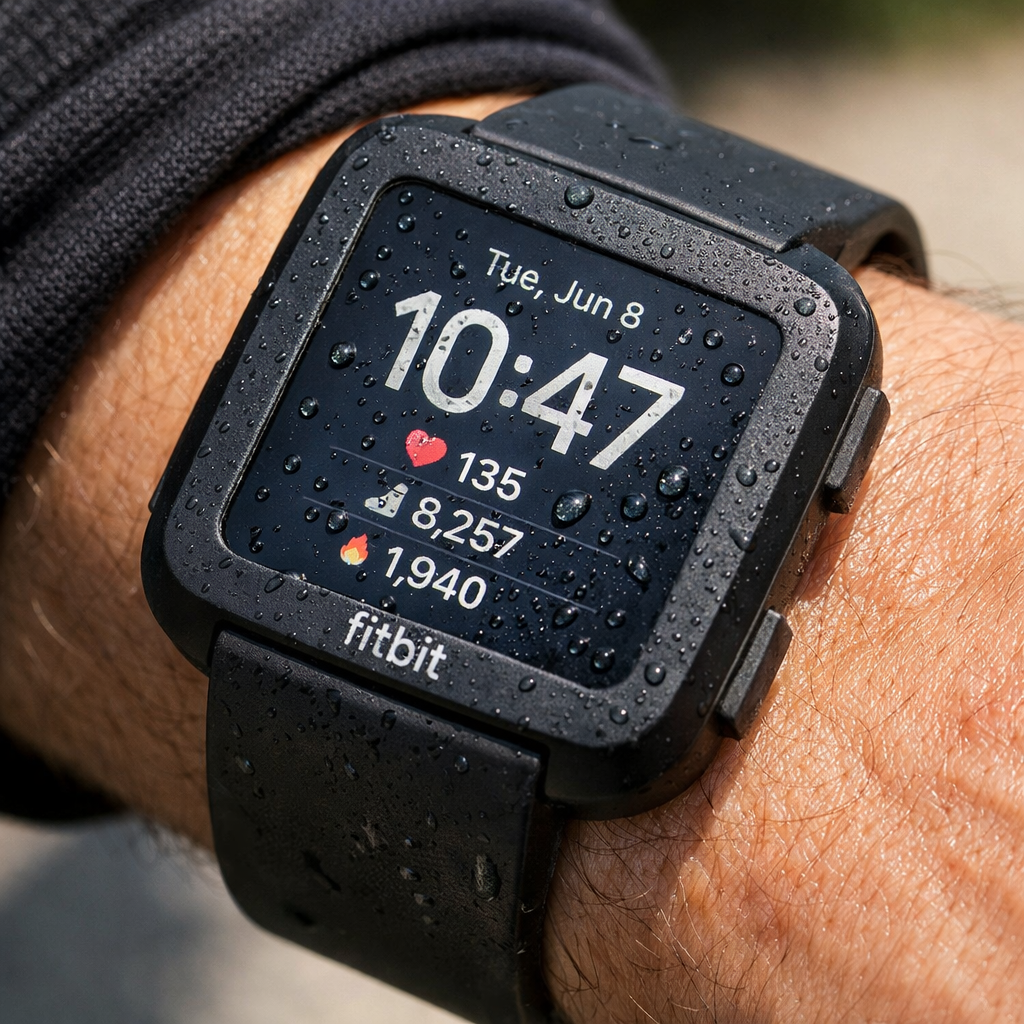
Over the past 30 days, the Fitbit Edge has quietly proven to be a strong addition to the wearable fitness tracker market — but it lives in what feels like the middle lane. It tries to straddle the simplicity of fitness bands like the Fitbit Air and the fuller smartwatch experience of Pixel Watches; the result is impressive in many ways, yet imperfect in some crucial spots.
Design & Durability: Built Tough, With Little Gloss Loss
The Edge boasts solid build quality. After a month of daily wear — gym visits, accidental wrist bumps, and general rough handling — it remains largely scuff-free. The oleophobic coating has started to show wear under cooler weather conditions and frequent contact with sleeves, but that’s the one blemish so far. The broader bezels stand out visually in certain lighting, reminiscent of early Pixel Watch designs, though they fade into the background most of the time.
User Experience: Functional, But With Compromises
The fusion of fitness tracker and smartwatch leads to trade-offs. Tiles work well, offering smooth navigation and quick access to weather or health stats. The default watch face, with its information-rich layout, has become a favorite. Still, notifications feel cramped; large bezels and congested layouts when alerts stack can detract.
Features That Shine — And Some That Miss
Fitbit Edge includes surprisingly advanced features given its size and category. Basic ECG functionality, a rarity in trackers at this price point, adds significant value. The simplicity is part of its appeal: no overwhelming app selection, no feature bloat. But some shortcomings are hard to ignore. The screen struggles with moisture — water droplets cause odd behavior, taps fail to register, and menus trigger unintentionally unless water protection mode is activated.
Comfort & Skin Sensitivity
While the bands are comfortable, wearing the Edge long term under certain conditions has led to skin irritation. The underside of the wrist, just beneath the palm, has been getting raw. Sweating or moisture exacerbates the problem. A fabric band may alleviate the discomfort, and there is concern that the new connector could slow availability of quality third-party strap options.
Battery Life & Power Management
Battery performance is a major highlight. Charging roughly five times in a month while maintaining up to three gym sessions weekly demonstrates solid longevity. Also, the Edge uses the same charger as the Fitbit Air, which adds convenience for those already invested in Fitbit accessories.
Who The Edge Is For
For people seeking something more than a basic fitness band but less than a full smartwatch, the Edge hits a sweet spot. It outperforms older models like the Charge 6 and appeals to users overwhelmed by smartwatch complexity. You get enough to handle fitness tracking, display convenience, and basic health monitoring — just not without some friction. If you must have all the features — seamless notifications, NFC payments, ultra-durable screen interaction after exposure to water — there might be better options.
Ultimately, the Fitbit Edge shows that its place is neither here nor there — and that’s often okay. For those content with essentials and a clean wearable experience, it delivers. But for more demanding users, the compromises may be too noticeable.
What this means: Fitbit’s strategy here seems intentional. Rather than chasing all-out smartwatch parity, the Edge is a compromise device designed for people craving balance. Moving forward, Fitbit will need to refine moisture handling, skin comfort, and notification usability to make the Edge feel less like a compromise. Watch for updates, band options, and UI enhancements — they’ll determine whether the Edge becomes a defining product, or remains a niche choice.