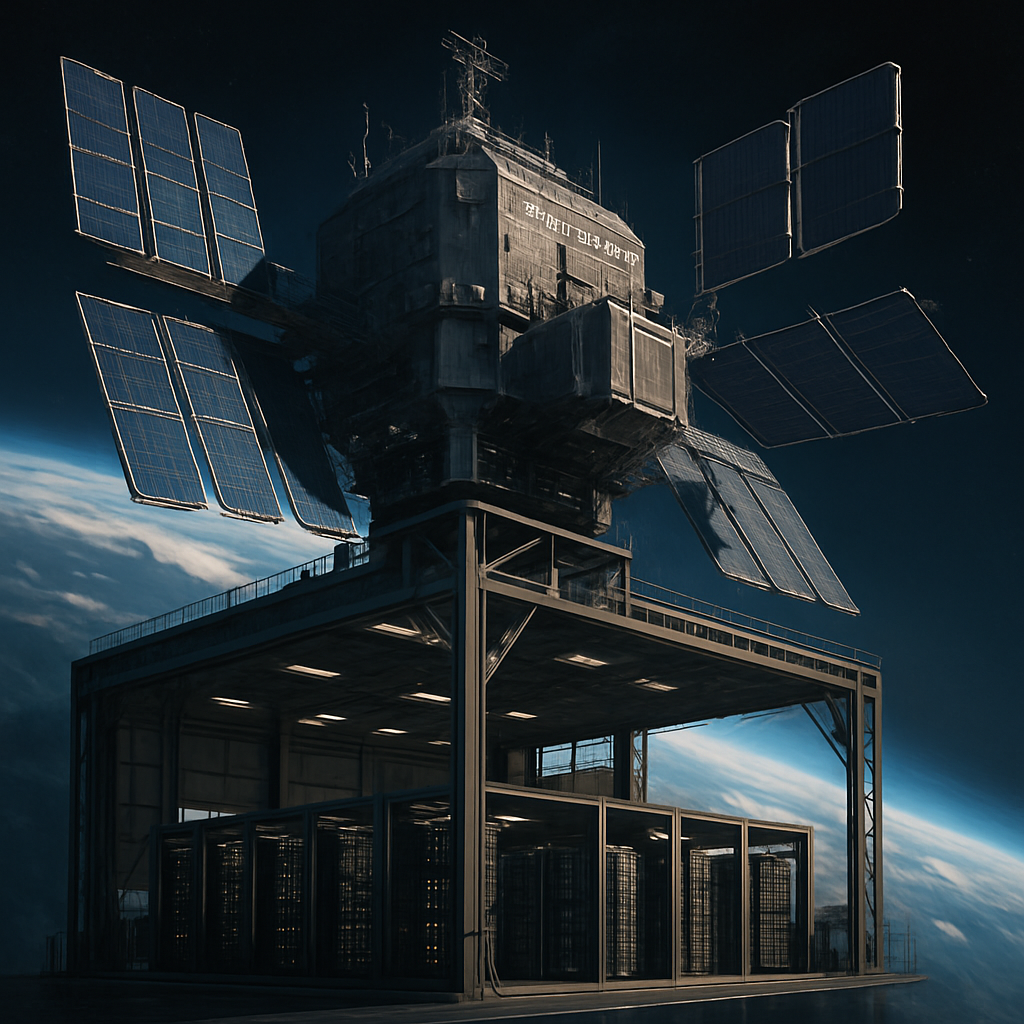
Starcloud, a startup aiming to perform artificial intelligence inference in orbit, has pulled in a $250 million extension to its Series A funding, boosting its valuation to $2.3 billion. The latest cash infusion adds to a $170 million round raised in March, and will fuel development of its Starcloud-3 orbital data center spacecraft and expand its manufacturing footprint. The company’s flagship Starcloud-3 is being designed for launch aboard SpaceX’s Starship rocket. ([techcrunch.com](https://techcrunch.com/2026/08/21/starcloud-raises-200-million-for-orbital-data-centers-as-launch-options-dry-up/))
A pressing concern for Starcloud is the scarcity of reliable launch options. SpaceX plans to retire its workhorse Falcon 9 in 2028 while Starship remains unproven. Meanwhile, competitors such as Blue Origin’s New Glenn and ULA’s Vulcan are not flying regularly, and Rocket Lab’s Neutron has yet to enter operational status. ([techcrunch.com](https://techcrunch.com/2026/08/21/starcloud-raises-200-million-for-orbital-data-centers-as-launch-options-dry-up/))
To stay on track, Starcloud has sought approval from the FCC to operate a fleet of up to 88,000 satellites. In the near term, it plans to deploy two Starcloud-2 class satellites—each embedding 8 kilowatts of compute—on rideshare missions in 2027, targeting government clients among others. The company is also exploring dedicated launches and signing multiple contracts to ensure sufficient launch capacity. ([techcrunch.com](https://techcrunch.com/2026/08/21/starcloud-raises-200-million-for-orbital-data-centers-as-launch-options-dry-up/))
Cutting-edge hardware, space-grade engineering
Starcloud is collaborating with Nvidia, which contributed $25 million of the recent funding, to develop space-optimized GPUs. It’s currently the only company known to have flight-tested Nvidia’s terrestrial H100 GPU in orbit, and holds plans to fly Nvidia’s upcoming Vera Rubin Space-1 GPU, still in development, into orbit by late 2028. Challenges include radiator size, radiation shielding, thermal tolerances, and structural ruggedization for launch. ([techcrunch.com](https://techcrunch.com/2026/08/21/starcloud-raises-200-million-for-orbital-data-centers-as-launch-options-dry-up/))
The company is operating out of a 100,000 square foot manufacturing facility in Woodinville, Washington. Its workforce totals about 25, and is growing. The facility is intended to support production of large orbital data centers in addition to its existing satellite platforms. ([techcrunch.com](https://techcrunch.com/2026/08/21/starcloud-raises-200-million-for-orbital-data-centers-as-launch-options-dry-up/))
Funding and market positioning
The round was led by Manhattan West Ventures, with participation from Benchmark, EQT, Soma, NFX, 776, Cedar Capital, Goanna Capital, and Standard Capital. Nvidia’s investment is seen as a validation of Starcloud’s leadership in the emerging orbital compute sector. ([techcrunch.com](https://techcrunch.com/2026/08/21/starcloud-raises-200-million-for-orbital-data-centers-as-launch-options-dry-up/))
Key to Starcloud’s long-term strategy is Starship’s potential to drastically reduce launch costs. CEO Philip Johnston has emphasized that while obtaining launch capacity is now among the biggest costs for orbital data center operators, many options are either shrinking or unreliable. He remains confident in Starship’s ability to prove itself reusable and frequent. ([techcrunch.com](https://techcrunch.com/2026/08/21/starcloud-raises-200-million-for-orbital-data-centers-as-launch-options-dry-up/))
This week, SpaceX CEO Elon Musk confirmed that attempts to catch Starship during reentry will be delayed by a few months. The first reflight of the rocket is expected toward the end of 2026 or early 2027. Johnston cautioned the company could face difficulties if launch capacity is unavailable in 2029. ([techcrunch.com](https://techcrunch.com/2026/08/21/starcloud-raises-200-million-for-orbital-data-centers-as-launch-options-dry-up/))
Starcloud has already deployed its Starcloud One satellite, but Starcloud-3 will represent its largest orbital data center to date. The extension funding will also pay for expansion of its high-volume manufacturing facility to meet growing demand for in-orbit compute. ([techcrunch.com](https://techcrunch.com/2026/08/21/starcloud-raises-200-million-for-orbital-data-centers-as-launch-options-dry-up/))
Analytically, Starcloud’s move spotlights the tightrope that space compute startups walk. The promise of orbital data centers—to deliver low-latency inference for applications ranging from defense to remote sensing—depends on reliable launch supply, resilient space-grade hardware, and regulatory clearance. With launch vehicles still in flux and capacity uncertain, the ability to lock in contracts, optimize design for hostile orbital environments, and scale manufacturing is what separates breakthrough from vaporware. What to watch: how Starcloud secures Starship launches, whether Vera Rubin makes orbit on schedule, and whether terrestrial data centers remain the more dependable alternative in the interim.