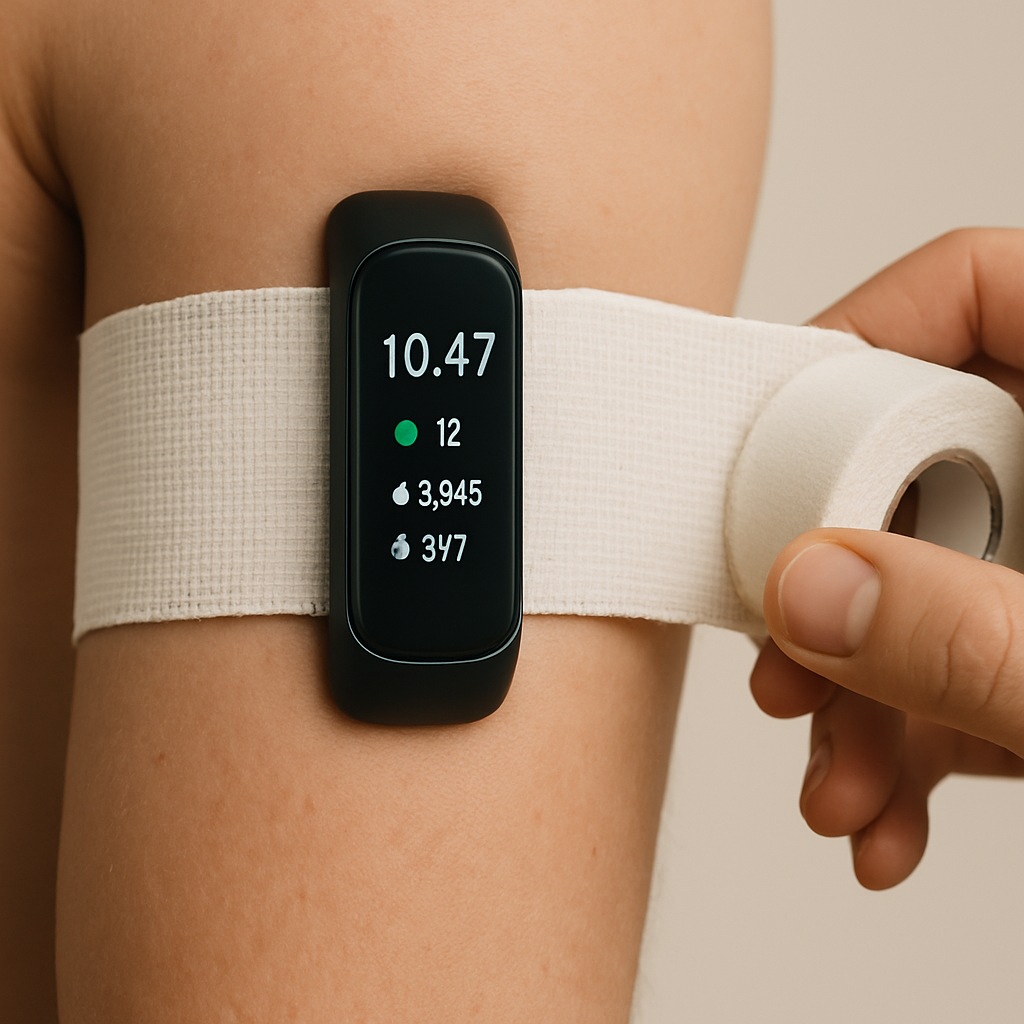
The Fitbit Air is gaining attention for an unexpected use: users are affixing it directly to their skin with athletic tape—particularly around the bicep—to improve tracking accuracy. While the device was designed for wrist wear, this improvised setup seems to be catching on among fitness enthusiasts.
The Fitbit Air launches as a minimalist health tracker intended for wrist placement, similar to most fitness watches. It tracks metrics like heart rate, body movement, and other activity data. The included band serves that traditional wrist-worn purpose, and some users even opt for dual use by wearing both Fitbit Air and a regular watch on the same wrist.
Why the Bicep?
A growing number of Fitbit Air owners reported on Reddit that taping the tracker to the upper arm delivers more stable, accurate measurements. The logic is simple: the bicep experiences less erratic motion compared to the wrist, which may enhance the reliability of data like pulse and movement.
One user described this method as offering “more accurate data,” reinforcing the idea that minimizing wrist movement helps the tracker focus more on physiological signals rather than noise from frequent gestures.
Flexibility in Placement
Adding to the story, enthusiasts are experimenting with other placements too—some have tucked the Fitbit Air into their socks or hidden it elsewhere on the body. These creative approaches aren’t officially supported, but they underline how users are adapting IoT health gadgets for performance rather than aesthetics.
It’s worth noting that dedicated solutions for non-wrist tracking already exist. Whoop, for example, offers a purpose-built bicep band. Around the internet, there are third-party bands made specifically to anchor Fitbit Air to the upper arm or body in various ways.
While Fitbit hasn’t officially endorsed these alternative placements, early feedback suggests the method works for many. Users seem willing to sacrifice traditional wearability for gain in data precision.
What this means is that consumer fitness trackers may need to rethink the one-size-fits-wrist approach. As users experiment with placement—taping device to skin, shifting bands, exploring nontraditional positions—companies could be pushed to provide hardware designed from day one for flexible use, better interfaces that adjust based on where the sensor sits, and clearer guidance about what placement works best. It’s change born from the bottom up; in wearable tech, sometimes the most useful improvements come from DIY users, not feature-rich software updates.