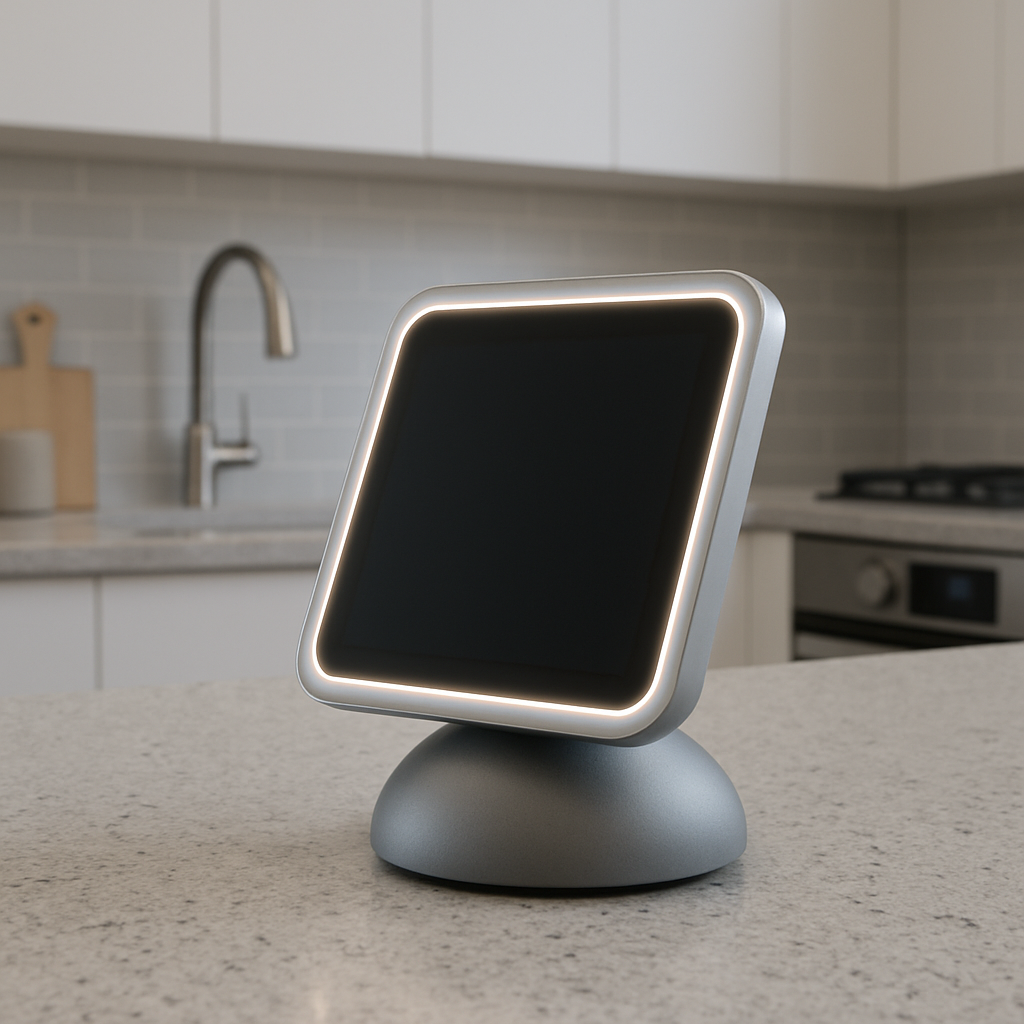
Apple is reportedly launching a smart home hub with a design that channels the classic iMac G4 from 2002, combining aesthetic nostalgia with modern smart-home functionality. The smart home hub will feature a square 6-inch display, available in two styles: one meant for countertop placement, the other for wall mounting.
Design & Hardware Details
The hub’s display is described as having a thin profile—about as thick as an iPhone—surrounded by a quarter-inch black bezel. It sits above a rounded base filled with perforated speaker holes and includes microphones and speakers built into that base. A polished metal arm connects the display to the base, and the screen can be tilted forward or backward. Finish is standard gray aluminum, and power is delivered through a USB-C port. There are no built-in buttons for power or volume, and the hub has no internal battery—it must remain plugged in at all times. A wall-mounted variant shares the same nine-square format, with speakers and mics housed in a flat base beneath the display.
Features & User Interface
The device will support video calls via a front-facing FaceTime camera, and it can act as an intercom system, audio player, photo slideshow display, or kitchen helper (recipes, videos) via voice commands. It’s intended to recognize individuals by voice or facial cues, displaying personalized content. There will also be a visitor mode to obscure personal info.
For cases where facial recognition isn’t reliable (especially in low light), the hub will use what’s called an Edge Light—akin to light rings on desktop Macs—to assist recognition. And if identification fails altogether, users can verify via their iPhone.
UI elements will blend design cues from Apple Watch, Safari-style Apple TV, and iPad. Features like dark mode, the presence of widgets, rearrange-by-hold interactions, and wallpapers are present. StandBy-like clock and slideshow modes are central: one clock design is said to evoke a lava lamp with digital hours over stacked minute markers. Swiping up from screens reveals the app launcher.
Preloaded apps will include the usual suspects—Calendar, Messages, Photos, Notes, Reminders, Music, Podcasts. Apps are expected to mimic iPad’s multi-panel layouts; for example Messages will open side-by-side panes similar to the iPad version.
Release Info & Positioning
The smart home hub is expected to be announced on October 13, alongside updates to the HomePod mini and Apple TV lines. Apple is planning for users to place multiple hubs throughout the home.
The hub merges functionality found in several existing Apple products—HomeKit hub functions, an intercom/audiovisual device, and a stationary smart display—but with its own distinct identity.
Pulling from a look back at the iMac G4 to inform its design underscores Apple’s ongoing interest in combining strong visual design with utility. That round-based base and tiltable screen evoke the G4’s signature architecture, but the lack of a battery and inclusion of USB-C power and modern UI features keep it firmly of today.
This development matters because Apple is entering a category long dominated by tablets or smart speakers, but those often lack the coherence of integration Apple aims for. The hub could redefine what a “home command center” looks like when built end-to-end rather than pieced together via iPads, HomePods, or Apple TVs. What to watch next: final pricing, screen resolution and performance, how well voice and facial recognition work in real homes, and whether this device complements existing ones or aims to replace them.