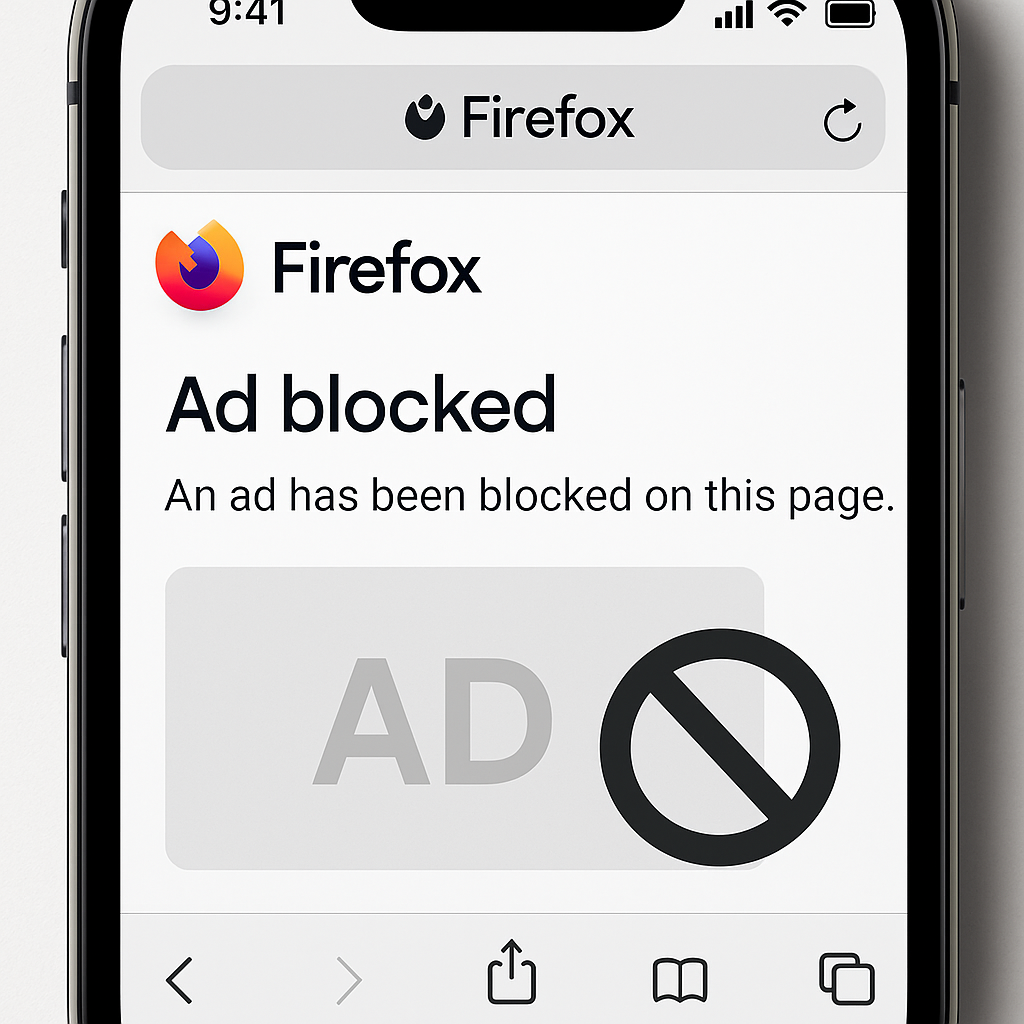
Firefox for iOS now includes a built-in ad blocker, rolling out a native way for users to filter out many third-party ads and trackers while browsing. Introduced in the app today, the new blocker leverages Apple’s WebKit Content Blocker API and EasyList filters to deliver ad blocking without relying on external Safari-only extensions.
The blocker is disabled by default. To enable it, users must navigate within the Firefox app to Settings > Browsing > Ad Blocker to switch it on. Once active, it filters out unwanted ads and trackers coming from external sources—but it doesn’t remove ads embedded by the site itself. Also, ads in search results and sponsored content displayed in new tabs will still appear.
How It Works
The technology powering this feature is Apple’s WebKit Content Blocker API, the same interface Safari ad blockers use. Firefox for iOS now integrates content blocking natively so that the restrictions are effective throughout the app, not just when delegating to Safari. EasyList serves as the foundation for which ads and trackers are blocked, targeting third-party resources that often compromise privacy or degrade loading performance.
Scope & Limitations
Because of the way it’s implemented, Firefox’s new ad blocker does not block everything. First-party ads—those served directly by the site you’re visiting—remain untouched. Ads shown among search results are also excluded from blocking. Meanwhile, sponsored content like featured shortcuts or promotional items you might see when opening a new tab aren’t affected by the blocker. Firefox treats those differently, aside from standard ads or trackers.
This update marks a notable shift for Firefox on iOS. Previously, ad blocking worked only via Safari with third-party apps. By embedding the functionality into Firefox itself, Mozilla gives users direct control over their ad experience without leaving the app or using external browser tools.
What it means: For privacy-conscious users, this new feature puts more power into your hands—right within Firefox. While it won’t eliminate every ad or sponsored item, it helps reduce unwanted trackers and third-party clutter. Users interested in tighter content control might look forward to more granular filters in future updates. Developers will want to watch how Mozilla refines which ads count as “third-party” versus “sponsored” in mixed content, since distinguishing them clearly impacts both user experience and web revenue models.