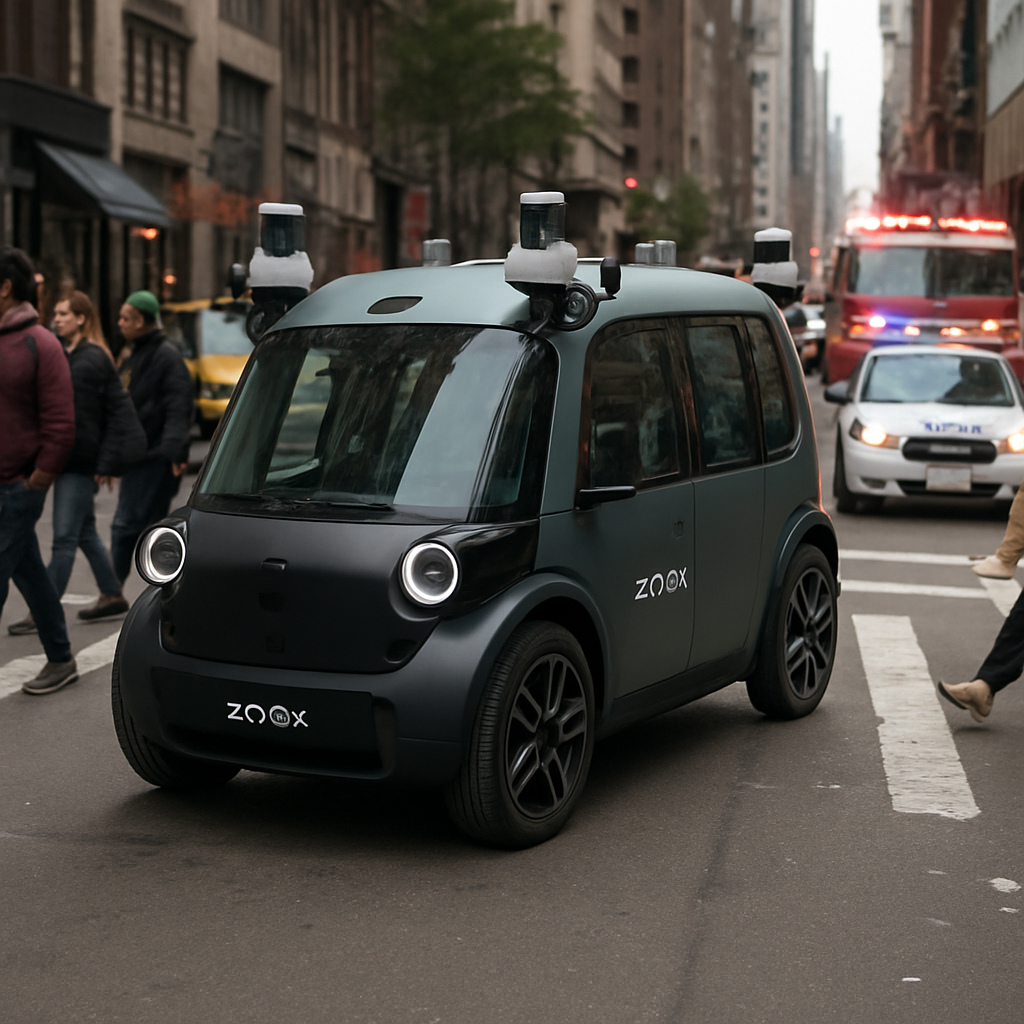
The autonomous vehicle (AV) industry is experiencing a dichotomy in regulatory approaches: while federal agencies are facilitating progress, state and local authorities are imposing stricter oversight.
The National Highway Traffic Safety Administration (NHTSA) has recently taken steps to expedite the development and deployment of AV technology. Notably, NHTSA granted Zoox a temporary exemption from eight federal motor vehicle safety standards, enabling the company to commence charging customers for rides in its custom-built robotaxis. This exemption removes a significant regulatory barrier, allowing Zoox to launch its commercial robotaxi service, starting with paid rides in Las Vegas.
Conversely, companies like Waymo are encountering increased scrutiny at the state and local levels, particularly concerning their vehicles’ interactions with emergency responders. Incidents in San Francisco, where Waymo’s robotaxis became immobile during heavy July 4 traffic, exacerbating gridlock, have prompted calls for enhanced regulations. Mayor Daniel Lurie has urged state regulators to strengthen rules governing autonomous vehicles to prevent such occurrences.
At the federal level, Representative Kevin Mullin (D-Calif.) has proposed legislation directing regulators to establish minimum national safety standards for AV operators. Mullin highlighted the unacceptable frequency of incidents where autonomous vehicles inadvertently interfere with emergency responders, underscoring the need for standardized safety protocols.
This juxtaposition of federal acceleration and local caution presents a complex landscape for the AV industry. While national initiatives aim to streamline AV integration, regional concerns emphasize the necessity for safety and reliability. Companies must navigate these divergent regulatory environments to achieve widespread adoption and public trust.
As the AV sector advances, balancing innovation with safety remains paramount. Stakeholders should anticipate ongoing regulatory developments and be prepared to adapt to varying requirements across jurisdictions. The industry’s success hinges on its ability to address both the technological challenges and the societal implications of autonomous transportation.