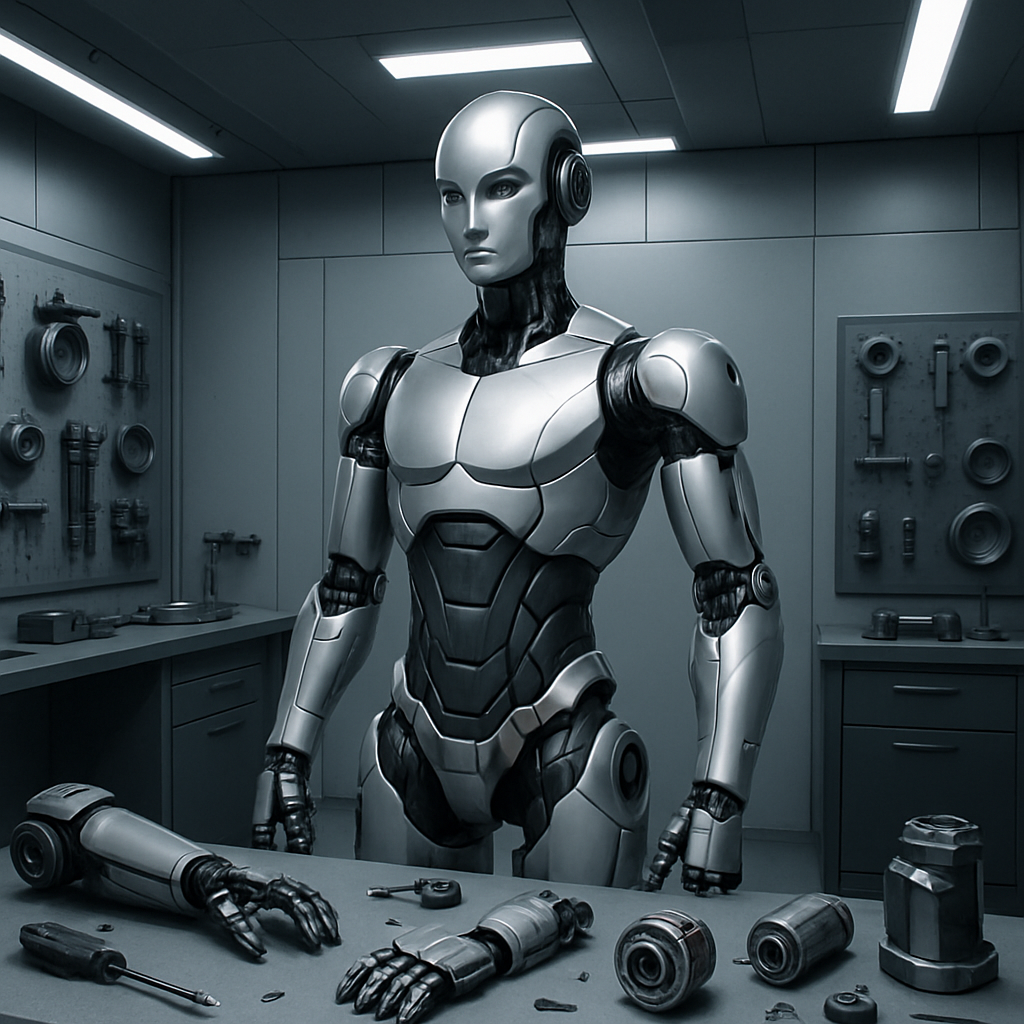
Every robotics founder points out a key gap: no “ChatGPT moment” yet—a robot that adapts universally to any setting. Some believe it’s around the corner, others say it’s years away. Feather Robotics aims to land somewhere in between. Rather than building just another general-purpose humanoid from scratch, Feather offers developers both customizable hardware and software right now. Think modular robots you can deploy and adapt to real tasks today.
From Idea to Revenue: What Feather Offers
Founded in 2025 by ex-humanoid startup leader Hoa Mai and former Tesla Model 3 engineer Parsa Bakhtiari, Feather has crafted a platform that balances adaptability with affordability. They’ve raised $7.6 million in pre-seed funding led by Gradient Ventures. Feather’s platform features modular hardware so arms, limbs, and other parts can be swapped or adjusted for different real-world tasks. On the software side, it supports models from major robotics AI providers like Generalist, Skild, and Physical Intelligence. The hardware is plug-and-play ready today, unlike some rivals still perfecting their core tech.
Feather already shipped units and hit over $1 million in revenue within its early customer base. Its robots are being used in restaurant kitchens in Japan and in laboratory cleanup operations. These field deployments helped them identify and fix many outstanding issues. Now, with field-testing largely behind them, they’re preparing for a broader product rollout.
How Feather Stands Out in Robotics Ecosystem
The robotics landscape is sprawling. On one end are startups building robots for specific household chores. On the other lie big bets—Tesla and Figure—working toward general-purpose humanoids. Feather positions itself in a middle category: a modular humanoid platform for developers. Gradient Ventures believes it’s the only U.S.-based company doing precisely that. Feather also emphasizes the advantage of being U.S.-made, particularly as some foreign robots face import restrictions in the U.S.
Price is another lever. Feather’s robot costs about $30,000—roughly half the price of Unitree’s H2 Edu model. That level undercuts many foreign alternatives, especially under current regulatory limitations. From an economic standpoint, investors see good value: a Feather unit represents a capital expense that could replace or augment labor costs and the entire overhead tied to human workers.
Financially, Feather claims efficient spending: using only a fraction of its pre-seed capital so far. And beyond just building robots, the company’s real bet is on fostering an ecosystem. The goal is for hundreds or even thousands of independent teams building physical AI applications over the next few years—Feather aims to be the substrate those applications run on.
It’s early days. A fully capable, general-purpose robot has yet to be realized by anyone. But Feather’s approach—deliver hardware and software now, make it modular, price it for developers—could help fill a missing gap in robotics. What to watch: how scalable their manufacturing becomes, how robust applications turn out in real-world settings, and whether this platform strategy can hold up when general-purpose robots finally do arrive.