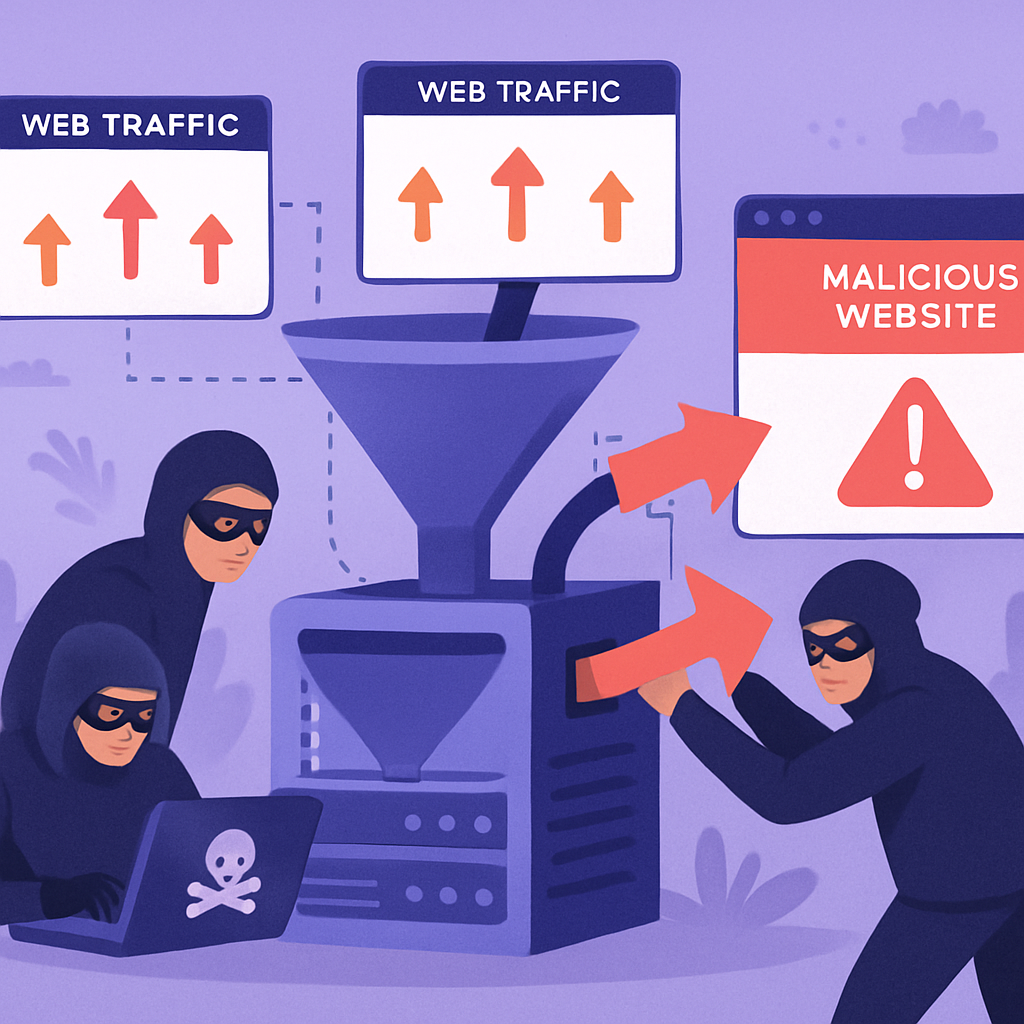
The Federal Bureau of Investigation (FBI) has issued a warning about cybercriminals misusing Traffic Distribution Systems (TDS) to redirect unsuspecting users to malicious websites. TDS, typically employed by legitimate businesses to manage web traffic, are being exploited to facilitate fraud, data theft, and the distribution of ransomware.
A TDS operates by intercepting user requests and determining their final web destination. Cybercriminals have hijacked this process to steer users toward phishing sites, counterfeit login portals, and malware-laden pages without any overt signs of redirection.
In a report shared with Cyber Security News, the FBI highlighted the increasing misuse of TDS and issued a Public Service Announcement on June 18, 2026. Analysts noted that these attacks are becoming more challenging to detect due to the TDS’s ability to obscure the final malicious destination through a series of intermediate steps, complicating detection for both users and security tools.
These attacks employ various methods, including phishing emails, manipulated search engine results, and compromised legitimate websites, to funnel users into TDS traps. Once ensnared, victims may remain unaware of the redirection, as the process is silent and occurs within seconds.
The repercussions can be severe. Upon landing on a malicious site, users’ devices may be infected with malware, their credentials stolen via fake login pages, or their network access sold to ransomware groups. The FBI emphasized that this is an active threat targeting everyday internet users and businesses alike.
FBI Warns Cybercriminals Use Traffic Distribution Systems
A particularly dangerous aspect of malicious TDS is their ability to filter who gets redirected. Before sending a user to a harmful site, the system collects data such as IP address, geographic location, operating system, and browser type. This allows criminals to bypass users from non-targeted regions and display safe content to security researchers, thereby evading detection.
This filtering capability means traditional security scans can miss the threat entirely. A researcher visiting a compromised website might see nothing unusual, while a targeted user in a specific country is redirected to a phishing page. This level of precision makes TDS a preferred tool for sophisticated criminal groups, including those involved in ransomware campaigns.
Protecting Yourself and Your Organization
The FBI has outlined steps for individuals and businesses to mitigate risk. Users should scrutinize URLs before clicking on advertisements or unfamiliar links, as malicious addresses often closely resemble legitimate ones. Organizations are advised to implement robust security measures, including regular software updates, employee training on phishing tactics, and the deployment of advanced threat detection systems.
As cybercriminals continue to refine their methods, staying informed and vigilant is crucial. Understanding the mechanisms behind TDS exploitation and adopting proactive security practices can significantly reduce the risk of falling victim to these sophisticated attacks.