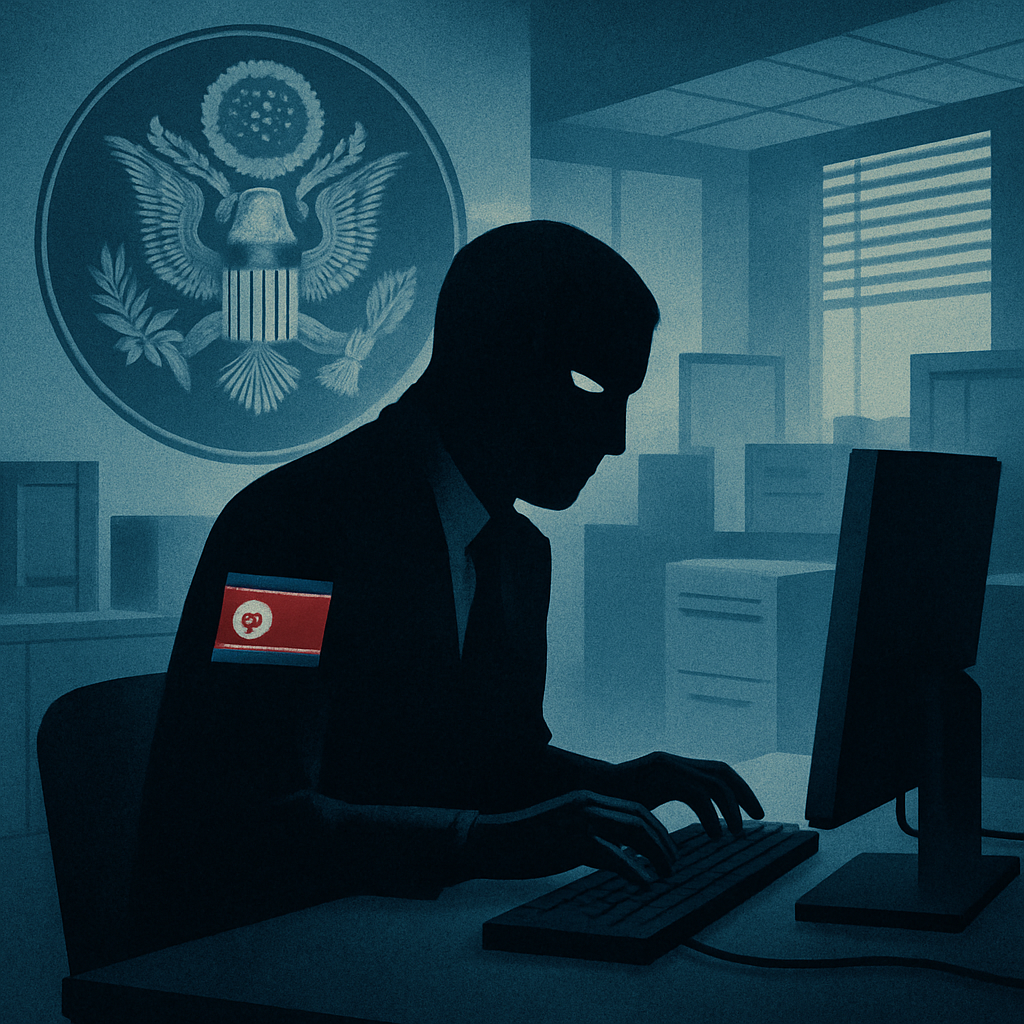
The Federal Bureau of Investigation (FBI) is currently investigating a case where an individual from North Korea secured employment within a U.S. federal government agency. This development underscores the persistent and sophisticated efforts by the North Korean regime to infiltrate organizations beyond the private sector.
Details about how the individual was hired remain unclear. However, it is well-documented that North Korea orchestrates extensive campaigns to fraudulently obtain positions in various organizations, including multinational corporations. These operations often involve using false identities to secure remote roles, enabling the regime to siphon wages and access sensitive information. Such activities not only provide financial support to North Korea’s sanctioned programs but also pose significant security risks to the affected organizations.
Historically, stringent vetting and security clearance procedures have been effective in preventing such infiltrations within government agencies. Nonetheless, there have been notable exceptions. For instance, in 2024, the U.S. Department of Justice charged a Maryland resident for assisting a North Korean hacker in posing as an American citizen to secure a remote contracting position with the Federal Aviation Administration.
The FBI has not disclosed which federal agency was compromised in the current investigation, nor have they confirmed whether any data or funds were compromised during the incident. This lack of information raises concerns about the potential breadth and depth of the infiltration.
In response to the growing threat posed by North Korean IT worker schemes, U.S. authorities have implemented several enforcement actions and sanctions. These measures target not only the networks operating directly from Pyongyang but also those in neighboring countries such as Russia and China. Additionally, American facilitators who establish infrastructures, like fleets of laptops, to enable North Koreans to work remotely under the guise of being U.S.-based employees have been subject to legal action.
North Korea’s reliance on cyber operations extends beyond fraudulent employment schemes. The regime has been implicated in numerous cyber thefts, including significant cryptocurrency heists. These activities are believed to fund its internationally sanctioned nuclear weapons program. Reports indicate that North Korea was responsible for a substantial portion of cryptocurrency thefts in recent years, amassing billions of dollars despite being excluded from the global financial system.
This incident serves as a stark reminder of the evolving nature of cyber threats and the lengths to which state actors will go to achieve their objectives. It highlights the necessity for continuous vigilance, robust security protocols, and comprehensive vetting processes within both the private and public sectors to safeguard against such sophisticated infiltration attempts.