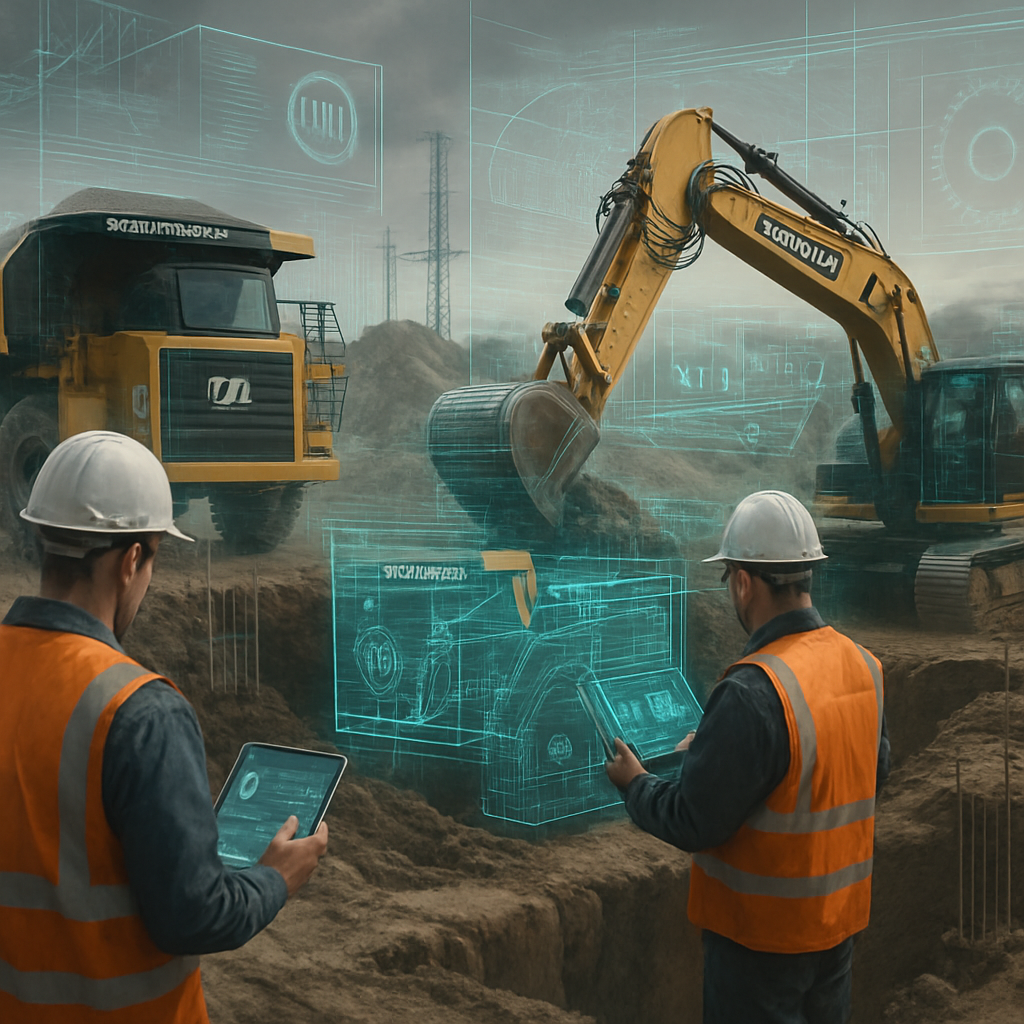
Caterpillar, long known for automating mining operations, is now applying those lessons to the broader rollout of artificial intelligence. The company has built a robust autonomous equipment portfolio — including haul trucks, drills, underground loaders, and remote-controlled construction vehicles — and developed metrics like remote terrain intelligence and fleet management. It is now using that infrastructure to expand AI across jobsites, quarries, and construction sites.
From Field to Factory: AI Tools in Action
One of Caterpillar’s newest tools, its AI Assistant, allows field technicians to use voice commands next to machines to retrieve repair instructions, troubleshoot problems, and identify needed parts before starting work. This assistant draws from the company’s trove of proprietary data, sourced from over 1.6 million connected assets around the globe, and more than 16 petabytes of structured data.
On the manufacturing side, Caterpillar is creating digital twins from site scans to simulate operations and analyze efficiencies more accurately. AI agents are also being deployed to modernize legacy software code, automate testing and find defects earlier — integrating AI into both core operations and the company’s software development lifecycle.
Human Change: Training, Process, Workflow
Caterpillar’s CTO, Jaime Mineart, emphasizes that building AI models and autonomous machines is only part of the task. Integrating them into existing workflows and jobsites requires rethinking human-machine interaction. Traditional operators may gradually shift toward more remote and supervisory roles.
The company is investing heavily in its workforce to support this transformation: over the next five years, Caterpillar plans to allocate about $100 million to train its 118,000 employees in AI, autonomy and robotics.
Business Drivers: Demand and Revenue Spikes
Caterpillar’s focus on data centers and generative AI infrastructure is already showing up in its bottom line. In the second quarter, the company recorded a record $20.5 billion in revenue, with its power-generation division jumping 72% year-over-year to $3.10 billion — largely driven by orders tied to cloud and AI infrastructure demand.
Caterpillar’s journey demonstrates how industries with deep experience in automation and remote operations can adapt that heritage to succeed in deploying AI at scale. What emerges is an image of a company not just producing autonomous machines, but building systems that embrace people, processes, and training as much as tech. What to watch: how Caterpillar manages the shift in workforce roles, how well its AI Assistant scales across sites, and whether its investments truly unlock broader operational gains — especially when human oversight, safety and user adoption become the real test.