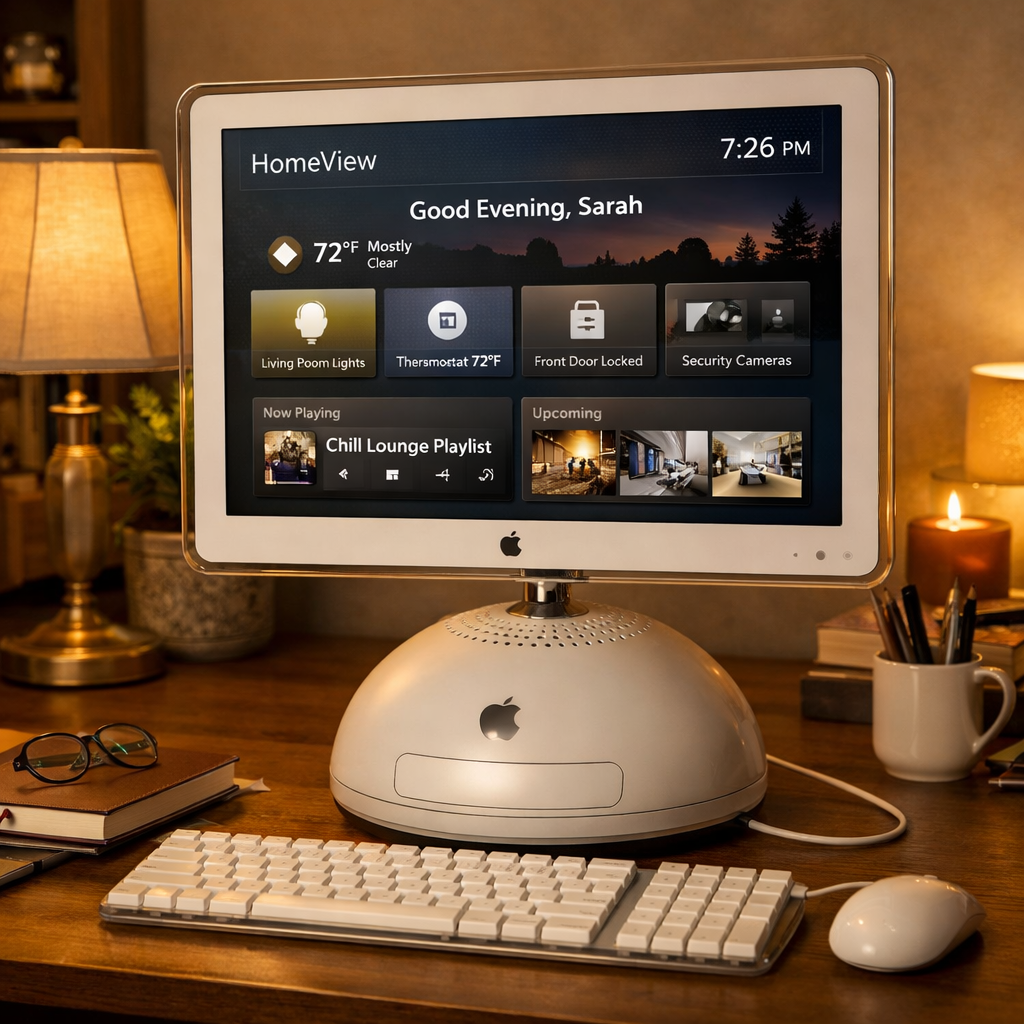
A creative modder has revived the iMac G4 by transforming it into a HomeView-style display through custom software, offering a fresh take on reusing Apple’s iconic hardware. The project comes from YouTuber Jesse Richards, who built a tool that streams HomeView content from a MacBook to an iMac G4, bringing modern smart display functionality to a vintage machine.
What’s the Setup?
The core of the project uses an iMac G4—recognizable by its dome base and floating flat panel—paired with a MacBook running HomeView. Richards created and shared software on GitHub that captures what’s showing in HomeView and sends it in real time to the iMac, acting essentially as an external display.
Rather than relying on legacy ports or specialized hardware, the streaming runs over standard networking between the MacBook and iMac. The old iMac shows exactly what the HomeView interface would display on the newer machine, making for a surprisingly seamless experience given the age of the monitor.
Why It Matters
The project highlights the growing appeal of breathing new life into classic Apple gear. Enthusiasts have long sought ways to repurpose older machines beyond nostalgia, whether as media servers, home labs, or in this case, as part of a home automation setup. Casting HomeView to an iMac G4 underscores what’s possible when software meets vintage hardware.
It’s also about sustainability. With e-waste and device turnover becoming ever more pressing issues, reusing components and replacing functionality via clever hacks can extend lifespans and reduce waste. A forgotten iMac suddenly becomes a useful home display, without needing the latest specs.
The modder’s software is publicly available, which means others can replicate or build upon the idea. It’s not just a one-off demo—it could inspire a community of people to revisit old Macs, giving them roles in home servers, dashboards, or media hubs.
Analytical angle: This type of project hits a sweet spot between nostalgia and utility. It reminds us how designs like the iMac G4 still resonate—not just aesthetically, but functionally when paired with modern software. Going forward, we may see more hybrid setups that fuse classic industrial design with current smart home ecosystems. The question is whether Apple—or third-party developers—will lean into this trend officially, enabling broader use of legacy hardware in modern contexts.