FAA Grounds Blue Origin’s New Glenn Rocket Following Orbital Mishap
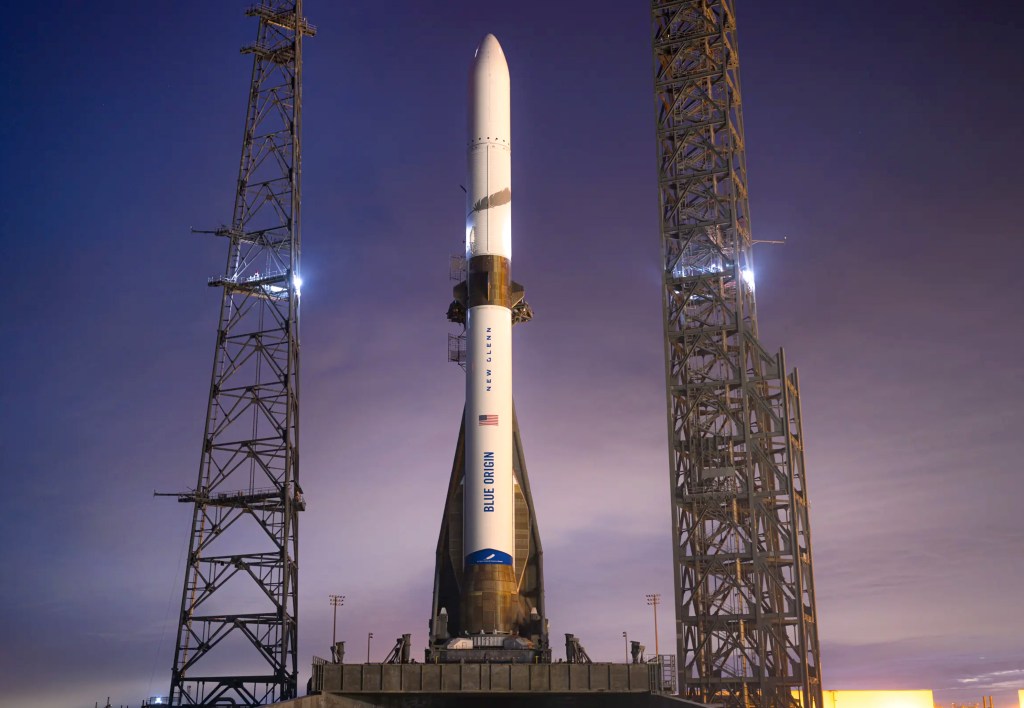
On April 19, 2026, Blue Origin’s New Glenn rocket embarked on its third mission from Cape Canaveral Space Force Station in Florida. This launch was notable for the successful reuse of its first-stage booster, marking a significant milestone in the company’s pursuit of reusable launch systems. The booster, previously utilized in the NG-2 mission, underwent enhancements, including new engines and upgrades to its thermal protection and guidance systems. After liftoff, the booster executed a precise landing on the Jacklyn droneship stationed in the Atlantic Ocean, underscoring Blue Origin’s advancements in booster recovery technology.
The primary objective of this mission was to deploy AST SpaceMobile’s BlueBird 7 satellite into low Earth orbit. BlueBird 7, distinguished by its expansive 2,400-square-foot antenna, was designed to enhance global connectivity by providing direct-to-cellphone broadband services. While the satellite successfully separated from the rocket and powered on, it was released into an orbit significantly lower than intended. This off-nominal orbit rendered the satellite incapable of sustaining operations, leading to its planned deorbiting. AST SpaceMobile has indicated that the satellite’s cost is covered by insurance and has multiple new satellites nearing completion, expected to be ready for launch in the coming weeks.
In response to this anomaly, the Federal Aviation Administration (FAA) has mandated that Blue Origin conduct a comprehensive investigation into the incident. The FAA’s directive requires Blue Origin to perform a mishap investigation and will approve the company’s final report and any corrective actions before it can resume flights. Consequently, all New Glenn flights are suspended until the investigation is concluded and corrective measures are implemented. This suspension could impact Blue Origin’s ambitious plans to launch up to 12 more New Glenn missions within the year, depending on the duration of the investigation.
Blue Origin CEO Dave Limp addressed the situation, stating that the company believes one of the upper stage’s engines didn’t produce sufficient thrust to reach our target orbit. This engine underperformance is identified as the primary cause of the satellite’s incorrect orbital placement. The investigation aims to determine the root cause of the engine’s failure to deliver the necessary thrust and to develop corrective actions to prevent future occurrences.
The implications of this mishap extend beyond the immediate mission failure. Blue Origin is actively involved in developing a lunar lander and has significant plans to contribute to NASA’s Artemis program, which focuses on returning humans to the lunar surface. Additionally, the company is in the process of obtaining certification from the U.S. Space Force to conduct national security missions. The outcome of the FAA’s investigation and the effectiveness of Blue Origin’s corrective actions will be pivotal in determining the company’s future role in these high-profile projects.
This incident is not the first time Blue Origin has faced challenges with its launch vehicles. In September 2022, the company’s New Shepard vehicle experienced a mishap due to a structural failure of an engine nozzle caused by higher than expected engine operating temperatures. The FAA’s investigation into that incident required Blue Origin to implement 21 corrective actions, including redesigning engine and nozzle components and making organizational changes. The current investigation into the New Glenn mishap will likely result in similar recommendations to enhance the reliability and safety of Blue Origin’s launch systems.
The aerospace industry is inherently complex and challenging, with companies like Blue Origin striving to achieve milestones in rocket reusability and payload delivery. While the successful reuse and landing of the New Glenn booster demonstrate significant progress, the upper-stage failure highlights the technical hurdles that remain. The forthcoming investigation and subsequent corrective actions will be crucial in addressing these challenges and ensuring the success of future missions.