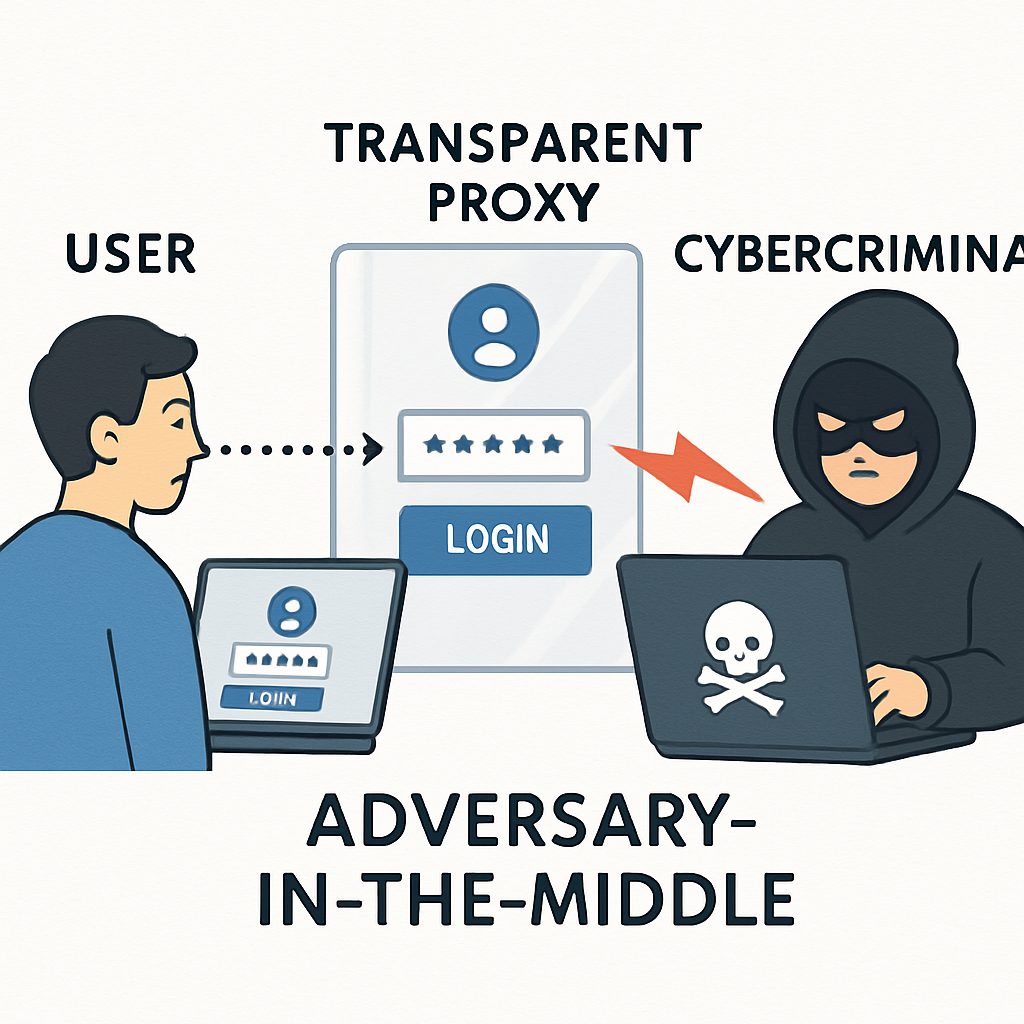
Recent security analyses have uncovered a surge in sophisticated phishing attacks targeting Microsoft users, employing a technique known as Adversary-in-the-Middle (AiTM) to bypass multi-factor authentication (MFA) protections. Central to these attacks is Evilginx, a tool that intercepts user credentials and session tokens, granting attackers unauthorized access to accounts.
In these campaigns, attackers deploy Evilginx to act as a transparent proxy between the victim and the legitimate Microsoft login page. When a user clicks on a malicious link, they are directed to a phishing site that mirrors the authentic login interface. As the user enters their credentials and completes the MFA process, Evilginx captures the username, password, and session cookies in real-time. This allows attackers to hijack authenticated sessions without needing further authentication challenges.
Security researchers have documented instances where Evilginx was used to target corporate executives. In one case, attackers registered a domain resembling the legitimate Microsoft login page and configured Evilginx to relay traffic through this domain. The phishing attempt was embedded within a social engineering scheme, making it difficult for victims to detect the deception. Upon entering their credentials and approving the MFA prompt, the attackers obtained the session cookies, enabling them to access the victim’s account without additional authentication.
These attacks highlight a critical vulnerability: the ability of AiTM techniques to circumvent MFA, a security measure widely regarded as a robust defense against unauthorized access. By capturing session tokens during the authentication process, attackers can maintain access to compromised accounts, even if passwords are changed post-breach.
To mitigate the risks associated with AiTM attacks, organizations should consider implementing phishing-resistant MFA methods, such as hardware security keys that utilize public key cryptography. Additionally, continuous monitoring of authentication logs for unusual activities and educating users about the dangers of phishing attacks are essential steps in enhancing security posture.
The rise of tools like Evilginx underscores the evolving nature of cyber threats and the need for adaptive security measures. As attackers develop more sophisticated methods to bypass traditional defenses, organizations must stay vigilant and proactive in their cybersecurity strategies to protect sensitive information and maintain trust.