Germany-based The Exploration Company (TEC) has secured $450 million in its Series C funding round — a record for a European space company. The capital raise positions TEC as one of the leading challengers in the global race to build reusable spacecraft, a domain long dominated by SpaceX.
What TEC is Building & What $450M Gets
TEC, led by French aerospace veteran Hélène Huby, operates across Germany, France, Luxembourg, Spain, and Italy. The startup has been given a mandate from investors to deliver alternatives to SpaceX’s rockets—particularly in Europe, where the need for sovereign access to space is increasingly urgent.
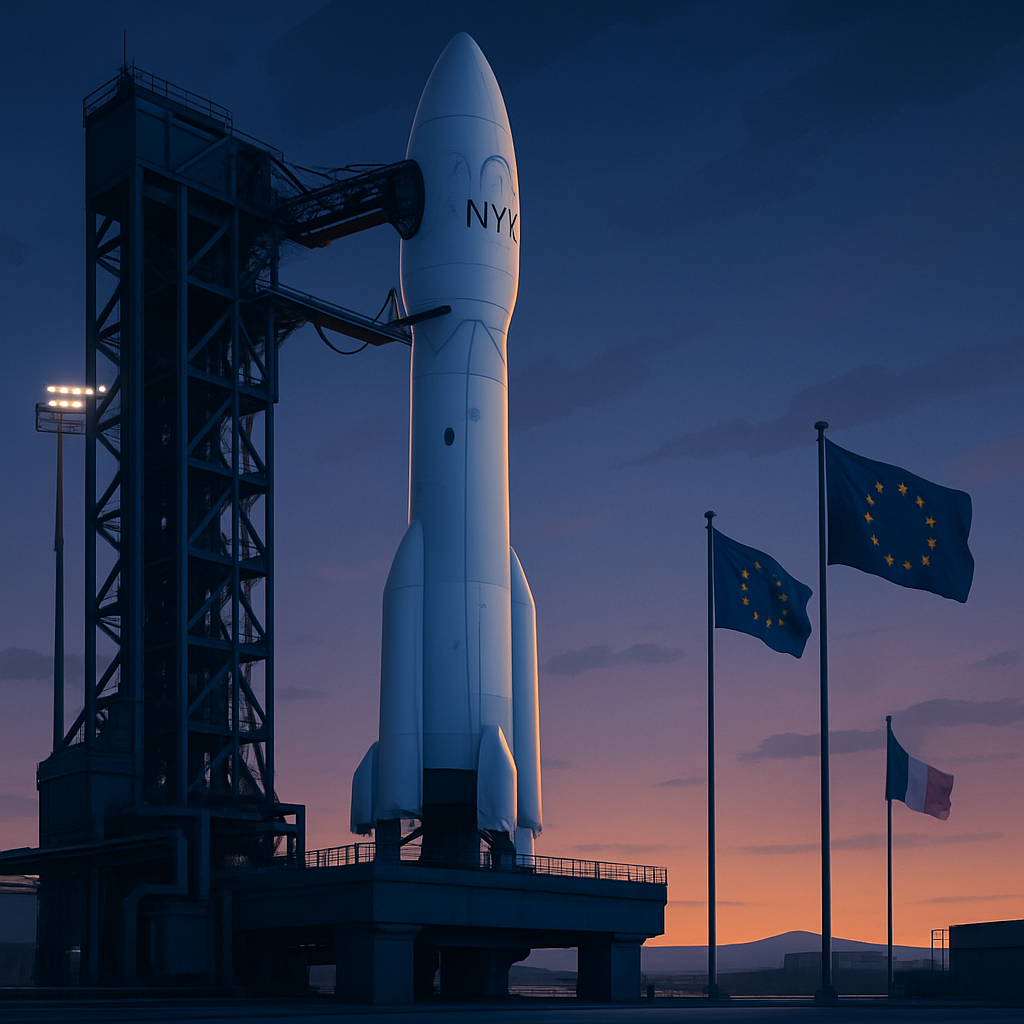
The funding will be used to advance TEC’s core projects: Nyx, a reusable capsule capable of carrying cargo and crew, designed to dock with the International Space Station (ISS); and Storm, a rocket engine development program. The company aims to get Nyx to dock with the ISS and return to Earth safely by November 2028. Funding also supports building the infrastructure — a launch pad — needed for future launches.
Europe’s Growing Bid to Compete in Reusable Launch
TEC’s latest round is being co-led by Atomico and the EQT-managed Scaleup Europe Fund, with Bessemer Venture Partners also participating. These funds reflect international confidence: not only from Europe, but from investors like NASA. As of now, TEC reportedly has “10 Nyx missions booked” along with over $2 billion in contracts and commitments. Institutional partners include the European Space Agency (ESA) and NASA.
This comes amid growing concern that SpaceX may be tightening access to its Falcon rockets as it prioritizes Starlink launches. With Starship expected to replace Falcon in the future, demand for alternative options is rising. TEC is betting that Europe will need its own reusable heavy-lift capacity—and that it needs to act fast.
Storm’s engine technology will use full-flow stage combustion, a complex yet highly efficient cycle. It’s an engine type that’s rare globally and brand new for Europe. Meanwhile, European launches are advancing elsewhere; German startup Isar Aerospace recently flew its Spectrum rocket for the first time, albeit smaller in scale than what TEC aims for.
Why This Matters
This funding comes at a moment when access to low Earth orbit is becoming a strategic priority. European policymakers have praised TEC’s raise, including leaders like President Macron and President von der Leyen. The announcement was timed ahead of the International Space Summit in Paris, where TEC hinted at further developments.
Tight timetables remain. While TEC has set ambitious goals — including ISS docking by late 2028 — there’s wide recognition that delivering reusable infrastructure at scale takes time, technical breakthroughs, and capital.
Analysis
TEC’s $450 million Series C marks more than just financial muscle; it’s a clear signal that European ambitions in space are accelerating. The focus on reusable heavy-lift rockets is especially relevant: as demand for satellite broadband, Earth observation, and potential space-based data centers grows, the need for affordable, frequent access to orbit becomes more urgent. While markets remain open—SpaceX still has vast scale, and developing full-flow stage combustion is notoriously difficult—TEC is putting Europe in the race in earnest. What to watch: whether Nyx meets its ISS docking promise by November 2028; whether Storm’s engine design delivers; and how supply chain, regulatory, and geopolitical pressures will shape TEC’s path forward.