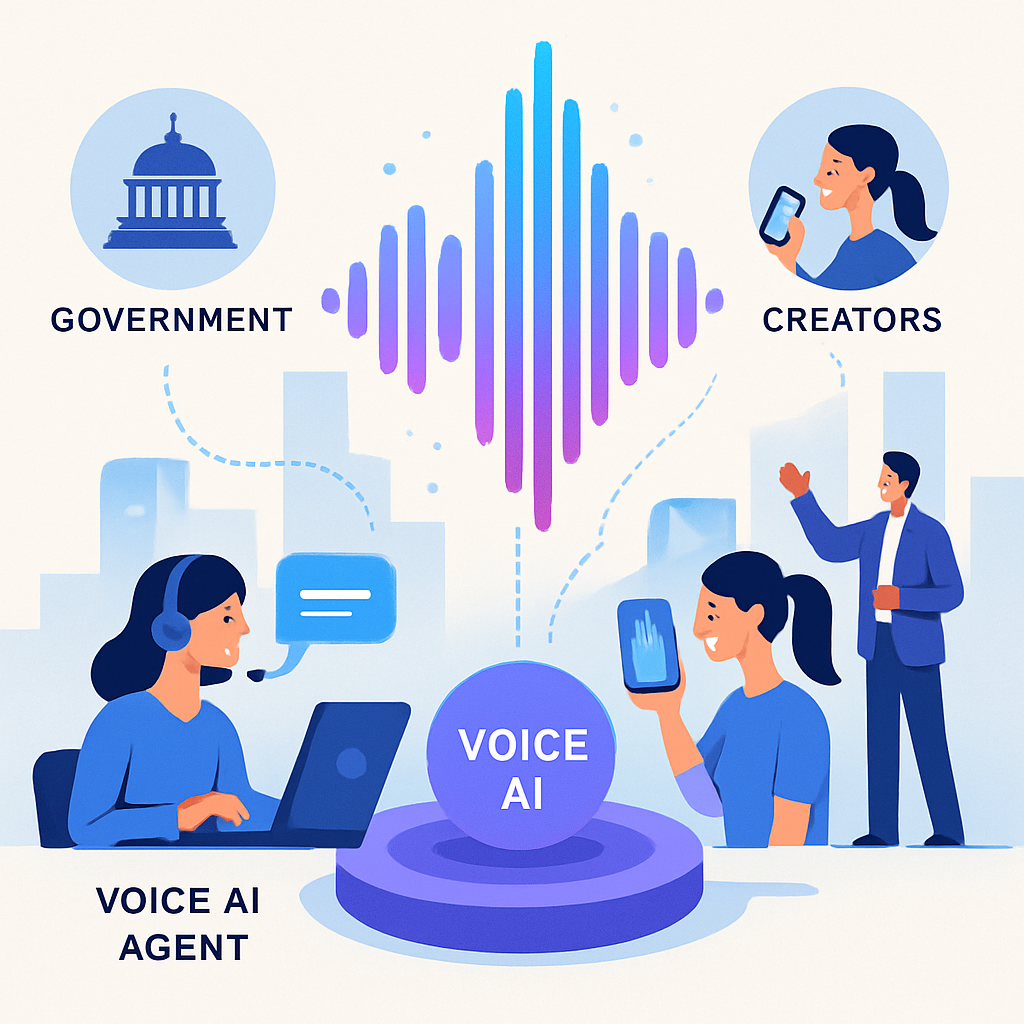
ElevenLabs, the voice-layer AI company that turns text into human-sounding speech, has just crossed a major valuation hurdle. Four years into its run, it’s reportedly valued at $22 billion by its investors, riding the strength of some $600 million in annual recurring revenue. The firm’s technology powers automated support lines for millions—Klarna handles first-line support for 35 million U.S. users via the platform, and governments, Adobe, Cisco, and Deutsche Telekom are also among its enterprise clients.
The company doesn’t just serve large institutions—it’s also a go-to for creators building audiobooks, producing dubbing, and making music using its tools. But while its reach is broad, ElevenLabs is also increasingly confronting a new challenge: some customers are now training their own voice AI models, in turn becoming potential competitors.
Enterprise-first, but creators matter too
Over half of its revenue comes from classic enterprise customers. The rest is split between SMBs, independent developers, and content creators. ElevenLabs is exploring how different kinds of models—open-weight versus proprietary “frontier” models—serve different use cases. When the stakes are high, such as in finance or government work that demands authentication and precision, frontier models still win out. For more informational tasks, open-weight models are sufficient if the customer’s own data can define the experience well.
With governments like Brazil and Poland among clients, ElevenLabs adjusts its offerings by country, taking into account issues like data residency, model source, and closed-source or fine-tuned configurations—depending on the sensitivity of the task. One example in Poland involves using voice agents to remind patients in the public health system about appointments, aiming to reduce the 18% no-show rate.
AI, ethics, and what’s next
CEO Mati Staniszewski believes companies should be transparent when customers are interacting with AI systems instead of humans—at least for now. He anticipates a shift in social norms, where AI agents become more accepted and expected in customer service settings over time.
On margins and pricing, ElevenLabs is cautious about revealing exact figures, but stresses that fine-tuning and model constraints help manage costs. The company is willing to let margins tighten if that helps win market share and build long-term value for customers over the next few years.
Training data is a mix of internally annotated human voice content, including accent, emotion, and other speech features. For high-risk deployments, ElevenLabs works closely with clients to co-create models tailored to their environment. On the question of going public, while the company is laying the groundwork to last long-term, there’s no commitment or firm timeline—2028 has been floated, but only as one possibility.
Though ElevenLabs admits the AI space is crowded, especially with rivals who both integrate and replicate its models, its leadership argues that its product depth, compliance with diverse government requirements, and focus on voice quality keep it competitive. Unlike companies exposed in past AI controversies, the new risks like self-replication or emergent agents creating agents are not part of its current platform—ElevenLabs asserts careful safeguards and identity verification are in place.
What this means in context: ElevenLabs is illustrating how voice AI is becoming a foundational layer of modern computing. As voice agents take up more customer-facing work, the firms that control both the underlying quality and the compliance will define who wins. For ElevenLabs, the next few years should test whether value follows valuation—and whether the company can both scale ethically and stay ahead in a game where today’s partner may be tomorrow’s rival.