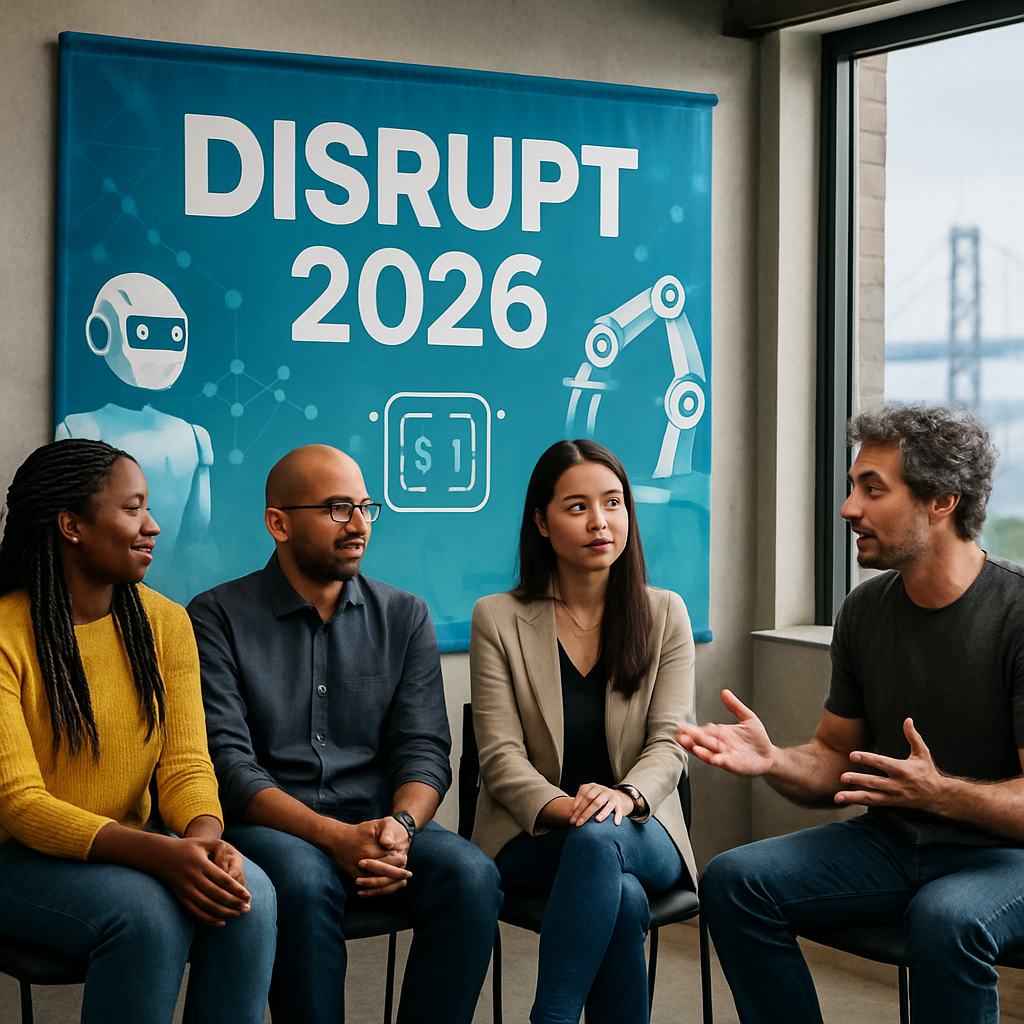
TechCrunch Disrupt 2026, set to convene thousands of founders, investors, and tech leaders at Moscone West in San Francisco from October 13–15, has revealed the full roster of breakout sessions, designed to deliver hands-on insights alongside audience Q&A. These 50-minute exchanges promise to delve into founders’ top questions: building with AI agents, opportunities in inference, physical AI, fundraising strategies, and scaling teams in the AI era. Attendance is limited and operates on a first-come, first-served basis.
What’s On the Agenda
A slate of expert-led sessions will tackle the intersection of emerging tech and real-world execution. “What Is Physical AI, Anyway?” will unpack AI systems that perceive, reason, and act in unpredictable environments, defining what qualifies as “physical AI” and how investors evaluate companies in this niche. The “Outnumbered Either Way” session features engineers from Anthropic sharing how they structure workflows around multiple Claude agents, including recovery strategies when agents err.
The “Inference Economy: Why AI’s Next Trillion Dollars Won’t Look Like Its First” session confronts the shift from training-focused business models to those centered around inference, examining latency as product value, evolving infrastructure needs, and where defensibility lies in future AI startups. Meanwhile, “Building Then vs Now” gathers leaders in AI, entrepreneurship, strategy, and data to explore how modern tools reshape decision-making, speed, bias, and the human elements of company building.
Fundraising, Growth & Leadership in Focus
Several breakout sessions focus on capital and leadership. One, sponsored by Fidelity Private Shares, will guide founders through every hurdle in raising capital—from due diligence and investor outreach to maintaining momentum and managing cap tables. Another, titled “Fundraising Mistakes That Will Kill Your Round, and How to Avoid Them,” spotlights decisions that derail a funding process and how to chart a clearer path from the first pitch to closing.
Additional sessions include “From Founder to Investor: The Next Act,” exploring the mindset shift when entrepreneurs become capital allocators; “Building a Growth Engine in the AI Era,” with lessons from bootstrapped success stories on spotting overlooked distribution channels and accelerating product-market feedback loops; “Physical AI Isn’t a Model Problem. It’s an Execution Problem,” which examines how to close the loop across perception, decision, action, and verification; and “Talent as the Operating System,” looking at how high-performance teams scale under AI demands through alignment, trust, and execution.
There’s also “Breaking Into Space: The AI Builder’s Opportunity,” a session mapping AI for aerospace and government use-cases: huge data, autonomous decisions, real-time processing, agent systems—all in orbit and beyond.
Why This Matters
These breakout sessions represent the connective tissue of Disrupt: more than stage presentations or product launches, they’re where ideas get interrogated, assumptions challenged, and practical tactics shared. For participants, this is your chance to unpack the real challenges: what moves the needle when AI transitions from theory to practice; what makes a company investable in sectors where execution, not just innovation, is key.
Disrupt 2026 aims to be more participatory: bring your toughest questions, expect honest answers. Register now—passes are on sale with deals for group purchases and Expo+ pricing. For those freshly laid off, there’s even a discounted option to stay in the loop.
What to Watch For: How conversations around the inference economy evolve; which teams are spotlighted for execution in physical AI; whether fundraising advice shifts to emphasize integrity and sustainability; and how AI-driven growth plays out for companies that didn’t start with massive capital. This agenda might hint at where tech investors and builders believe the next frontier lies.