Discord is preparing a major performance upgrade for Android devices thanks to a new client being built with Rust. The change promises dramatically faster launches, smoother operation on low-end phones, and significantly less RAM use.
What’s Changing
The update replaces key components of the existing Android client with a codebase that mirrors Discord’s new desktop app. By using Rust to drive the native Android UI, the company aims to harness the speed and resource efficiency for which Rust is well-known. The goal is to cut down load times and memory requirements substantially, especially on budget devices.
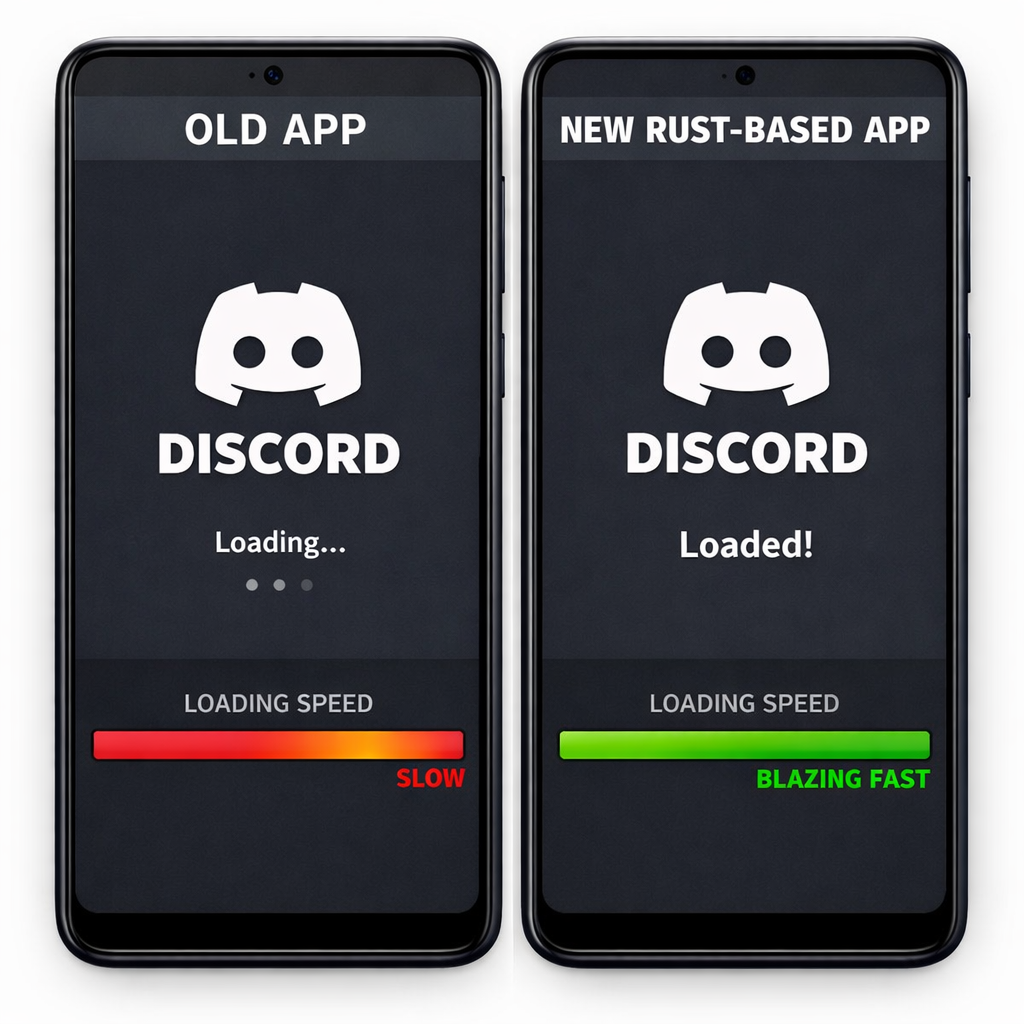
A demo from Discord’s CTO shows a side-by-side of the current Android app and the new Rust-based client. With the existing build, it takes over 3 seconds just to launch, followed by another 2 seconds to fully load the interface. In contrast, the Rust version opens in under a second and finishes loading everything before 2 seconds in total.
Memory Use Drops Dramatically
Alongside the speed boost, substantial reductions in RAM usage are coming. On desktop, Discord’s old client was using about 1,200 MB of RAM, versus just 300 MB for the new client in a recent screenshot from the CTO. Though mobile numbers haven’t been fully disclosed yet, users should expect similar efficiencies once the Android app rolls out.
The update is still in development, and there’s no official public release date yet. But with this progress already visible, an imminent launch seems likely. Android users have reason to be excited, especially if they’re using older or lower-spec phones.
Beyond performance upgrades, there’s also hope for improved support for foldable phones. Users have reported the current Android app works inconsistently on foldables ever since its design was merged with the iOS build. This update may open the door to better optimization for those devices.
This Rust-driven client isn’t just about speed—it’s part of a broader trend. Developers are increasingly rewriting code in systems languages like Rust to deliver performance gains while keeping codebases maintainable. For Discord, this change could mark a turning point in how smooth and responsive mobile chat apps feel.
Why this matters: faster launches and lower memory use translate to better battery life, fewer crashes, and a more usable app on older phones. It’s a win for users who’ve long put up with lag or heavy RAM use. What to watch for next: benchmarks from the Android client once it’s public, how well it handles edge cases like foldable screens, and whether the memory savings match what’s been shown on desktop.