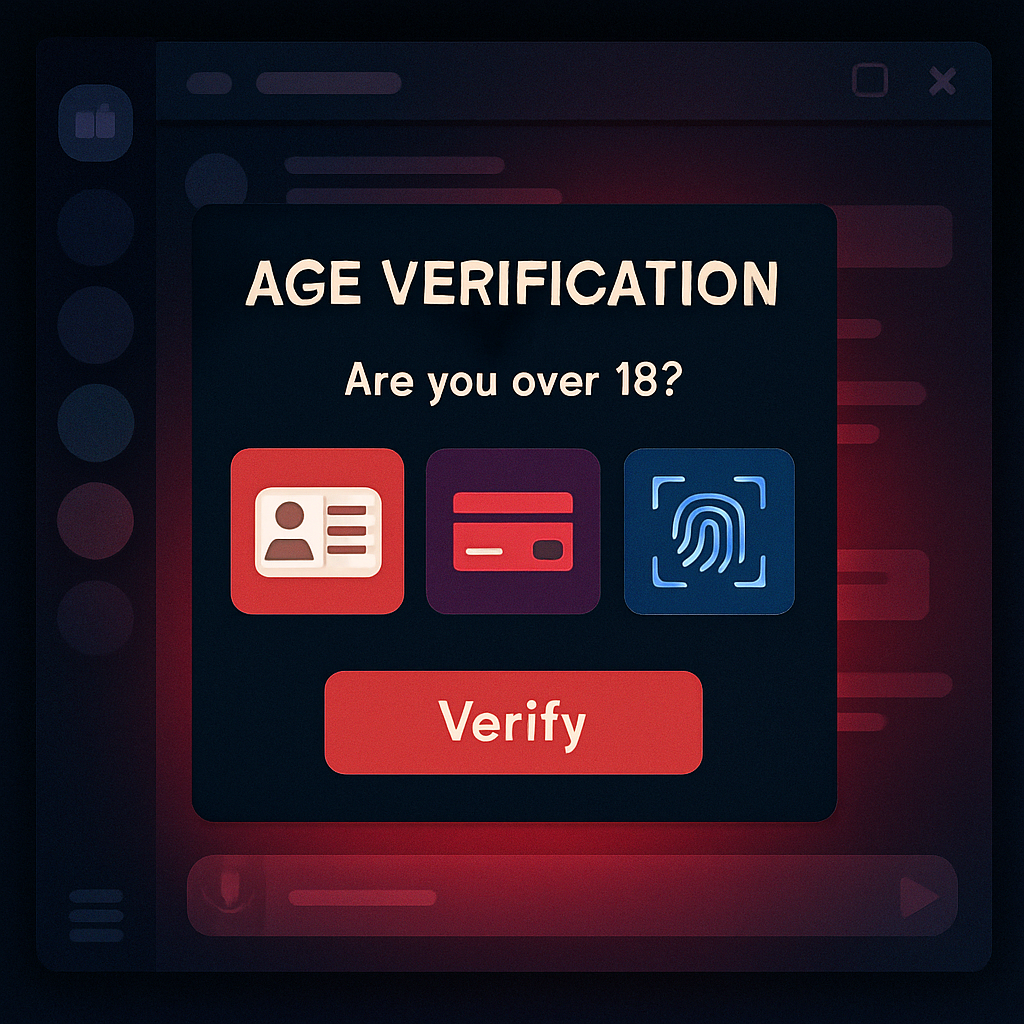
Discord is unveiling mandatory age verification measures for all users beginning Wednesday, marking a major shift in the company’s policy despite strong opposition from its community. Earlier plans for age verification were postponed in February after privacy concerns—users and advocates alike worried about the risks inherent in biometric scans and identity document checks. Compounding those fears, a breach last year exposed data held by a vendor partnering with Discord, including government ID photos and selfies linked to identity verification.
The push is driven in part by evolving legal standards. As certain jurisdictions—among them Brazil and Texas—require platforms to implement age compliance systems, Discord is expanding its age assurance processes in response. The company’s CTO emphasized that, while biometric data raises understandable scrutiny, the firm is under growing regulatory pressure to act.
How Discord’s Age Assurance Will Work
Discord asserts that the vast majority of its user base—over 90%—will not face direct ID or biometric verification. Instead, the platform will rely on behavioral “signals” such as account age, device usage, and general activity patterns to classify users into adult, teen, or unconfirmed categories. The system operates via machine learning models trained on confirmed age data from regions already bound by age verification laws.
Users who aren’t clearly identifiable as adults may still verify their age through less invasive means. Discord says affected users can provide proof using a valid credit card or pull age group data from their Apple App Store or Google Play Store accounts—options designed to avoid requiring facial scans or government documents in many cases.
What This Means for Teens and Platform Access
Confirmed adults will see little change in their Discord experience. Teens, however, will be restricted from joining age-restricted servers or channels, receive messages from non-friend users via a separate message requests inbox, and be warned before accepting friend requests from users they do not share mutual connections with. Unconfirmed users may face limitations until they verify their age.
Discord clarifies that age estimates will not derive from message content, profile details, or demographic info. Rather, patterns in user behavior, including engagement levels and community participation, will feed into the model’s predictions. All data used in these models is already collected as part of standard platform operations.
Privacy experts caution that mandatory age verification can introduce fresh risks—even though its goal is protecting minors, especially as platform liability laws expand globally. Users have expressed concerns about data retention, potential misuse, and the invasive scope of biometric verification despite Discord’s assurances.
Regulatory compliance appears to be non-negotiable. With laws increasingly pushing online platforms to prove users’ ages, Discord is choosing to act now—even at the price of backlash. The tension between legal obligations, platform safety, and user privacy has become unavoidable.
Analytic Corner: Discord’s new age verification rollout is not just policy change—it signals a turning point in how platforms balance user experience with regulatory compliance. What to watch next: how well Discord protects sensitive identity data, how accurately its behavior-based signals distinguish minors from adults, and whether other social platforms will follow suit or differ in their privacy trade-offs under pressure. If handled poorly, this could reshape not only Discord, but also expectations for identity assurance across the internet.