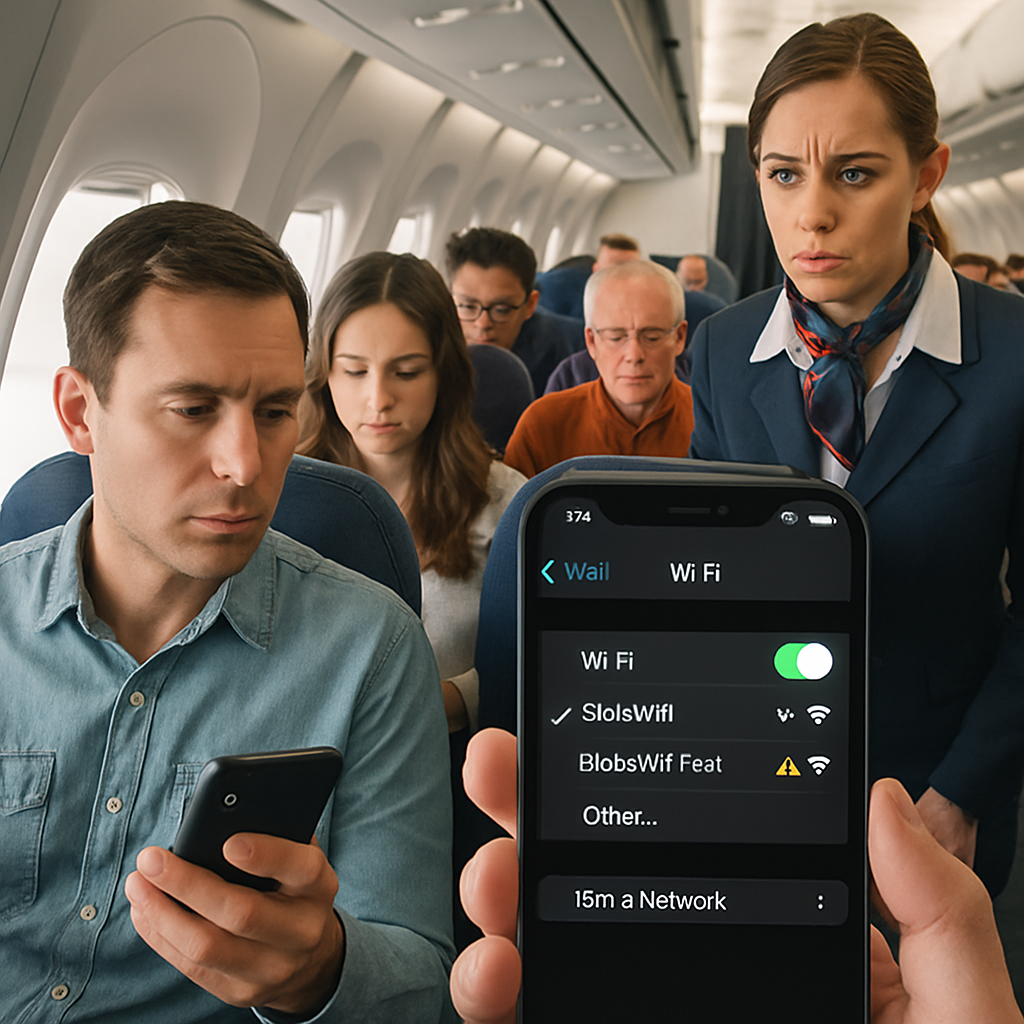
During a recent Delta Air Lines flight from Las Vegas to Atlanta, passengers returning from a major hacking conference reportedly experienced a cybersecurity incident. Approximately an hour into the flight, crew members detected an unauthorized Wi-Fi network named ‘Delta WiFi Fast,’ which closely resembled the airline’s official network. This rogue network was allegedly set up to deceive passengers into connecting, potentially exposing their personal information.
Reports suggest that individuals onboard, who had attended the DEF CON 34 conference, may have employed a technique known as an ‘evil twin attack.’ In such attacks, a malicious actor creates a counterfeit Wi-Fi access point with a name similar to a legitimate network. Unsuspecting users who connect to this fake network can be redirected to fraudulent login pages designed to harvest sensitive credentials.
Further accounts indicate that the perpetrators might have used specialized equipment to disrupt the aircraft’s genuine Wi-Fi service, effectively forcing passengers to seek alternative connections. This disruption, often referred to as ‘jamming,’ can lead users to inadvertently connect to the malicious network.
Upon discovering the unauthorized network, Delta’s flight crew took immediate action by disabling the in-flight Wi-Fi for about thirty minutes as a precautionary measure. The airline has confirmed the presence of the rogue network but emphasized that no internal systems were compromised. Delta is collaborating with federal authorities to investigate the incident thoroughly.
The cybersecurity community has expressed strong disapproval of the alleged actions, highlighting the potential legal ramifications. Interfering with authorized communications and engaging in credential phishing are serious offenses that can lead to significant penalties under federal law. Such incidents also risk tarnishing the reputation of ethical researchers who attend conferences like DEF CON to enhance security practices.
For travelers, this event underscores the importance of exercising caution when connecting to public Wi-Fi networks, especially those that appear unexpectedly or promise enhanced performance. Always verify the legitimacy of a network before connecting, and consider using personal mobile data or trusted VPN services to safeguard sensitive information.