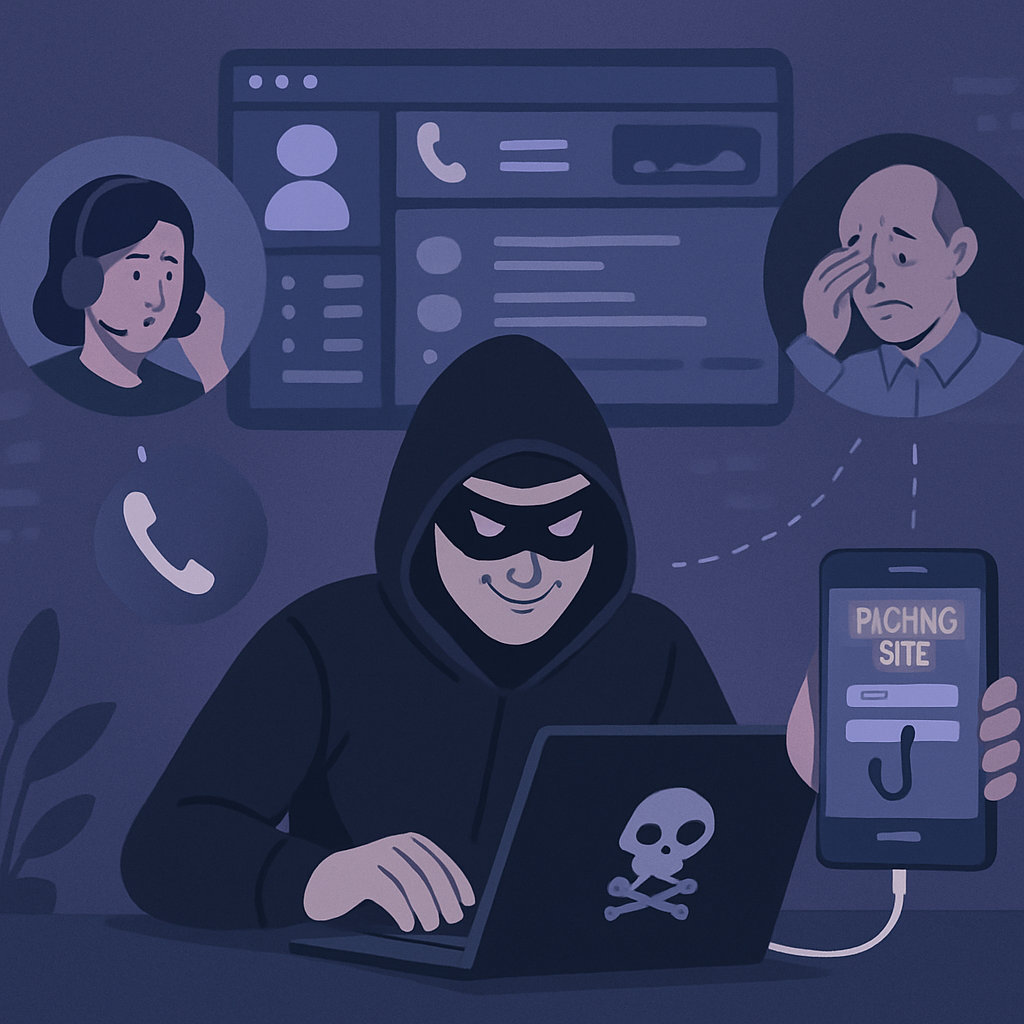
Cybercriminals are increasingly leveraging sophisticated platforms to orchestrate voice phishing (vishing) attacks, transforming routine helpdesk calls into avenues for enterprise account takeovers. A notable example is the ‘Work Panel’ platform, which integrates target research, caller management, phishing-site creation, and credential handling into a unified web-based operation.
Work Panel is actively employed in vishing campaigns targeting customers of various identity providers. The platform enables operators to gather detailed employee information, replicate familiar login interfaces, deploy isolated phishing pages, and guide victims through authentication processes—all while maintaining real-time communication via phone calls. This method mirrors tactics observed in previous campaigns where attackers exploited trust in internal support channels to gain unauthorized access.
According to a report by Okta, Work Panel functions as a comprehensive application for conducting vishing-driven account takeovers, distinguishing itself from basic phishing kits. The platform supports multiple operators and distinct staff roles, facilitating rapid campaign deployment and resilience against disruptions. This structure allows cybercriminals to scale their operations effectively while maintaining separation between callers and those managing stolen credentials.
Operational Structure of Work Panel
Work Panel delineates its workforce into three primary roles:
- Callers: Responsible for identifying employees, utilizing assigned internet-phone credentials, sending pretext emails, and engaging targets via phone.
- Managers: Oversee live victim sessions, collect submitted passwords or authentication codes, and monitor ongoing activities.
- Administrators: Manage the overall infrastructure, staffing, settings, and have the capability to initiate shutdowns.
Prior to initiating a call, the platform can access commercial business-contact databases to retrieve comprehensive employee details, including names, corporate email addresses, direct phone numbers, job titles, and LinkedIn profiles. This preparatory step enhances the credibility of the impersonated helpdesk calls, as callers can reference specific information about the target’s role and organizational structure.
Notably, the platform ensures that callers do not have direct access to the credentials captured during the attack. Instead, managers monitor live queues displaying the phishing pages viewed by victims and orchestrate the next steps in real-time, such as prompting for push approvals, number matching, authenticator codes, or support-ticket completions. This segregation safeguards the most sensitive data and simplifies the recruitment and replacement of callers.
Automated Phishing Site Deployment
Work Panel automates several tasks that traditionally required technical expertise. Administrators can:
- Register domains and configure DNS settings.
- Create separate phishing sites with templates mimicking Okta, Microsoft 365, or Salesforce sign-in pages.
- Clone visual branding from target organizations to enhance the authenticity of phishing sites.
- Send branded phishing emails directing employees to the newly created sites.
Each phishing panel operates independently with its own subdomain, configuration, process, and web-server block. The platform also includes features such as secret rotation, activity logging, live caller monitoring, and a self-destruct function that can simultaneously remove phishing sites and associated DNS records. These capabilities complicate defense efforts, as taking down a single domain does not provide a lasting solution.
To mitigate the risks posed by such sophisticated vishing attacks, organizations should implement robust verification processes for unsolicited support calls. Employees must have clear, trusted methods to confirm the identity of helpdesk personnel before sharing sensitive information, approving login requests, or following instructions that could compromise security.
The emergence of platforms like Work Panel underscores the evolving nature of cyber threats, where attackers continuously refine their methods to exploit human trust and technological vulnerabilities. Organizations must remain vigilant, adopting comprehensive security measures and fostering a culture of skepticism towards unsolicited communications to safeguard against these advanced social engineering tactics.