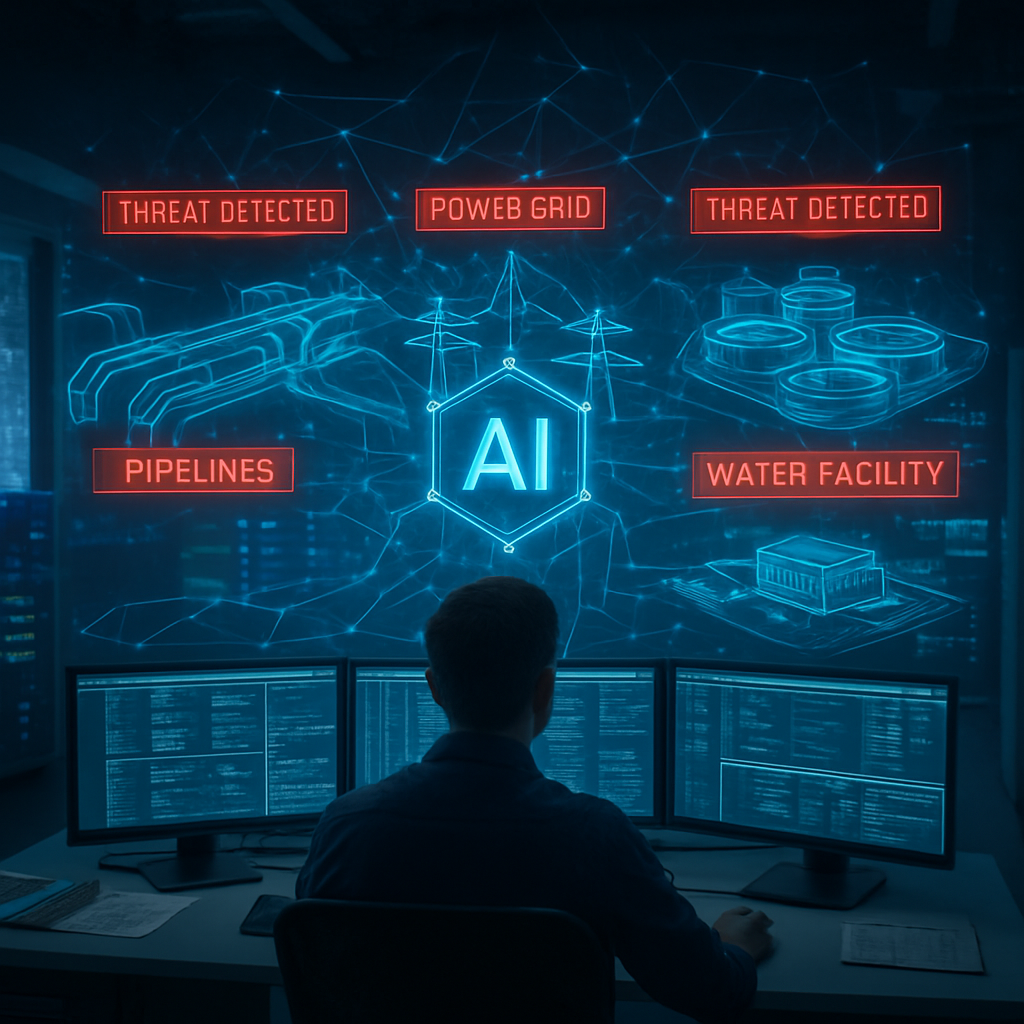
CrowdStrike has joined forces with Anthropic through its Critical Infrastructure Defense Program, aiming to bolster protection for vital sectors such as energy, water, transportation, and manufacturing. The collaboration, announced on October 8, 2026, marries CrowdStrike’s deep operational and network defense experience with Anthropic’s Claude AI models, technical research, and security engineering support.
Trusting AI at the Core of Industrial Security
Critical infrastructure networks span modern IT systems and legacy operational technology (OT) that governs physical machinery. Many OT systems operate for decades, making them difficult to upgrade without disrupting essential services. This leaves known vulnerabilities unresolved for years. The new program targets this challenge head-on — offering AI-powered defense tailored for environments where downtime isn’t an option.
How CrowdStrike Fits In
CrowdStrike is among eleven founding partners in Anthropic’s program, including firms like Dragos, Nozomi Networks, Rockwell Automation, Palo Alto Networks, Accenture, and Deloitte. Participating organizations are expected to bring in their industrial domain knowledge, while leveraging Claude models, on-site engineering, and threat research to develop practical defenses.
CrowdStrike’s contributions include sharing threat intelligence, security data, and expertise from its Falcon platform. A key asset in this effort is Falcon for XIoT, which helps map out unmanaged or legacy devices alongside traditional IT assets, without resorting to disruptive scanning. Its integrated view across endpoints, identity, threat intelligence, cloud, and operational security is designed to give defenders full visibility across business and operational networks.
Farmed from existing collaboration, Claude already powers CrowdStrike’s Charlotte AI security assistant. The new program not only expands access to AI tools and model output, but also embeds technical guidance and connections to a critical infrastructure defense community.
While identifying vulnerabilities is a key goal, the partnership emphasizes that AI alone isn’t the full solution. Safely applying fixes—especially in environments with equipment that can’t be taken offline—is central. Operationalizing AI findings into safe, practical security enhancements will be a benchmark of the program’s success.
What this means going forward:This alliance reflects a broader shift toward using AI as a hands-on tool in industrial cybersecurity. As threats evolve, blending human expertise with AI model-driven insight—especially in high-stakes infrastructure—is likely to become standard. The real test will be translating research and detection into operational policies that protect without disrupting critical systems. Stakeholders should watch closely how deployments fare in real-world environments, what safety precautions are built in, and how quickly vulnerabilities identified by AI are remedied in systems that demand high reliability.