Recent code in the macOS Tahoe 26.7 update suggests Apple’s upcoming Home Hub will support face-based profile switching and ambient sensing, allowing it to recognize different people in the home and display their personal content accordingly. The hooks were spotted in strings tied to identity verification—invoking Control Center, settings, and presence sensors—to switch profiles automatically when someone is nearby. ([macrumors.com](https://www.macrumors.com/2026/08/24/home-hub-ambient-sending/))
The hub is expected to offer multiple user profiles, each accessing “Personal Content,” which will be selectable via the Control Center or Settings app. It’s likely to run an OS similar to tvOS—profile controls may resemble what users already experience on Apple TV. ([macrumors.com](https://www.macrumors.com/2026/08/24/home-hub-ambient-sending/)) It will reportedly use built-in cameras and proximity sensors to detect someone in the room and trigger a profile switch. References to “ambient sensing” and presence detection reinforce this, along with instructions for users to stand in front of the device to enable access. ([macrumors.com](https://www.macrumors.com/2026/08/24/home-hub-ambient-sending/))
Models, Display & UI
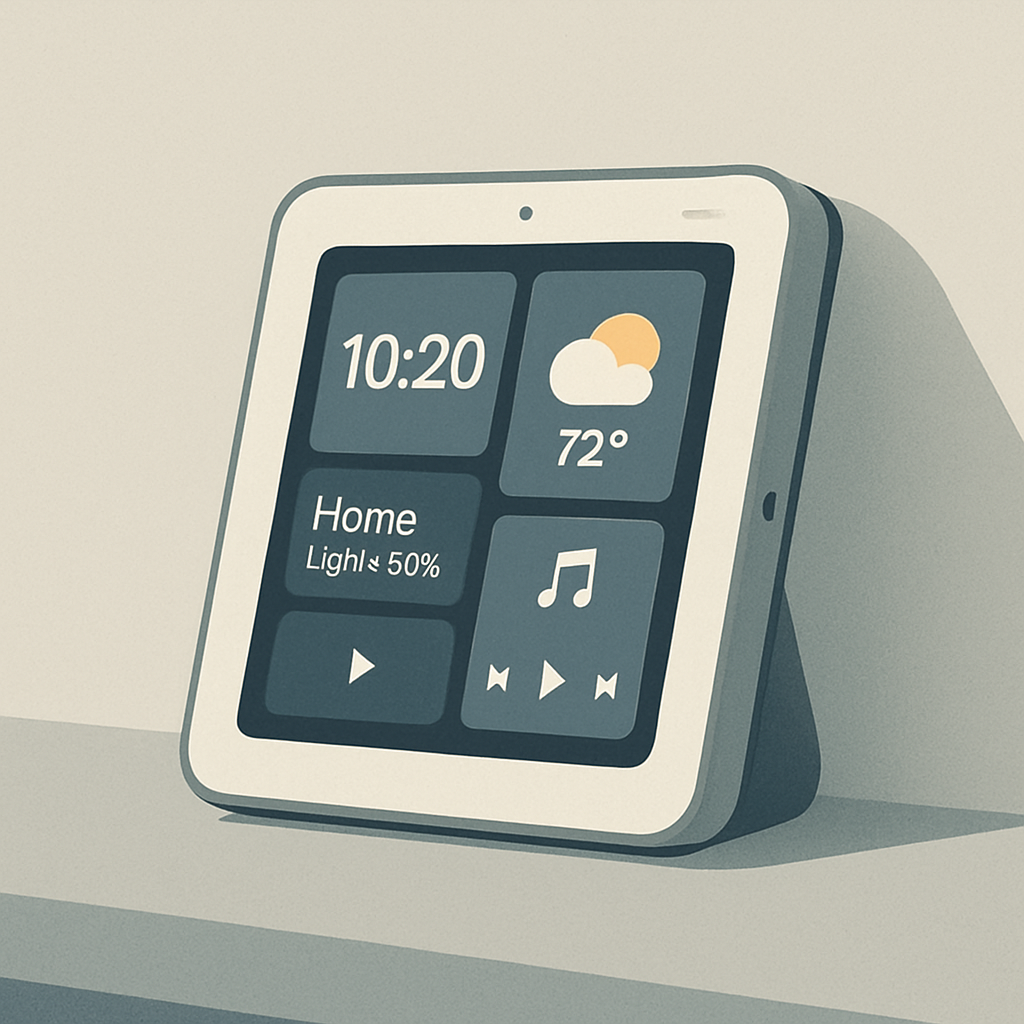
There appear to be two variants of the Home Hub in development: a wall-mounted version and one with a speaker base. The device is rumored to feature a square 7-inch screen, allowing for home screen widgets and quick access to key content. ([macrumors.com](https://www.macrumors.com/2026/08/24/home-hub-ambient-sending/)) Some strings call for instructions like “Before I can help with that, you’ll need to enable Personal Content…” or “This device hasn’t seen you in a while, you’ll need to ask again in front of the camera,” suggesting some verification flow tied to ambient sensing. ([macrumors.com](https://www.macrumors.com/2026/08/24/home-hub-ambient-sending/))
Launch timing may be sooner than many expect—sources suggest an announcement could happen as early as September. Alongside profile switching, other leaked features include a widget gallery for choosing home screen content, aligning with broader themes in Apple’s current product strategy. ([macrumors.com](https://www.macrumors.com/2026/08/24/home-hub-ambient-sending/))
Background: Apple has reportedly been working on a dedicated Home Hub for some time, intended as a stationary smart assistant for living rooms, kitchens, and bedrooms. Earlier rumors placed its release between late 2026 and early 2027, and comparisons to HomePod and Apple TV capabilities loom large. The ambient sensing approach aims to bring seamless identity personalization—something Amazon Echo and Google Nest devices began pushing years ago. ([macrumors.com](https://www.macrumors.com/2026/08/24/home-hub-ambient-sending/))
Apple’s move toward biometric profile switching via ambient sensing demonstrates a push to intensify personalization and privacy together. Similar to how Face ID works on the iPhone, this feature seems to require verification through camera-based recognition, only surfacing personal content when safe. That could be a major shift for the smart home space, where devices often rely on manual user selection or voice profiles.
What this means: The Home Hub’s profile switching via ambient sensing could change how households interact with shared devices. Automatically surfacing relevant content per user streamlines personalization, but it raises questions about privacy, data storage, and accuracy, especially in mixed settings.
What to watch: Keep an eye on Apple’s event lineup for September—these leaks make it possible the Home Hub will appear this fall. Also note how the ambient sensing tech handles verification, security protections, and false recognition before it actually ships.