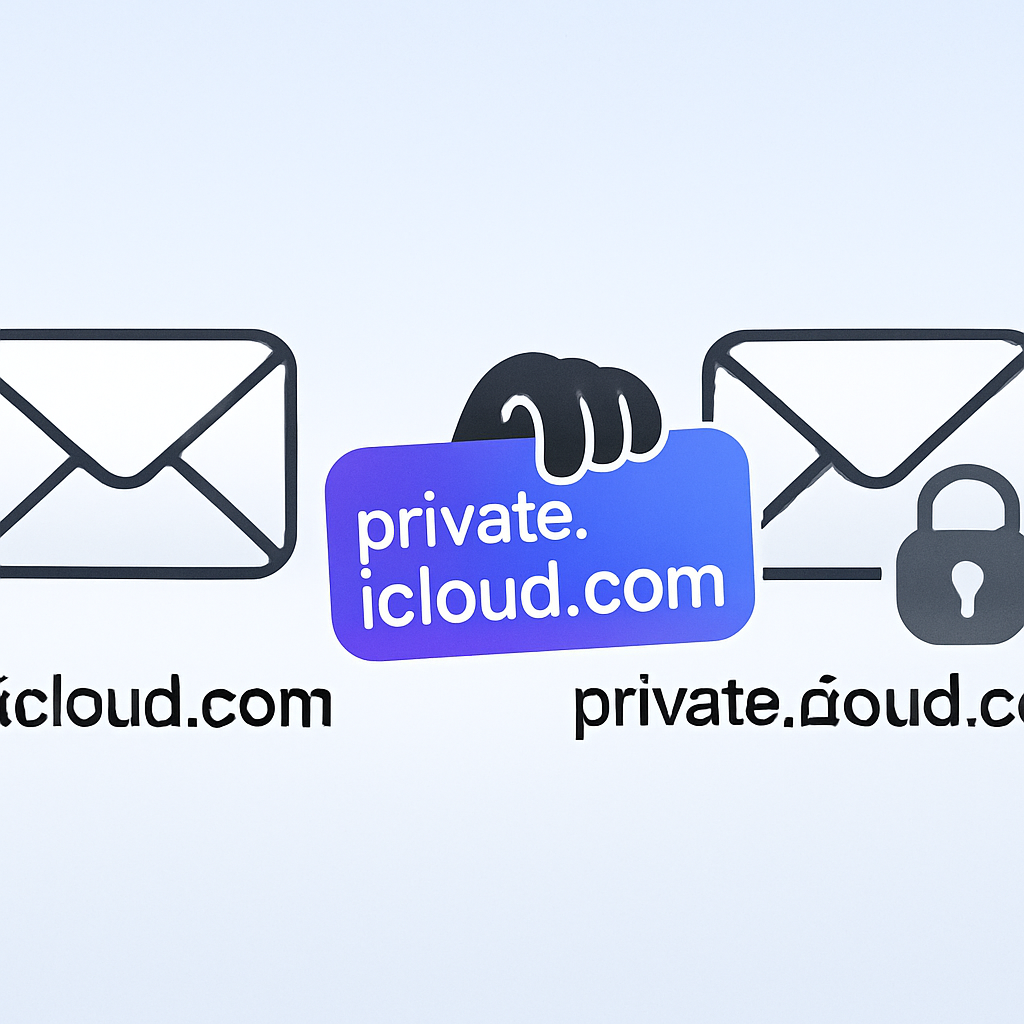
Apple has backtracked on its earlier plan to reassign the domain used by Hide My Email addresses, confirming today that those emails will continue to use “@icloud.com”. This reversal comes after community outcry over a proposed switch to “private.icloud.com,” which many feared would disrupt web admins and email filters. Meanwhile, the related Sign in with Apple service will still shift its addresses to the new domain. ([appleinsider.com](https://appleinsider.com/articles/26/08/24/hide-my-email-no-longer-changing-domains-will-keep-icloudcom/))
What Changed—and What’s Staying the Same
The revised developer documentation, published August 24, formalized the change. Rather than moving both services, Apple will leave Hide My Email on icloud.com while only Sign in with Apple addresses adopt the private.icloud.com domain. Existing Hide My Email aliases remain untouched, and email forwarding will continue without a hitch. ([appleinsider.com](https://appleinsider.com/articles/26/08/24/hide-my-email-no-longer-changing-domains-will-keep-icloudcom/))
The proposed domain change had triggered concerns among developers and administrators. If Hide My Email switched to private.icloud.com, phishing filters and domain-based blocks could misinterpret or reject legitimate emails from that service. Developers also pointed out that since users can generate Hide My Email addresses for any site, admins might not be confident in allowing a newly introduced domain by default. ([appleinsider.com](https://appleinsider.com/articles/26/08/24/hide-my-email-no-longer-changing-domains-will-keep-icloudcom/))
Why Apple Wanted the Shift—and Why Pushback Was Strong
Apple’s intended domain realignment appears tied to its broader shift from “Apple ID” to “Apple Account” branding. Sign in with Apple—originally using privaterelay.appleid.com—was set to adopt private.icloud.com to align its domain naming. ([appleinsider.com](https://appleinsider.com/articles/26/08/24/hide-my-email-no-longer-changing-domains-will-keep-icloudcom/))
Hide My Email differs significantly from Sign in with Apple in how it’s used. The former produces randomized email aliases that closely mimic standard Apple email domains, which helps with seamless integration and trust. Moving it could have endangered its functionality—mass blocking of private.icloud.com could cripple system-wide usefulness. ([appleinsider.com](https://appleinsider.com/articles/26/08/24/hide-my-email-no-longer-changing-domains-will-keep-icloudcom/))
Apple also acknowledged that Hide My Email is fundamentally a privacy tool—not a shield for anonymity. While the generated aliases can hide a user’s real address to protect from spam, the company still retains metadata that ties those addresses to the originating Apple Account. Earlier bugs even exposed real email addresses—but Apple has since patched those issues. ([appleinsider.com](https://appleinsider.com/articles/26/08/24/hide-my-email-no-longer-changing-domains-will-keep-icloudcom/))
With the change in domain policy, email administrators can avoid immediate compatibility workarounds. This move allows Hide My Email to preserve its desktop and mobile experience without forcing users or platforms into confusion. ([appleinsider.com](https://appleinsider.com/articles/26/08/24/hide-my-email-no-longer-changing-domains-will-keep-icloudcom/))
What this episode underscores is the delicate balance between branding consistency and user experience, especially in privacy services. Apple’s decision to isolate changes to Sign in with Apple while preserving the trusted icloud.com namespace for Hide My Email acknowledges both technical risk and user trust. It’s a reminder that domain names aren’t just cosmetic—they’re crucial infrastructure for how we receive and trust digital communication. Watch closely now for how email providers, spam filters, and enterprises respond—and how Apple applies lessons from this reversal moving forward.