Enterprises running Claude now have a lot more oversight. A newly released Compliance API gives security and compliance teams visibility into employee usage of Claude, including conversations, uploads, and activity of AI agents. This expands monitoring to bring Claude under the same lens as tools like SIEM, DLP, and identity services.
What’s Included: Deep Visibility Across Claude Activity
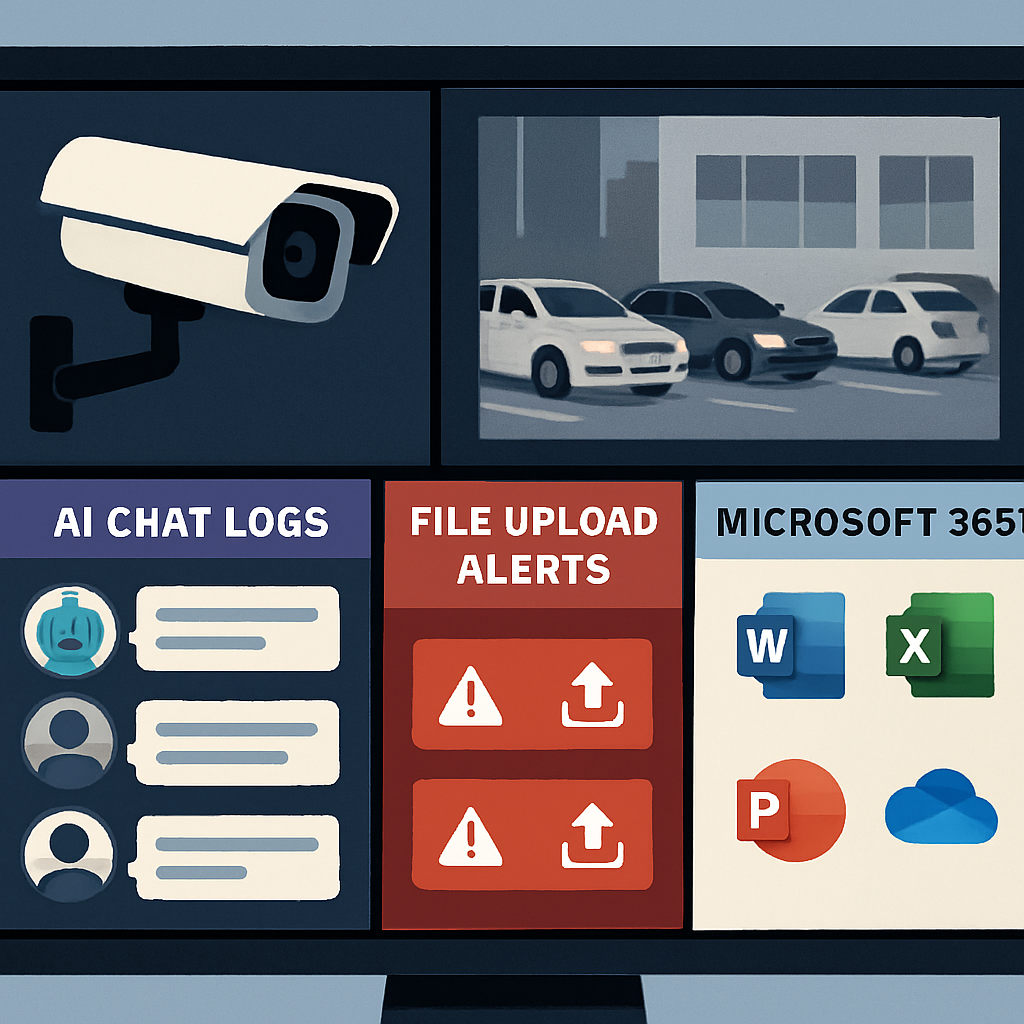
For Claude Enterprise customers, the API provides access to full conversation content—chats, uploaded files, and projects. It captures session content from Claude Code and Claude Cowork, including prompts, model responses, tool-call content, skills used, and artifact transcripts. In Microsoft 365 environments, the API can also monitor Claude use within Word, Excel, PowerPoint, and Outlook.
This added insight helps organizations detect when sensitive data—such as credentials, source code, personal data, financial or regulated content—is being shared improperly. Events like these can feed into detection workflows where data classification, policy enforcement, alerting, and incident response happen within established security tools.
Agentic AI, Platform Events & Integration Risks
Beyond simple chat logs, the API tracks agentic AI tools and integrations—plugins, connectors, skills, etc.—which may access internal systems, invoke servers, or request permissions. These agentic models carry identity, authorization, and software supply-chain risks that were hard to monitor before.
In addition, Claude Platform—which underpins many deployments—offers an activity feed covering system and administrative events like workspace changes, member updates, API key creation, account setting modifications, file creation and download, and skill adjustments. Note: prompts and model responses are NOT exposed in platform deployments via this API.
How it Fits Into Enterprise Security & Governance
Major security tools—CrowdStrike, SentinelOne, Splunk, Datadog, Microsoft Purview, Palo Alto Networks, among others—are already integrating Claude telemetry. This lets teams ingest Claude audit data alongside other logs for detection, governance, and auditing use cases.
Enterprises control access tightly: only the organization’s Primary Owner can enable the Compliance API and issue access keys. Admins are excluded from enabling the feature, ensuring strict governance. To avoid misuse, practices like least-privilege access, connector review, key protection, policy definition, and data-retention specification are encouraged.
As AI becomes woven into workflows—be it document processing, research, or automated agents—the risk surface increases. Monitoring Claude in this way helps close that visibility gap, especially for SOCs and incident responders.
Analysis: The introduction of this Compliance API marks a significant step in plugging one of generative AI’s biggest blind spots: lack of observability. By giving security teams access to prompts, responses, and agent behavior where allowed, organizations can now detect and respond to misuse, policy violations, or data leaks more effectively. What to watch: how access controls are enforced in practice, whether user privacy expectations are managed, and how security tools integrate Claude’s telemetry without drowning teams in noise. Proper governance here will be critical; without it, the expanded visibility has risks of its own.