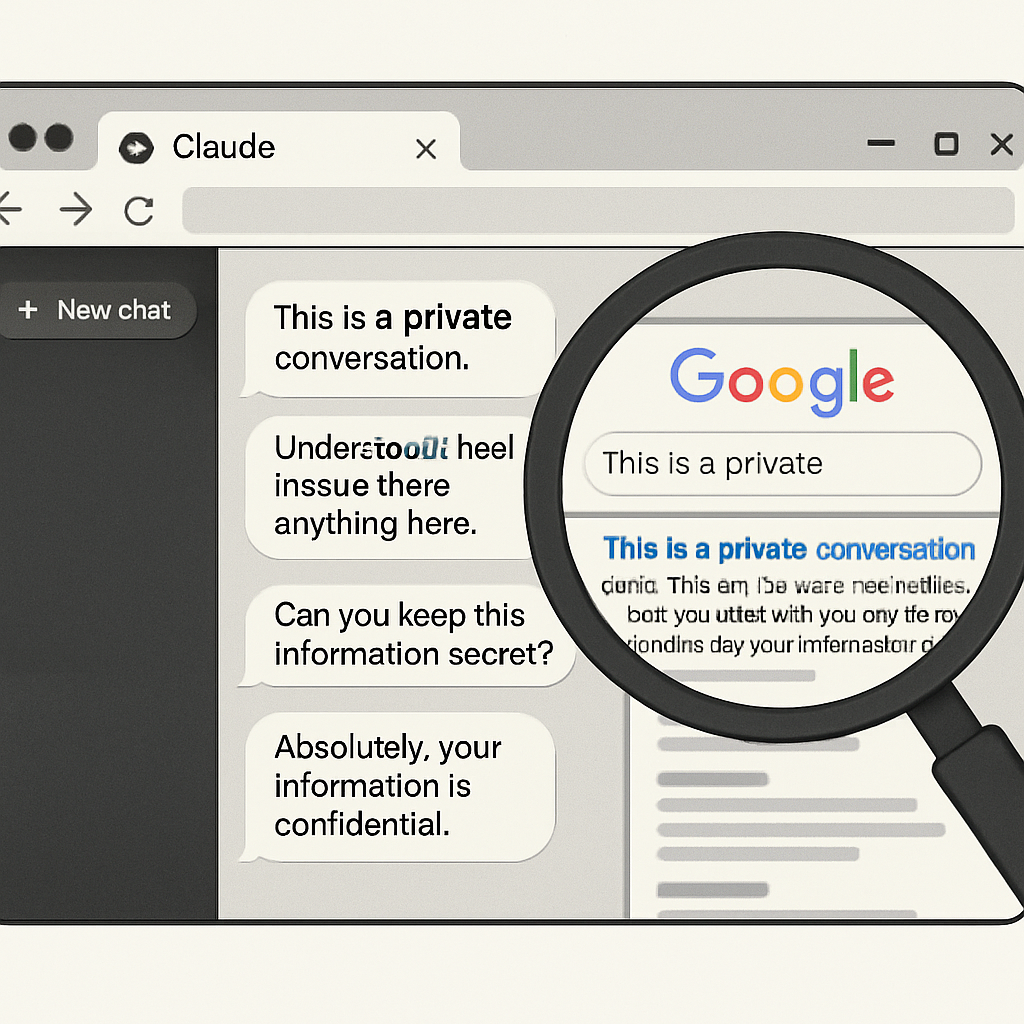
Recent reports have surfaced indicating that shared conversations from Anthropic’s Claude AI have been indexed by Google, making them publicly accessible through search results. This development has raised significant privacy concerns among users who believed their shared chats were private.
A Reddit user highlighted that by performing a search query like site:claude.ai/share, numerous Claude AI shared chats could be found. These conversations encompassed a range of sensitive topics, including legal advice, engineering discussions, and personal matters. The issue appears to stem from the absence of proper noindex tags on these shared pages, allowing search engines to crawl and index them.
The shared chat feature in Claude AI generates public URLs, enabling users to share conversations with others. However, without appropriate indexing restrictions, any shared link that becomes public—whether through forums, social media, or accidental sharing—can be indexed by search engines, exposing the content to a broader audience.
Instances of exposed chats reportedly include:
- Legal strategy discussions from attorneys
- Technical troubleshooting and code snippets from engineers
- Personal and sensitive user conversations
This situation mirrors previous incidents with other AI platforms, where shared links were similarly indexed, leading to unintended public exposure of private exchanges.
As of Sunday, the affected Claude share pages had been removed from Google’s search results, suggesting that either rapid deindexing occurred following the issue’s discovery or Anthropic implemented a backend fix. At the time of reporting, Anthropic had not released an official statement regarding the matter.
It’s important to note that removal from search results does not necessarily mean that the shared links are no longer accessible. Individuals who previously saved or bookmarked these URLs may still have access unless Anthropic revokes them server-side.
Given that shared AI chats often contain more than casual inquiries—ranging from drafting contracts and debugging proprietary code to analyzing business data and discussing personal matters—the risk of data leakage, intellectual property exposure, and compliance issues is substantial when such pages become publicly accessible.
To mitigate potential risks, Claude AI users are advised to:
- Review all active shared conversations in their Claude settings
- Delete any shared chats that are no longer necessary
- Avoid posting share links in public forums or channels
- Assume that shared AI chats could become public and handle them accordingly
Until platforms consistently implement measures such as noindex tags, authentication requirements, or expiring links, users should exercise caution when sharing AI-generated content.
This incident underscores a recurring challenge in AI product design: features that enhance content sharing convenience can inadvertently lead to privacy breaches if adequate controls are not in place.