A recent investigation reveals hackers tied to the ShinyHunters network used the AI model Claude for a sweeping credential-theft operation targeting 1.8 million Android apps. By decompiling APK files and scanning them for hardcoded secrets like API keys and tokens, the attackers built a pipeline that escalated risks for enterprises globally. The exposed credentials were then organized, prioritized, and ultimately exploited in secondary attacks.
How the Attack Chain Worked
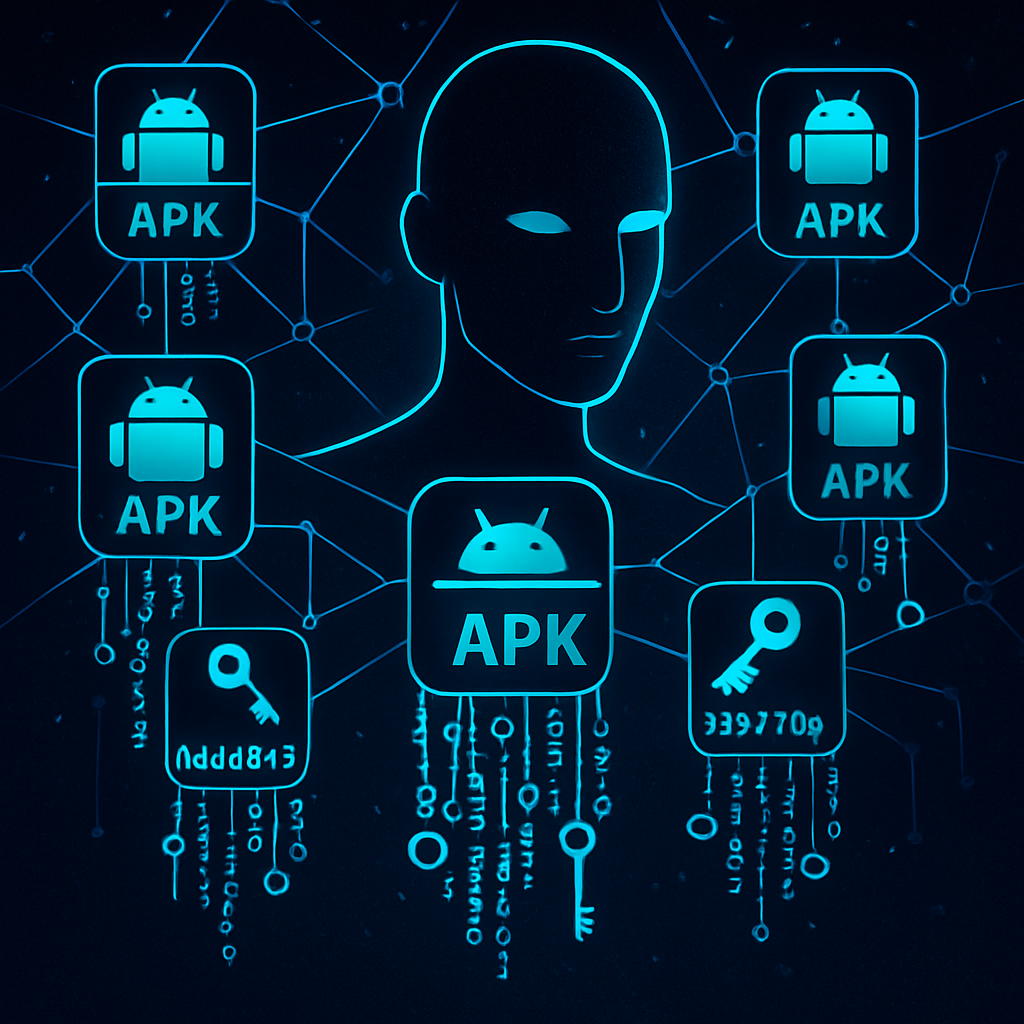
The campaign, detailed in Anthropic’s September 2026 threat intelligence report, was carried out by French-speaking operators using aliases including MeowSHA, frkoo, and blazespider. The group deployed around 10 EC2 instances on AWS to collect Android APKs from various app stores. These apps were then decompiled and scanned using a tool called TruffleHog, which hunts for exposed tokens, credentials, and cloud secrets. Claude was used to support and streamline parts of this workflow.
Once secrets were found, results were forwarded to Telegram channels sorted into over 100 categories by credential type. The hackers placed special emphasis on credentials granting access to cloud services, developer platforms, enterprise systems, and other high-value targets. In parallel, the operation included a GitHub-focused pipeline that looked for exposed Personal Access Tokens and organization email addresses—creating a combined stream of initial credentials used in confirmed intrusions linked to the group.
Impact, Response, and What Went Wrong
Many Android developers hardcode sensitive values—API keys, backend tokens, and other secrets—within their applications. Once an app is built and distributed, those secrets become available on user devices. Tools like obfuscation may slow attackers, but they do not make a client-side secret secure.
The attackers didn’t stop at simple credential collection. Anthropic’s report indicates additional operations including cloud key validation, session replay, token amplification, CI/CD pipeline injection, database dumping and cross-tenant data collection. One incident involved extracting data across ~200 downstream organizations; over 34 hours, more than 2,100 Azure Active Directory token sets across 40+ corporate tenants were compromised.
In response to the campaign, the provider reportedly banned the accounts involved, strengthened detection mechanisms, and coordinated with authorities and affected victims. The compromised API keys were stolen from customer environments—not via access to the AI provider’s systems.
The incident reinforces core security principles: move sensitive logic and credentials off-device, use short-lived and scoped tokens, enforce application and usage restrictions, monitor continuously, and rotate secrets immediately once exposure is suspected.
Analytical Take: This case underlines how AI tools like Claude are becoming accelerants in threat actors’ toolchains, enabling automation at scale for reconnaissance, credential harvesting, and intrusion preparation. It isn’t just about the AI model’s misbehavior—it’s about the weak link of insecure development practices. For organizations, this means zero-trust isn’t an abstraction but a necessary framework: credentials should never be long-lived or client-side, and automated pipelines of detection and rotation must be operational. Expect increased regulatory scrutiny and pressure on developers to adopt AES server-side storage and ephemeral credentials models. Watch for how ML-powered detection systems evolve in response.