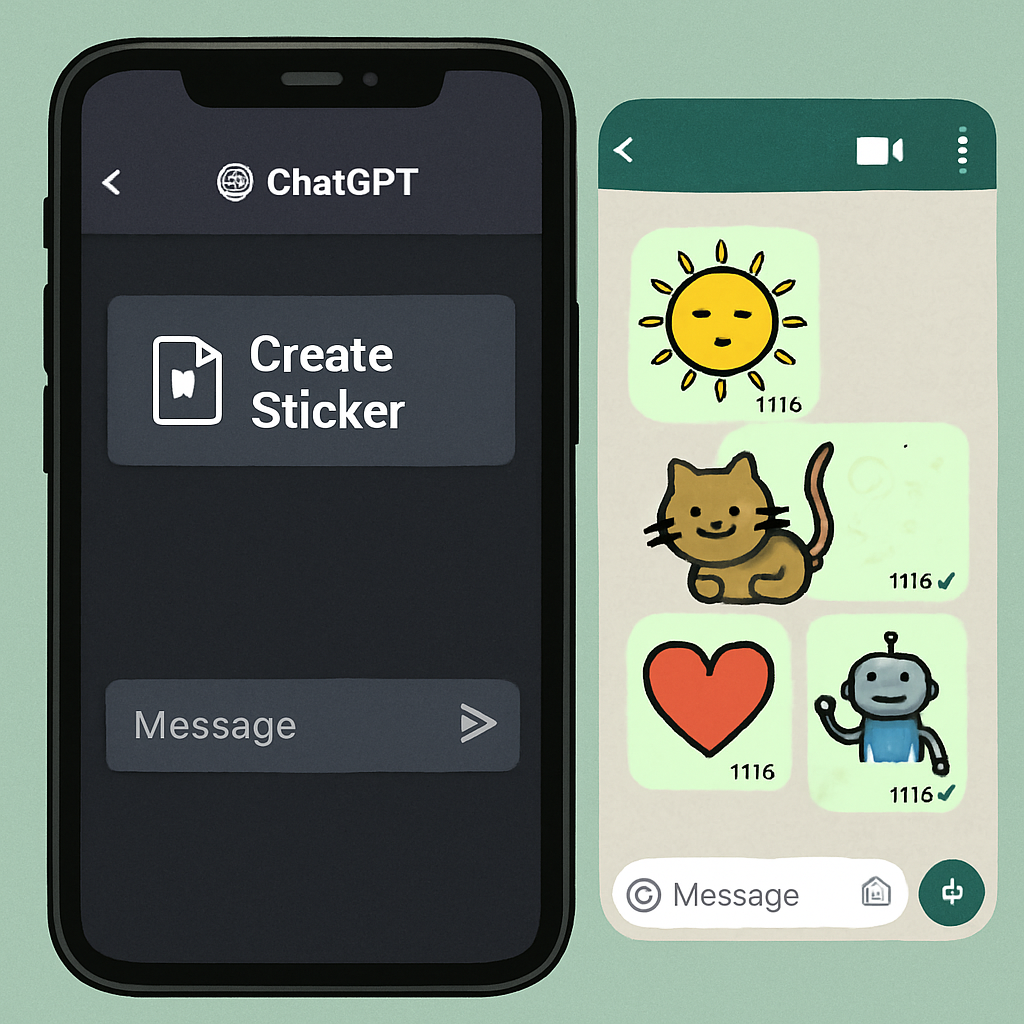
OpenAI is reportedly developing a feature that would allow users to create and export custom stickers directly from ChatGPT into WhatsApp. This development was identified through an analysis of the latest version of ChatGPT’s Android application, which revealed strings related to sticker creation and integration with chat applications.
Stickers have become a popular form of expression in messaging apps, offering users a way to convey emotions, reactions, and messages beyond traditional text and emojis. WhatsApp, a leading messaging platform, has previously introduced its own AI-powered sticker creation tool, enabling users to generate images from text prompts without relying on third-party applications.
The uncovered strings in ChatGPT’s Android app include references such as “ChatGPT Stickers,” “Add to chat apps,” “Add to WhatsApp,” and “Download stickers.” These suggest that the upcoming feature, tentatively named “ChatGPT Stickers,” will provide users with the capability to create stickers within ChatGPT and seamlessly add them to chat applications, with initial support focused on WhatsApp. Notably, the feature indicates a requirement to add a minimum of three stickers to WhatsApp, aligning with WhatsApp’s existing guidelines for custom sticker packs.
While this feature is still under development and has not been officially announced, its potential integration signifies a growing trend of enhancing user engagement through personalized content creation within messaging platforms. By enabling users to craft custom stickers directly within ChatGPT, OpenAI aims to streamline the process of personalizing conversations, reducing the need for external tools or applications.
As the digital communication landscape continues to evolve, the ability to create and share personalized content like stickers enhances user experience and fosters more expressive interactions. If OpenAI successfully implements this feature, it could set a precedent for further integrations between AI-driven content creation tools and popular messaging platforms, paving the way for more innovative and user-centric communication features in the future.