Caterpillar Acquires Monarch Tractor Amidst Startup’s Struggles
Monarch Tractor, once a promising innovator in autonomous electric farming equipment, has been acquired by construction giant Caterpillar. This acquisition follows a tumultuous period for Monarch, marked by layoffs, legal challenges, and the loss of key manufacturing partnerships.
The Rise of Monarch Tractor
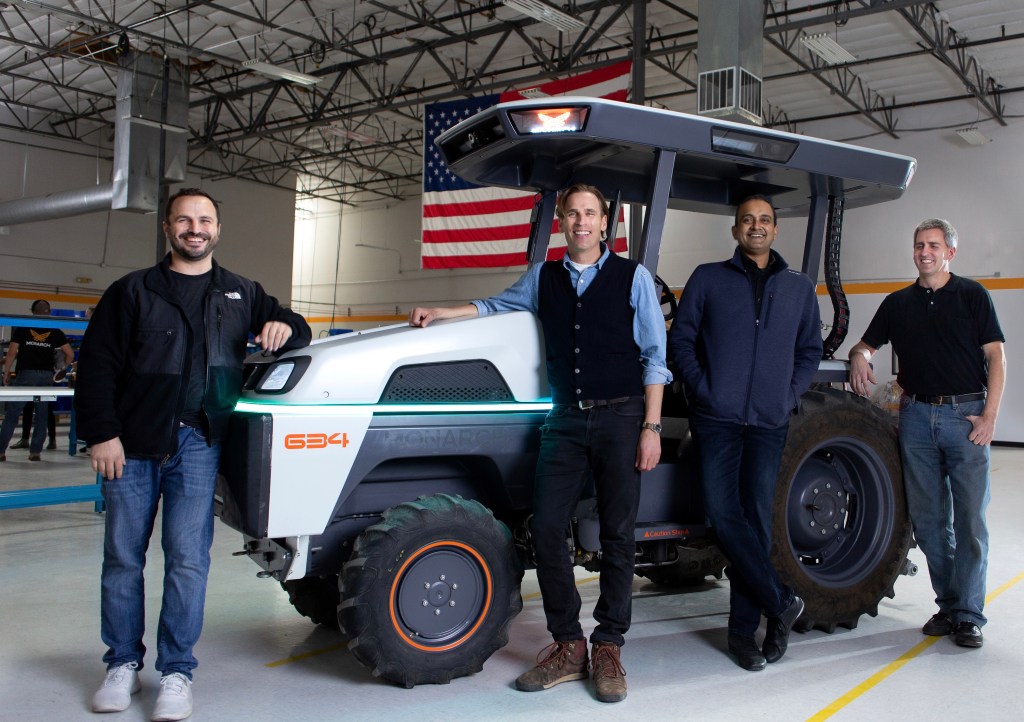
Founded in 2018 by Carlo Mondavi, Praveen Penmetsa, and former Tesla executive Mark Schwager, Monarch Tractor aimed to revolutionize agriculture with driver-optional electric tractors. These tractors were designed to autonomously navigate vineyards, orchards, and dairy farms, addressing labor shortages and promoting sustainable farming practices.
The startup garnered significant attention and investment, raising over $200 million. In December 2022, Monarch delivered its first MK-V unit to Constellation Brands, signaling a promising start. The tractors, powered by Nvidia’s Jetson platform, offered advanced driver assistance and autonomous modes, along with data collection capabilities to monitor crop health and yield.
Strategic Partnerships and Manufacturing Challenges
To scale production, Monarch partnered with Foxconn, the Taiwanese electronics giant, to manufacture tractors at a former General Motors factory in Lordstown, Ohio. This facility was also slated to produce vehicles for EV startups like Fisker, Lordstown Motors, and IndiEV. However, these partnerships faced setbacks as Lordstown Motors, Fisker, and IndiEV filed for bankruptcy, leaving Monarch as Foxconn’s primary client at the plant.
In August 2025, Foxconn sold the Ohio factory to SoftBank, intending to repurpose it for AI server production under the Stargate data center project. This sale left Monarch without a manufacturing partner, disrupting its production plans.
Financial Struggles and Workforce Reductions
Despite raising $133 million in a Series C funding round in July 2024, co-led by Astanor Ventures and an affiliate fund of Foxconn, Monarch faced financial difficulties. The company underwent multiple rounds of layoffs, including a 10% workforce reduction in November 2024 as part of a restructuring to focus on software and licensing its autonomous technology. CEO Praveen Penmetsa cited a slower-than-expected third quarter as a reason for the restructuring.
By November 2025, Monarch warned employees of potential layoffs exceeding 100 staff members and the possibility of shutting down operations. This warning came amid ongoing financial challenges and the loss of manufacturing capabilities.
Legal Challenges and Product Performance Issues
Monarch also faced legal challenges regarding the performance of its tractors. In November 2025, Burks Tractor, an Idaho-based dealership, filed a lawsuit alleging that the tractors were unable to operate autonomously as promised. The dealership claimed that the tractors experienced significant problems and were defective, leading to a breach of contract and warranty violations.
Leadership Disputes and Strategic Shifts
Internal disagreements further complicated Monarch’s trajectory. Co-founder Carlo Mondavi, a member of the renowned winemaking family, publicly stated that he was pushed out after opposing CEO Penmetsa’s strategy to pivot the company towards a software-focused business model. Mondavi’s departure highlighted the internal conflicts over the company’s direction amidst mounting challenges.
Caterpillar’s Acquisition and Future Prospects
In April 2026, Caterpillar acquired Monarch Tractor’s assets, as confirmed by filings with the United States Patent and Trademark Office. This acquisition aligns with Caterpillar’s ongoing efforts to integrate advanced technologies into its product offerings. Previously, in 2017, Caterpillar acquired Yard Club, a marketplace for construction equipment, indicating its interest in expanding digital and autonomous capabilities.
While specific details of the acquisition remain undisclosed, Caterpillar’s interest in Monarch’s technology suggests a strategic move to enhance its autonomous and electric machinery portfolio. This acquisition could lead to the development of new products that combine Caterpillar’s industrial expertise with Monarch’s innovative technologies.
Conclusion
Monarch Tractor’s journey from a pioneering startup to its acquisition by Caterpillar underscores the challenges faced by companies in the autonomous and electric vehicle sectors. Despite significant investments and initial successes, Monarch encountered manufacturing disruptions, financial difficulties, legal disputes, and internal conflicts. Caterpillar’s acquisition offers a new chapter for Monarch’s technology, potentially contributing to advancements in autonomous and electric machinery within the construction and agriculture industries.