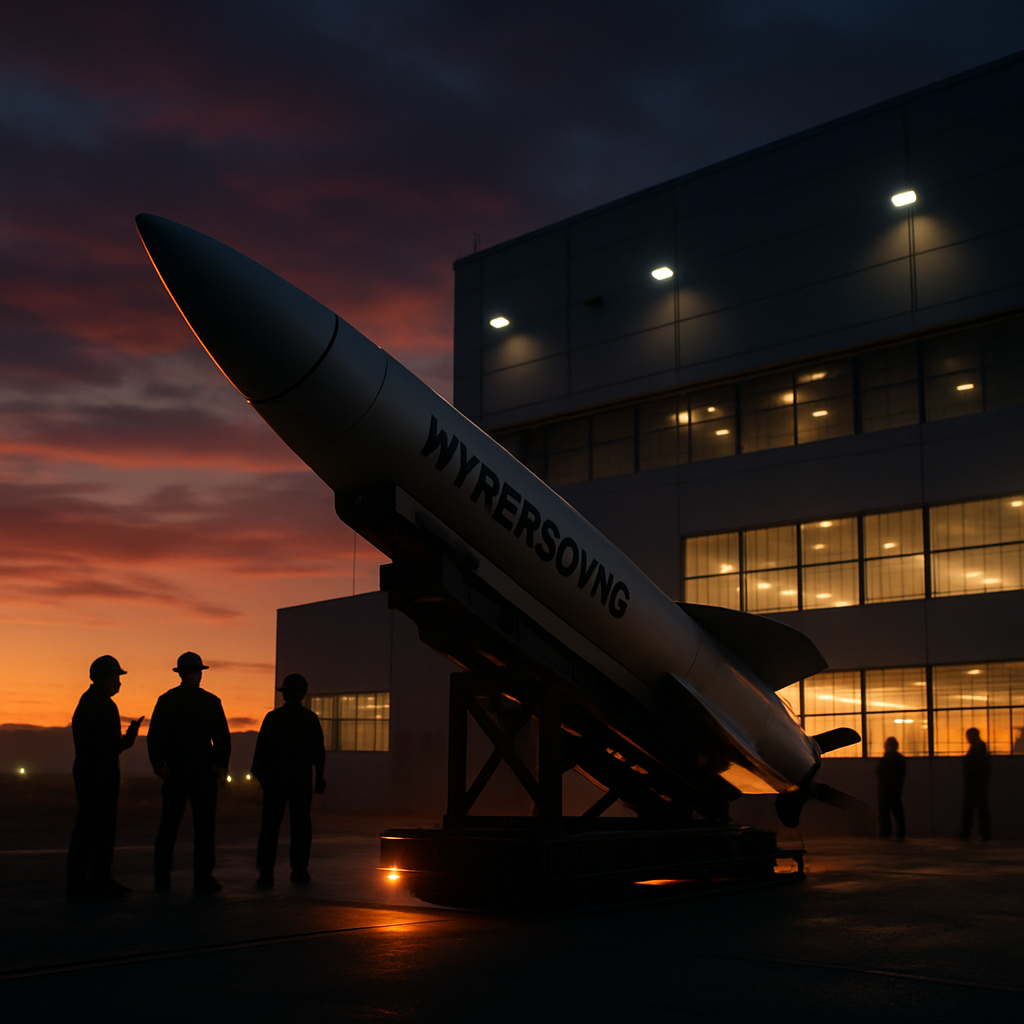
Castelion, an aerospace startup founded in 2022 by former SpaceX engineers, has secured $1 billion in Series C funding, pushing its valuation to $13 billion. The round was co-led by Andreessen Horowitz, Carlyle, and JP Morgan Chase. ([techcrunch.com](https://techcrunch.com/2026/08/20/castelion-hits-13b-valuation-to-mass-produce-hypersonic-missiles/))
Based in Torrance, California, Castelion aims to disrupt the defense industry by producing hypersonic weapon systems more rapidly and affordably than traditional contractors. The company has already landed over $500 million in contracts with the U.S. military. ([techcrunch.com](https://techcrunch.com/2026/08/20/castelion-hits-13b-valuation-to-mass-produce-hypersonic-missiles/))
Central to Castelion’s strategy is its “Blackbeard” missile project, which the company plans to manufacture at a facility in New Mexico. With its newfound capital, Castelion intends to ramp up production of Blackbeard along with other hypersonic weapons. ([techcrunch.com](https://techcrunch.com/2026/08/20/castelion-hits-13b-valuation-to-mass-produce-hypersonic-missiles/))
Funding Details and Operational Backing
The Series C infusion consists of $800 million in equity, plus a $250 million revolving credit facility, allowing Castelion both broad flexibility and financial depth. Existing investors Lightspeed, General Catalyst, and Altimeter also participated. ([techcrunch.com](https://techcrunch.com/2026/08/20/castelion-hits-13b-valuation-to-mass-produce-hypersonic-missiles/))
Washington has been pressing for accelerated production of hypersonic weapons. The U.S. currently trails China in the number of deployable missiles capable of exceeding Mach 5. Castelion positions itself as part of the solution, promising faster manufacturing to close the gap. ([techcrunch.com](https://techcrunch.com/2026/08/20/castelion-hits-13b-valuation-to-mass-produce-hypersonic-missiles/))
Why Castelion’s Push Matters
Hypersonic missiles—projectiles that travel at least five times the speed of sound—pose unique challenges for production and cost. Historically, major defense contractors have struggled with both scale and speed. Castelion’s claim is that it can move faster and more cheaply than those legacy suppliers, thanks in large part to its tech-led background and focus. ([techcrunch.com](https://techcrunch.com/2026/08/20/castelion-hits-13b-valuation-to-mass-produce-hypersonic-missiles/))
By centralizing production in New Mexico, Castelion may also benefit from regional industrial and regulatory advantages, alongside closer ties to U.S. military procurement infrastructures. The timing of its raise aligns with intensifying pressure from the Pentagon to expand the nation’s hypersonic arsenal. ([techcrunch.com](https://techcrunch.com/2026/08/20/castelion-hits-13b-valuation-to-mass-produce-hypersonic-missiles/))
While the technical and economic hurdles for hypersonic weapons remain high—thermal stresses, guidance accuracy, and defensive countermeasures are all ongoing challenges—Castelion’s $1B influx gives it runway to scale. It’s now one of the highest-valued private firms in defense-focused startups.
This funding round signals more than just investor confidence—it marks a pivotal moment in modernizing U.S. strategic capabilities. If Castelion can deliver on its promises of faster timelines and lower unit costs, it may force legacy defense contractors to adapt or risk falling behind. The nation’s ability to match global threats hinges not just on innovation, but on the capacity to manufacture at scale.